
Armenian Public Opinion on Armenia–Turkey Relations Amid Regional Geopolitical Shifts
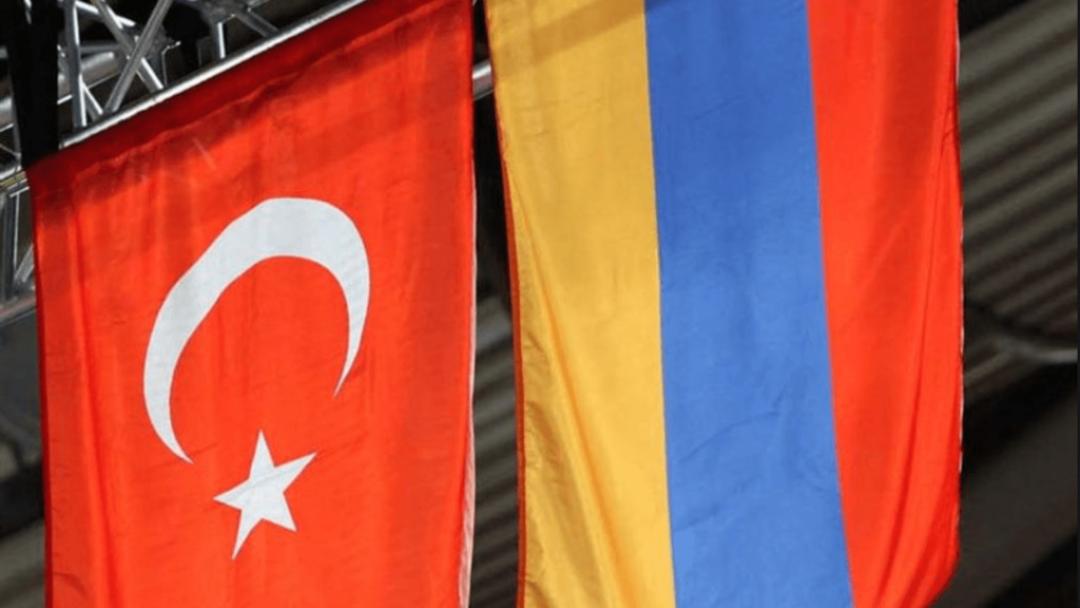
Historically, Armenian-Turkish relations have been shaped by multi-layered, complex, and contradictory processes. They have always been politically turbulent and psychologically strained, driven by issues of memory and security. This background strongly influences public perceptions, political decisions, and potential future regulation.
Back in the days of the Soviet Union, Armenia and Turkey did not have diplomatic relations for many years. Contacts were minimal. After Armenia's independence in 1991, relations with Turkey were also not normalized. Turkey closed its border with Armenia in 1993 against the backdrop of the Nagorno-Karabakh conflict, relying on its ‘brotherly’ relations with Azerbaijan.
Nevertheless, in both Armenia and Turkey, improving relations with neighboring countries has been emphasized more than once. The European Union, as well as Russia and the United States, are also interested in this. This topic gained prominence in 2009, when the Armenian-Turkish Zurich Protocols were signed, but neither side fully ratified them due to internal and external pressures.
After the 2020 Karabakh war and the region’s new geopolitical situation, new attempts at normalization kicked off. The parties appointed special representatives and carried out small humanitarian and technical steps, but fundamental issues—opening borders, establishing diplomatic relations, and recognition of the genocide—remain unresolved.
Recently, a new reality has been forming in the South Caucasus region, the status quo of the balance of power is changing by reflecting a new balance of power.
There is no doubt among the global centers of power that today it is impossible to undertake any initiative in the South Caucasus without taking into account the interests of Iran and Turkey. Assessing the existing regional security system in the South Caucasus and adapting it to the new realities is becoming a challenge for the countries of the region.
Historical Memory and Interstate Relations Are Unrelated
Is there a need for new approaches, narratives, and strategic common sense in relations with Turkey as a vital issue for today's Armenia? Caucasus Watch tried to find out the answer by talking to several Armenian experts.
Professor Ruben Safrastyan, an Armenian historian and Turkologist, former director of the Institute of Oriental Studies, believes that normalizing relations with Turkey has been one of Armenia’s key foreign policy priorities, emerging from the very earliest stages of the Republic of Armenia’s existence, and this has been articulated as Armenia’s wish to have normal relations with Turkey, as two neighboring states.
“This is not about friendly relations, but about normal relations. The Turkish side refused to normalize relations, and this situation has, in fact, continued to this day”, Safrastyan claims.
In response to our question - whether it is possible in new Armenian–Turkish narratives to reconcile memory with sound reasoning without illusions, while at the same time not letting the past block the path to the future, preserving memory not for accusation or revenge, but for life and the future ?- Ruben Safrastyan gives the following answer:
“Historical memory is something that cannot be forbidden: the Armenian people’s historical memory will remain. But here, the reference is to interstate relations. I do not particularly see a connection between historical memory and interstate relations, as long as historical memory does not become a goal of foreign policy. That's a different matter. But Armenia does not pursue such a policy and will not pursue in the further either”.
Genocide Recognition Has Never Been Armenia’s Precondition
Under the current Armenian authorities, an active dialogue on normalizing Armenian -Turkish relations is underway. Will Armenia and Turkey be able to smooth over historical wrinkles and engage in truly constructive dialogue without preconditions? Ruben Safrastyan believes that the focus here is primarily on Turkey, because it is Turkey that has imposed preconditions. According to Ruben Safrastyan, now, with the Nagorno-Karabakh issue no longer existing, that precondition has essentially been lifted by Turkey, instead, Turkey is now making the normalization of relations with Azerbaijan a precondition, which has been stated by Turkey at the highest level on multiple occasions. “I believe that Turkey will act accordingly; that is, until a peace treaty or agreement is signed between Armenia and Azerbaijan, Turkey will not move toward normalizing relations or opening the border,” Ruben Safrastyan predicts.
Professor Safrastyan, who has devoted a significant part of his life to studying the Armenian Genocide and Turkey’s policies, is nevertheless not opposed to Armenia and Turkey having normal relations, because, as per him, Armenia has never made the issue of the genocide recognition by Turkey as a precondition for normalization of relations and does not do so.
“Regarding the normalization of relations on Armenia’s part, I honestly do not see any obstacles; it is Turkey that has placed obstacles in every way - that is their policy. So, I believe that the normalization of interstate relations is one thing, and historical memory is another,” the political scientist concludes.
Armenian–Turkish Relations Need Accurate Narratives and Sound Strategies
Our second interlocutor, Turkologist, Professor Ruben Melkonyan, who is also the dean of the Faculty of Oriental Studies of Yerevan State University, believes that, in the case of relations with Turkey, Armenia essentially had a state strategy, which did not belong to any particular government.
“Certain details were added to or removed from that strategy, but in my opinion, it had two important elements. First, it had passed the test of time to some extent and had matured. Second, it could be said that it was semi-scientifically developed and was based on various regional and Turkish strategic actions, priorities, countermeasures, responses, and so on.”
Ruben Melkonyan notes that in a changing region, and in the context of global developments, there is undoubtedly a need—if not for new narratives, then at least for certain strategic adjustments. This is because strategy stems from the existing situation, the balance of power, and the various fluctuations or turbulence in regional equilibrium. It is a continuous process. The political scientist emphasizes that in today's Armenia, it is a vital issue to stop false narratives and wrong strategic approaches, because, according to him, they are, first of all, not productive and do not yield any positive results, in particular, the narrative of concessions, the narrative related to the removal of various important symbols for the public, etc. Melkonyan is reassured that these do not move the nature of Armenia–Turkey relations even a centimeter in a positive direction. Moreover, these narratives are scientifically and diplomatically wrong, and wrong in historical, psychological, moral, and other contexts.
“I see the need to restore correct narratives and a distorted strategy in those relations, and given the existing situation, I also see the necessity for certain changes and the addition of new elements. As for Turkey, I think those narratives have remained unchanged since the 90s, they are stable. If you study, for example, the 1993 speech of Turkey’s president, as well as those from 2003, 2013, and 2023, you will not see any significant differences. After 2020, the obligation to sign an Armenia-Azerbaijan agreement has been added to that narrative. Until the 2020 war, presidents, governments, and parties changed, but there was no significant change in that narrative, because it is state based. The same was true in the case of Armenia as well” Ruben Melkonyan notes.
Memory As State Policy - With the Aim of Not Repeating the Mistakes of the Past
According to Ruben Melkonyan, memory is not subject to political conjuncture, but is a peculiarity related to the identity, psychology, and environment of each individual, therefore, managing and directing memory is essentially impossible. “Memories cannot become a factor that strongly influences real state politics if the roots or causes of the issue have been eliminated, but if they have not been, they inevitably have the potential to persist through both the state and society”, Ruben Melkonyan claims. He gives a symbolic example from European countries—the story of the Dutch people’s grandfathers’ bicycles, which were taken by Nazi forces during the Second World War. To this day, a generational discourse has been passed down in Dutch society regarding forgiving the Germans: “not until they return my grandfather’s bicycle”. At the same time, Ruben Melkonyan notes that this does not prevent the Netherlands and Germany from having normal relations.
"Therefore, memory has its own path, big politics has its own. Inherently, these illusions can prevent society from seeing the world more broadly, but at the same time, the lack of memory can also prevent that society from repeating mistakes based on past experience. If that cause has not been eliminated—for example, if Turkey were to apologize for the Armenian Genocide and if the hate-speech propaganda in both Turkey and Azerbaijan were to cease—naturally, the direction of memory and public sentiment could develop more positively. But since that is not the case, the sharper perception of that memory continues,” the political scientist concludes. As a second example, Melkonyan mentions the negative relations between Jews and Arabs, anchored in memory. In my opinion, there is no Arab or Jew who does not carry that negative memory, but that memory does not force them to close off the paths to the future, because it is, after all, a very human memory. “Therefore, expecting society to completely forget all of that is, in my view, impossible. But revenge, blocking the path to the future, is possible when that memory is not fueled by new antagonism, and when that memory can be isolated in its own domain, so that it remains as a memory and does not become state policy, in a negative sense. It would be positive if it became a state policy in the sense of gaining experience from the past so that past mistakes are not repeated and new genocides do not occur”, Ruben Melkonyan notes.
Today’s Processes Only Simulate Armenian-Turkish Normalization
As for the claims of the current Armenian authorities to be conducting an active dialogue with Turkey, Ruben Melkonyan is skeptical about this matter: “I don't think there is a very active, real dialogue underway to normalize relations. I believe that what is happening is largely an active imitation, because active dialogue could lead to concrete results, but we have no tangible outcomes, and the observable results are of relatively minor importance—for example, opening the border for third-country citizens or restoring the old bridge at the Ani ruins, and other such symbolic issues. The visits of envoys and their statements are also an imitation; they do not solve any problems. In other words, this is not active dialogue, but simulation”. Political scientist Ruben Melkonyan also doubts that Turkey and Armenia will be able to smooth out historical wrinkles, "...because there is no mutual empathy, no solidarity. There are only unilateral processes on both sides, which are contradictory and not synchronous. The current authorities of Armenia are trying to forget everything, reevaluate various issues related to the past, remove Mount Ararat from textbooks as a symbol, etc., while in Turkey the denial of the genocide continues, the claims that Armenians are not indigenous, etc., in other words, two opposing processes are taking place”. Ruben Melkonyan also reminds us that, unlike today, in the past there were at least hints or elements of parallel processes. Specifically, for example, in Turkey, there used to be exhibitions showing the presence of Armenians in the Ottoman Empire in 1914, featuring photographs of Armenian neighborhoods, architecture, and art centers. Turkish intellectuals even organized petitions for apology. On April 24th, there was a candlelight vigil in Istanbul in memory of the victims of the genocide, which no longer exists. In the Turkish Parliament, not only Armenian but also Kurdish MPs could speak about the Armenian Genocide, but now that is essentially gone. It even reached the point where Turkey’s then-Prime Minister, and later President Erdoğan, began sending condolence messages on April 24, which continues today, however, every year, the emphasis in those messages becomes increasingly unconstructive. In other words, the processes are no longer running in parallel, which reduces the chances of resolving historical tensions. As for engaging in constructive dialogue without preconditions, according to Ruben Melkonyan’s description, this dialogue is currently taking place with more preconditions than ever before. "Turkey has never abandoned its preconditions. There is a state-developed Turkish narrative that has remained stable since the 1990s and has not changed. The principle and tradition of setting preconditions has also not changed," the political scientist notes and cites as an example the recent statement of Turkish Foreign Minister Hakan Fidan, in which the latter declares that Turkey will refrain from establishing relations with Armenia until Armenia signs a peace agreement with Azerbaijan, and only after the signing will Turkey open the border with Armenia, otherwise it will deprive Armenia of dialogue with Azerbaijan.
Armenian Society Seeks Peace, Open Borders, But Resists Giving Up Historical Memory – Polls
Is Armenian society ready for normalization of relations with Turkey, considering the sharp issues of the historical past? Our study of surveys conducted among the public in recent years on this question shows the following picture: During a nationwide poll in Armenia, conducted by the International Republican Institute (IRI) in January 2022, Armenians expressed a strong desire for bilateral relations with Turkey and some openness for new cross border transport routes in the region. In total, 70% of Armenians agreed that bilateral relations with Turkey should be established, although with preconditions such as Turkey’s non-hindrance in Nagorno-Karabakh.
However, according to another survey conducted at the same year by the Armenian office of GALLUP International Association showed that more than half of residents in capital Yerevan are against the opening of the Armenian-Turkish border. A significant portion opposes normalization without major concessions from Turkey, fearing unilateral Armenian concessions and unresolved historical grievances, as seen in recent Alpha News polls (in May, 2025).
In essence, Armenians largely want peace and open borders but are deeply scarred by history, making them wary of normalization that doesn't first address core demands for justice and recognition.
Analyzing the results of recent surveys conducted among the Armenian public, our interviewee Ruben Melkonyan concludes that the majority of the Armenian public opposes the nature of relations with Turkey as presented by the current government, in other words, Armenian society is not ready to abandon its memory; they do not agree to forget the Genocide, Mount Ararat, their historical homeland, and so forth.
According to Ruben Melkonyan, today there is an aggressive campaign being conducted by various branches of the Armenian government's propaganda machine to present the issues of the historical past in a more backward, primitive manner, in order to force the public to abandon these views and accept the government's policy. “We can see various manifestations of this in both state media programs and even in school textbooks, with the aim of changing these perceptions, which, I believe, is being done in a very wrong manner. The imposed pressure on memory leads to various distortions, which may yield the desired result for the government at that moment, but in a broader sense, it will cause new problems for society. A society that is somehow deprived of its memory or subjected to rough interference with its memory is highly prone to an identity crisis. Therefore, as an expert, I consider this method to be wrong,” insists Ruben Melkonyan.
About the Author: Anna Vardanyan is an Armenian political journalist and researcher who has specialized in defense policy, international relations and security in Eastern Europe and the Caucasus for over 18 years. She has worked for several Armenian media outlets and held advisory roles in the National Assembly of Armenia. She is the awardee of the “Tytus Filipowicz” Academic Award provided by the Centre for East European Studies of the University of Warsaw.
Insights,
Politics,
Armenia |
Armenia-Turkey Relations, Anna Vardanyan, Ruben Safrastyan, Ruben Melkonyan