
Armenian-Turkish Rapprochement: What Lies Ahead?
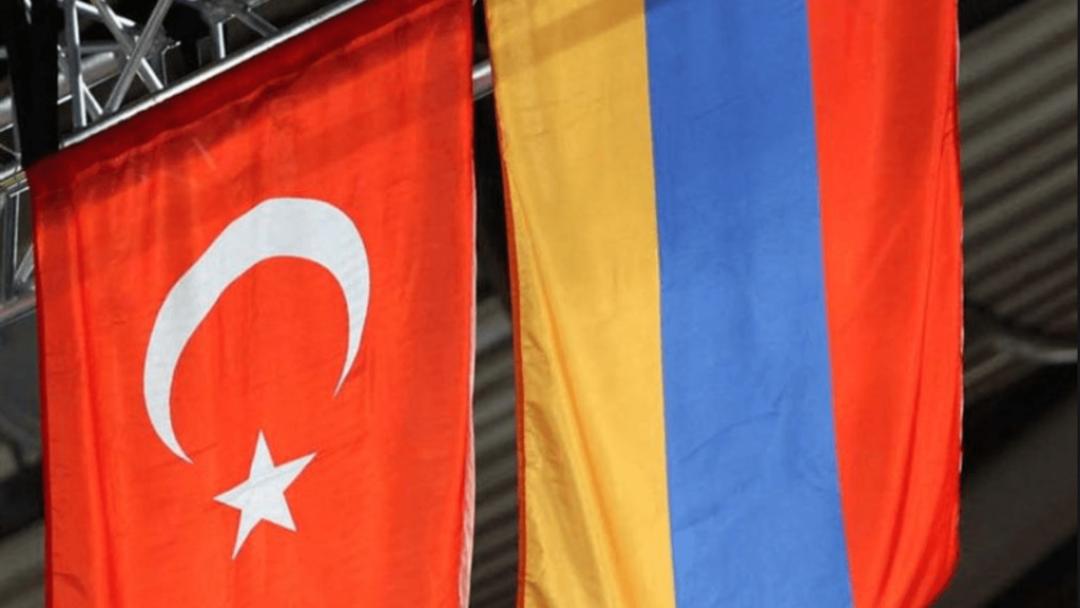
The year 2025 saw at least two remarkable Armenian-Turkish coordinated operations. The instances of law-enforcement and humanitarian cooperation illustrate a tangible development in between the two countries, occurring in a context where political relations had been formally suspended since 1993.
On 19 January 2025, Armenia extradited two individuals to Türkiye who were wanted for organized crime activities in Turkish territory, following a request transmitted via Interpol under its Red Notice mechanism. The Turkish Interior Ministry stated that the transfer occurred as a result of negotiations initiated with Armenia. Armenia’s Foreign Ministry issued a statement confirming that the extradition had taken place in accordance with international police cooperation procedures. Türkiye’s Foreign Ministry simultaneously released an identical announcement, acknowledging the cooperation demonstrated by Armenia in the case. Türkiye’s Ministry of Interior identified the two extradited individuals as Ercan Yılmaz and İbrahim Kaymak. Yılmaz had been wanted for 15 years, with 43 arrest warrants issued nationally and an Interpol Red Notice for 14 years and was described as a leader connected to the Barış Boyun criminal organization. Kaymak had been wanted for 6 years, with 10 national arrest warrants and an Interpol Red Notice for one year.
The 2025 extradition represents a good sample in the practical implementation of mutual legal assistance and regional policing frameworks under Interpol’s jurisdiction, evidencing a degree of institutional communication between Armenian and Turkish ministries of interior and foreign affairs.
A further step in bilateral cooperation occurred with the announcement of the temporary opening of the Margara border checkpoint between Armenia and Türkiye from 21 to 31 March 2025. The reopening constitutes a significant logistical event given that the Armenian-Turkish border has been officially closed since 1993, when Türkiye aligned with Azerbaijan during the Nagorno-Karabakh conflict.
The Armenian government dispatched a convoy of humanitarian aid bound for Syria through Turkish territory. Armenia’s Deputy Foreign Minister Vahan Kostanyan stated that the Armenian convoy carried medical supplies and food and expressed appreciation for the Turkish side’s cooperative approach. A notable precedent occurred in February 2023, when Armenia dispatched rescue teams and humanitarian aid to southern Türkiye following the Kahramanmaraş earthquakes, under arrangements negotiated at that time through diplomatic intermediaries and international organizations. That event, often cited as an example of disaster diplomacy, constituted the first operational border opening in three decades. The March 2025 reopening therefore follows an established pattern of limited, purpose-specific crossings linked to humanitarian activity.
Both examples demonstrate the existence of direct channels for bilateral operational coordination, functioning communication mechanisms at the working-level between the relevant ministries, and the capacity of both governments to coordinate on logistical and administrative procedures within constrained timeframes and under mutual agreement.
Previous efforts to reopen the border, such as those foreseen in the Zurich Protocols, were not implemented. The 2009 Zurich Protocols were two bilateral protocols signed in 2009 by Armenia and Türkiye that envisioned the establishment of formal diplomatic relations, the opening of the Turkish-Armenian border, and the establishment of a joint historical commission on the Armenian genocide issue. Signature was not followed by any ratification, and the protocols never entered into force.
High Level Meetings
The comparison with what happened at the time of the 2009 Protocols can continue, with even greater emphasis, moving to the diplomatic developments between the two countries, and high-level meetings.
In June rumors spread about an unprecedented bilateral, high-level meeting in Istanbul to address both Armenian-Turkish and Armenian-Azerbaijani relations. This was followed by remarks by Pashinyan on 13 June 2025 in which he underscored that direct contact between the two countries now existed without third-party mediation.
Indeed, on 20 June 2025, Prime Minister Nikol Pashinyan conducted a working visit to Türkiye. He arrived at Istanbul International Airport, where he was received by Turkish Deputy Foreign Minister Berris Ekinci. Pashinyan was received by President Erdoğan at the Dolmabahçe Palace Presidential Office with an official ceremony, followed by delegation introductions and a bilateral meeting attended by the Turkish Foreign Minister Hakan Fidan and Armenian Foreign Minister Ararat Mirzoyan. According to the Armenian government’s press release, discussions also touched on steps aimed at establishing peace with Azerbaijan, ongoing regional developments, and Armenia’s “Crossroads of Peace” regional connectivity initiative. Armenia’s Government reported that both sides reaffirmed their readiness to maintain direct dialogue, discussed the normalization process, and reviewed potential areas of cooperation, including the reopening of transport routes and electricity connections.
During the visit, Pashinyan met representatives of the local Armenian community, visited the Surp Asdvadzadzin Patriarchal Church and the Hagia Sophia Grand Mosque. In his meeting with representatives of the Armenian community, Pashinyan highlighted the importance of his visit, stating that it had become possible due to the recently activated dialogue with Türkiye. He noted that his meeting with Erdoğan would provide new impetus to bilateral relations and stressed the role of the Armenian community of Türkiye in advancing interstate dialogue.
The Istanbul meeting was unprecedented in the post-1993 period: it is the first official visit of an Armenian head of government to Türkiye since independence for a bilateral meeting. The only prior comparable precedent had been the visit of Turkish President Abdullah Gül to Yerevan on 6 September 2008, during the earlier phase of rapprochement known as “football diplomacy”, when the Zurich protocols were under discussion. On that occasion, Gül attended a FIFA World Cup qualifying match between the national teams of Armenia and Türkiye and met then-President Serzh Sargsyan.
The 2025 Istanbul visit by Pashinyan thus constituted the reciprocal occurrence of high-level contact, taking place after seventeen years.
A further unprecedented development took place in September 2025 with bilateral meetings held inside Armenian territory. In September 2025, Armenia’s Deputy Speaker of Parliament and Special Representative Ruben Rubinyan confirmed that Türkiye’s Special Representative for the normalization process with Armenia, Ambassador Serdar Kılıç, would travel to Armenia leading a delegation via the Alican-Margara land border crossing, ad hoc opened once more to discuss steps already taken, technical parameters for the re-launch of the Kars-Gyumri railway, and restoration of the historic Ani bridge. Rubinyan also referred to the pending implementation of the 2022 agreement permitting crossings for citizens of third countries and diplomatic passport holders, noting that Armenia was ready to proceed without delay or preconditions.
On 12 September 2025, Ambassador Kılıç entered Armenia, at the border he was received by Rubinyan. The meeting was also attended by Armenia’s Foreign Minister Ararat Mirzoyan, who received Ambassador Kılıç separately. The September 2025 Yerevan meeting marked the first time since the early 1990s that a Turkish governmental delegation ever entered Armenia via land routes for formal talks.
Türkiye
For Türkiye, normalization with Armenia carries a set of clearly defined strategic and economic objectives. President Recep Tayyip Erdoğan has repeatedly described the Armenian-Azeri process as integral to transforming the South Caucasus into a corridor of peace and trade, with the prospective opening of the borders, that align with Ankara’s wider agenda of regional connectivity and development, strengthening its role in international freight transport. Speaking to journalists on 5 July 2025 aboard his return flight from the 17th Economic Cooperation Organization (ECO) Summit in Khankendi, Erdoğan outlined Ankara’s priorities in detail. He identified the Zangezur Corridor as both a geopolitical asset and a geo-economic revolution, linking the South Caucasus to Central Asia, and described it as the most important part of the Middle Corridor, the intercontinental transport network extending from China to Europe through Türkiye. Erdoğan explained that the opening of the Zangezur Corridor would accelerate Türkiye’s trade with Central Asia, reduce transit time for freight between Europe and China, and strengthen Türkiye’s role as a key logistical hub. The corridor, he said, would traverse Iğdır and connect with Nakhchivan, providing unimpeded access for Turkish goods to cross the Caspian Sea and reach Central Asia and China. He linked this plan to the ongoing construction of the Kars-Iğdır-Nakhchivan railway and infrastructure projects in Karabakh, describing their operational synergy once the corridor became active. The corridor is projected to handle freight volumes currently constrained by alternative routes, particularly facilitating exports of machinery, manufactured goods, and processed agricultural products. Erdoğan also stressed that passenger transport along these routes could become operational once technical studies are completed, broadening mobility and regional integration. He assessed that the peace that Armenia and Azerbaijan will sign will change the climate of the region, enabling the activation of the dormant potential left idle due to conflicts and wars. The peace agreement between Armenia and Azerbaijan had created conditions to operationalize these routes and have for all players a win-win outcome.
The 2025 Turkish National Security Council communiqué reiterated the importance of the transportation line enabling unimpeded access between Azerbaijan and Nakhchivan and yielding results serving the interests of all countries in the region.
Moreover, at local level, the opening of the border with Armenia and the creation of new transit routes for goods and people could have significant implications for the eastern regions of the country, which will be directly affected by the new transits and infrastructures.
On 25 January 2025, Türkiye’s Special Representative Serdar Kılıç met in Ankara with Kadir Bozan, President of the Kars Chamber of Commerce and Industry, and other business leaders from eastern Türkiye. The delegation presented their expectations regarding the opening of the eastern border gate with Armenia and the anticipated socio-economic effects for Kars and neighboring provinces. Bozan stated that the opening of the Eastern Border Gate would make a great contribution to the entire region, and that local entrepreneurs were closely following the normalization process between Azerbaijan, Türkiye and Armenia and viewed it as a path toward prosperity. Ambassador Kılıç, who hosted the meeting together with senior officials from the Ministry of Foreign Affairs, conveyed Ankara’s determination to ensure that border opening measures coincide with regional peace and technical readiness. These priorities were reiterated in Kılıç’s visit to Iğdır province shortly before his September 2025 consultations in Armenia. During his meeting with Governor Ercan Turan, he told journalists that Türkiye aimed to open the line in the short term to benefit both sides economically. His remarks reflected Ankara’s policy of linking each political step to tangible development outcomes, especially in eastern provinces that stand to gain directly from renewed trade routes.
Therefore, the second dimension of normalization with Armenia for Türkiye is the development of its eastern regions, notably Kars and Iğdır, which form the country’s immediate interface with the South Caucasus. Ankara’s long-term regional policy places these provinces at the center of planned trans-Caucasian corridors. Kars, already a railway junction connecting to the Baku-Tbilisi-Kars line, is expected to become a major hub once border traffic resumes.
In this regard, eastern Türkiye’s engagement with the normalization process goes beyond foreign policy symbolism, it represents a socioeconomic development strategy that aims to convert geopolitical change into local benefit.
Finally, the rapprochement with Armenia carries a flavor of reconciliation, without directly addressing the thorny memories of the unrecognized Armenian genocide. The Protocols foresaw to specifically address this issue, which it proved to be unapproachable, and contributed to the collapse of the Protocol ratification process.
The opening of the border, the normalization of relations with Yerevan carries a significant domestic sociopolitical dimension connected to Ankara’s relationship with its own Armenian community. On 24 April 2025, the day of remembrance of the unrecognized Genocide, President Erdoğan sent a letter to the Armenian Patriarch of Constantinople, Archbishop Sahag II Mashalian, conveying greetings and emphasizing Türkiye’s tradition of coexistence among diverse communities. Erdoğan wrote that “we have never allowed and will never allow even a single one of our people to be subjected to discrimination, exclusion, or marginalization,” and that the “peace, security, and well-being of our Armenian citizens will continue to be a priority.” In the same message, he expressed respect for Ottoman Armenians who perished during the First World War and offered condolences to their descendants. This gesture, repeated annually but framed in 2025 within the ongoing normalization, signaled Ankara’s intent to project internal social cohesion as complementary to its external diplomacy.
Armenia
Closure with Türkiye historically meant that Armenia operated as a de-facto land-locked economy with heavy dependence on a limited set of transit corridors (primarily northward via Georgia and, to a lesser degree, southward via Iran). This produced higher freight costs, longer transit times, constrained market access for Armenian exporters, and limited sourcing options for importers. Reopening the border would reduce these transaction costs by enabling direct land links, shortening transit distances for Turkish suppliers to Armenia and opening direct onward routes from Armenian territory toward Nakhchivan, Azerbaijan, and beyond. Transit arrangements under discussion underline that corridor activation would materially reconfigure north-south and east-west flows across the South Caucasus, integrating Armenia into higher-volume Eurasian freight networks. The activation of Middle Corridor and the newly negotiated Armenia-Azerbaijan transit arrangement (the TRIPP / “Trump Route for International Peace and Prosperity”) create multimodal routes that, if implemented, would materially diversify Armenia’s import and export channels.
More specifically for the Turkish-Armenian leg if the routes, implementation would result in immediate, measurable changes for Armenia’s trade profile. Presently, much trade is trucked: consignments traverse Georgia’s border crossings or use southern routes through Iran when politically and commercially viable. Rail movements directly between Türkiye and Armenia are effectively non-operational. Technical impediments to rail freight include track rehabilitation, customs interoperability, transshipment capacity, and synchronized scheduling across multiple jurisdictions. Plus, the political will to make it happen.
Armenia’s commercial relationship with Türkiye is currently modest in scale but structurally significant: in 2024 Armenian imports from Türkiye were roughly USD 330–340 million while Armenian exports to Türkiye were negligible. The bilateral trade is heavily impacted by the constrained logistics regimes. Rehabilitation and interconnection of the Gyumri–Kars rail axis, Margara–Kornidzor road/bridge crossings, and electricity/telecom interconnectors would enable Armenia to reroute exports currently dependent on single corridors, import intermediate and finished goods via shorter multimodal paths, and capture transit fees and value-added logistics services.
Armenia, therefore, expects several commercial effects. First, import baskets would diversify, e.g. consumer manufactures, processed foodstuffs, construction materials, and intermediate industrial inputs where Türkiye has comparative export strength. Second, direct land access would permit Armenia to capture transit-related revenues and logistics activity (warehousing, transloading, customs services) and to integrate into near-term projects for the Middle Corridor and TRIPP, enhancing volumes for both freight and passenger services. Third, improved connectivity would broaden market access for Armenian exports by linking producers to Turkish distribution networks and onward European and Asian routes.
These expectations are contingent on political and diplomatic normalization, completing technical works, and establishing commercial schedules that shift cargo from current truck-dependent lanes to mixed rail-road multimodal corridors. In early November, Armenian Prime Minister Nikol Pashinyan further articulated Armenia’s readiness to operationalize cross-border transport for commercial purposes. He confirmed that Armenia is prepared to facilitate cargo transit in both directions between Türkiye and Azerbaijan via the Margara-Kornidzor route, suggesting that even immediate logistical requests could be accommodated.
Pashinyan has repeatedly affirmed that the establishment of full diplomatic relations between Armenia and Türkiye, as well as the opening of the border, is largely a matter of timing rather than substantive obstacles. Speaking at the Paris Peace Forum on 3 November 2025, he indicated that current conditions permit the eventual normalization of political and economic ties, with open borders and bilateral cooperation becoming feasible in the near term. He stressed that the momentum generated by the initialing of the Armenia-Azerbaijan peace deal in Washington contributed positively to Armenia-Türkiye relations, creating a favorable environment for progress. While he refrained from specifying a precise timeline, he underscored that both countries are moving toward full diplomatic and economic engagement.
On 4 November 2025, at the Orbeli Forum 2025 in Yerevan, Pashinyan highlighted the unprecedented regional situation: Armenia now maintains permanent, institutional communication with all neighboring countries, including Türkiye and Azerbaijan. He stressed that this development represents a significant departure from past circumstances, where Armenia lacked structured engagement with either state. Pashinyan noted the importance of repeated bilateral meetings with President Erdoğan, and he extended a formal invitation to Erdoğan for the European Political Community Summit in Yerevan in May 2026. He declined to comment on the likelihood of Erdoğan’s attendance.
Next steps
There is still no official confirmation regarding whether President Recep Tayyip Erdoğan will travel to Yerevan for the 8th Summit of the European Political Community. Meanwhile, an Armenian parliamentary delegation - including Foreign Relations Committee Chair Sargis Khandanyan and MPs Maria Karapetyan, Lilit Minasyan, and Artur Hovhannisyan - participated to the 23rd Autumn Session of the OSCE Parliamentary Assembly in Istanbul from 16 to 20 November 2025. The event marks another instance of institutional contact between the two neighbors within a multilateral framework, reflecting cautious progress in political dialogue. The contrast between Erdoğan’s unconfirmed trip to Yerevan and Armenian lawmakers’ presence in Istanbul highlights the measured, step-by-step nature of the Türkiye-Armenia normalization process. This kind of lower-level exchange might become a routine, paralleling mutual visits between Armenian and Azeri delegations, a process which is disentangling, slowly.
Subsequent steps in practical normalization have begun to emerge. On 30 September 2025, Turkish Airlines (THY) announced its decision to initiate scheduled flights to Yerevan, indicating commercial and logistical preparation for enhanced connectivity. The airline stated that operations would commence subject to market conditions, signaling private-sector alignment with anticipated political developments.
During the meeting between the two special representative in Yerevan it was also discussed to start flights to various destinations starting in the summer of 2026, thereby increasing the number of air routes and flights between the two countries and to strengthen cooperation in the field of culture and academia, particularly by creating scholarship opportunities for higher education students.
The entire process of normalization largely depends on what happens on another border, in another bilateral development.
As President Erdoğan said, Türkiye and Azerbaijan are bound not only by friendship but also by brotherhood. Erdoğan emphasized that the phrase ‘two states, one nation’ is not just an ordinary saying: It embodies profound meanings and is reflected in concrete reality. Therefore, Ankara cannot view the events in this region as outsiders. On 12 September 2025, Turkish Foreign Minister Hakan Fidan addressed the Istituto Affari Internazionali in Rome. Fidan announced that Türkiye intends to rapidly normalize relations with Armenia contingent upon the finalization of the Armenia-Azerbaijan peace agreement. He stated that as soon as the final signatures are placed on the Armenia-Azerbaijan agreement, Ankara will quickly proceed with normalization with Armenia, projecting that the agreement’s finalization is expected in the first half of 2026. Fidan praised Armenian Prime Minister Nikol Pashinyan for assuming a historic risk in pursuing the peace process with Azerbaijan over the preceding years and referenced the reinforcement of the agreement in Washington by U.S. President Donald Trump, but noting that formal signatures had not yet been placed.
President Erdoğan assessed that: ‘Keeping up with change means activating potentials and opening doors to gains. The peace that Armenia and Azerbaijan will sign will change the climate of the region. With the reconciliation achieved, we will witness new and historic windows of opportunity opening one after another”.
Indeed, what distinguishes this thaw between the two countries from the 2009 Protocols? Is there a renewed risk that the process will stall again, or reverse altogether, and that it will take another twenty years to reconvene a bilateral high-level visit? What gives hope that the process is not so easily reversible is that the context within which these mechanisms of cooperation and diplomacy are being activated has profoundly changed. In particular, the potential Armenian-Azeri peace, and thus the change in the regional outlook, is a driver that was missing two decades ago. It's not just Yerevan and Ankara that want to be different to each other, as they were 17 years ago, but it’s the entire region that is in transition. And that this transition is proving to be one of the most stimulating triggers for rapprochement.
Contributed by Dr. Marilisa Lorusso
Insights,
Politics,
Armenia |
Nikol Pashinyan, Recep Tayyip Erdogan, Armenia-Turkey Relations, Marilisa Lorusso