
Armenia’s Constitutional Debate and the Regional Balance of Power
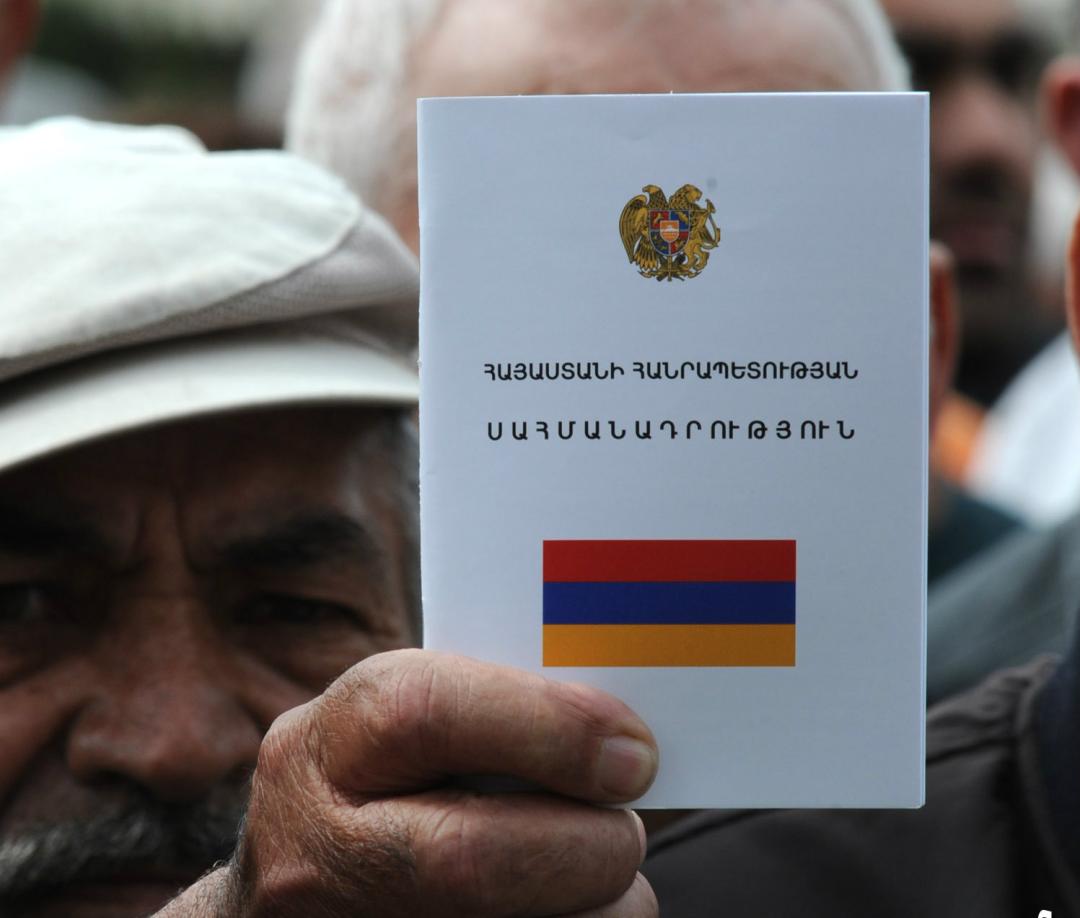
Armenia’s constitutional debate is increasingly intersecting with regional power dynamics, as shifts in governance models and legal frameworks signal the country’s strategic orientation between actors such as Russia, the European Union, and neighboring Turkey. Far from being a purely domestic reform process, constitutional changes carry implications for security alliances, conflict-resolution mechanisms, and the broader balance of influence in the South Caucasus. As such, the outcome of this debate may redefine not only Armenia’s internal political order, but also its role within a rapidly evolving regional geopolitical architecture.
Armenia adopted its first Constitution in 1995, establishing a presidential system. Reforms in 2005 introduced a semi-presidential model, while the 2015 Constitution completed the transition to a parliamentary system, significantly reshaping the country’s political structure. Following the 2018 revolution, Prime Minister Nikol Pashinyan pledged constitutional amendments, calling the system “super-prime-ministerial.” However, the issue was later deprioritized amid shifting political developments, before re-emerging in the context of the Armenia–Azerbaijan peace process and the initialing of a Washington-brokered agreement.
Official Baku insists that constitutional change is a precondition for a peace treaty. President Ilham Aliyev argues that Armenia must remove references in the Constitution’s preamble that, in his view, imply territorial claims over Nagorno-Karabakh and support unification narratives. The preamble itself refers to Armenia’s Declaration of Independence, which is based on the December 1, 1989, joint decision of the Armenian SSR Supreme Council and the Nagorno-Karabakh National Council on “reunification.” It also commits Armenia to supporting international recognition of the 1915 Armenian Genocide in the Ottoman Empire and Western Armenia.
Baku demands the removal of any reference to the Declaration of Independence. At the same time, Yerevan states that the Washington-initialed peace draft includes mutual recognition of no territorial claims and a commitment that domestic law cannot be used to avoid treaty obligations. It also emphasizes that constitutional change is an internal matter. Pashinyan has separately stated that his political force supports removing references to the Declaration of Independence in a new Constitution, describing it not as a declaration of independence but as one of conflict and dependence.
Authorities plan to hold a constitutional referendum after parliamentary elections, though no date has been set. The draft must first pass parliament with a two-thirds majority. According to the Justice Ministry, the draft is complete and under ruling-party review and does not include a preamble referencing the Declaration.
The key question remains whether the referendum will pass and proceed without obstacles. The U.S. Office of the Director of National Intelligence, in its declassified 2026 “Annual Threat Assessment,” also noted that the outcome is uncertain due to potential challenges. Pashinyan has further stated that if the referendum fails, a second vote may be held. Opposition figures and analysts argue the reforms are driven by pressure from Baku and Ankara to remove references to Nagorno-Karabakh and genocide recognition, while the government maintains that constitutional decisions rest solely with the Armenian people.
Against this backdrop, constitutional reforms have become closely linked to efforts to finalize a peace agreement, normalize relations, and redefine Armenia’s position within the regional order. This article examines their implications for the balance of power and long-term stability in the South Caucasus, assessing what this could mean not only for Armenia’s domestic political trajectory, but also for the viability of the peace process and the credibility of externally mediated agreements. From a regional perspective, what impact could the adoption or rejection of Armenia’s new Constitution have? Could failure to approve the draft affect the authorities’ broader regional peace agenda? We sought answers from Armenian expert circles.
Constitutional Uncertainty and Its Impact on the Peace Process
Robert Ghevondyan, a political expert at the ‘Armenian Council’ Analytical Center, said in a conversation with us that if the new Constitution is adopted, it will not include a preamble.This would leave Azerbaijan with no grounds to delay signing the Peace Agreement. As a result, the agreement is expected to be signed, which could also pave the way for progress in other areas.
According to Robert Ghevondyan, the primary direction is the unblocking of infrastructure. It is expected that this will lead to the reopening of transport routes across the region, which would have a tremendous impact on unlocking economic potential. On the other hand, Robert Ghevondyan points to two key conditions for the adoption of the Constitution, both of which appear unlikely to be met, though there remains some possibility.
“The first is securing a constitutional majority in the National Assembly elections—either by the ruling Civil Contract party on its own or in agreement with another political force—so that they can put the issue to a referendum. The second, if that hurdle is overcome, is the referendum per se. During the referendum, it would be necessary to gather around 622,000 votes from those eligible to vote in the June 7 elections, which is also a fairly difficult task—especially given that there will be significant opposition to the adoption of the new Constitution. In my assessment, the chances of the new Constitution being adopted or failing are roughly equal—about 50/50. If the new Constitution does not pass, the processes will most likely continue, but they will proceed much more slowly and with a greater degree of unpredictability”.
Ghevondyan also noted that during the recent bilateral roundtable discussions held in Azerbaijan from April 10 to 12, within the framework of the ‘Bridge of Peace’ initiative and with the participation of civil society representatives from both Azerbaijan and Armenia—discussions in which he also took part—the question was raised as to what Azerbaijan’s approach would be, and how it would prefer to proceed, if the Constitution were not adopted in any way, whether it was not put to a referendum or failed to pass.
“The Azerbaijani participants expressed the view—though this is still just an opinion, not a final decision—that in such a case the Peace Agreement would likely not be signed. However, efforts would be made to advance processes in various areas even without signing the agreement. In other words, there would be some progress on the points already outlined, which means that even in the event of failure, there would still be slow but tangible progress,” the political analyst noted.
As for the likelihood that the Prime Minister of Armenia might put the constitutional referendum to a vote multiple times, the political analyst believes that, procedurally, this would not be so easy for the state. Securing the required two-thirds of the vote each time would be challenging—regardless of whether the ruling Civil Contract party holds that majority on its own or together with another political force. “To form a government, 51 percent is sufficient—that is, they may together have 51 percent. However, when it comes to putting the issue to a referendum, they would need to reach an agreement with another political party. And each time—the second, third, and so on—they would inevitably have to pay some political price in return for doing so. This will be quite difficult.”
And the next obstacle, according to the political analyst, is that the process is quite costly and burdensome for the state in terms of financial and organizational resources.
“The ruling Civil Contract party may choose to pursue this, but regardless of how many times the issue is put to a referendum, the probability will not change. Each time, I assess the chances as 50/50,” the political analyst concluded.
Referendum Risks and the Constitutional Dimension of Regional Negotiations
Our second interlocutor, Gevorg Danielyan—Professor, Head of the Chair of Constitutional Law at Yerevan State University, Advisor to the Constitutional Court of the Republic of Armenia, and former member of the Constitutional Reforms Committee—is convinced that, first and foremost, Armenian society is largely not inclined to accept the view that the authorities have adopted a genuine peace agenda. According to Danielyan, it is more than evident that the political force in power is simply seeking to reproduce itself and remain in office by accommodating the ever-growing demands of Azerbaijan and Turkey—even at the cost of conceding territories, weakening the pillars of national identity, and initiating a campaign against the Armenian Church.
“Linking the entire saga of adopting the Constitution to the peace process is a misguided approach and may, in fact, do more harm than good to that process,” Gevorg Danielyan argues. In response to our question about possible scenarios in the event of a failed referendum (including the prospect of a repeated vote), and what this could mean not only for Armenia’s internal situation but also for the viability of the peace process and the credibility of internationally mediated agreements, Professor Danielyan noted: “First of all, no such agreement has actually been signed; these are merely initialed documents with no legal force. Unfortunately, this clear reality is consistently being ignored by the Armenian authorities, without a proper assessment of the potentially disastrous consequences. I have stated as early as four years ago that the referendum is doomed to fail from the outset. More recently, the intelligence community of the United States—the mediating side—also clearly expressed doubts about the feasibility of the Azerbaijani demand.
The issue is not only the open antipathy toward the unpopular Constitution, but also the fact that the required turnout threshold for the referendum is at least 50 percent of eligible voters. However, due to widespread political apathy, this threshold has never been reached in recent nationwide elections. Moreover, in the 2023 Yerevan City Council elections—where a significant portion of the population is concentrated—voter turnout was only 28.4 percent. Furthermore, the authorities cannot artificially boost turnout by scheduling the referendum on the same day as nationwide elections, as this is prohibited by law”, Professor Danielyan notes. When asked about what Armenia would gain or lose if the reference to the Declaration of Independence were removed from the Constitution, Gevorg Danielyan believes that adopting a new Constitution with such wording—a scenario he considers virtually zero probability—would inevitably lead to a reduction of Armenia’s sovereignty and, in the near future, even to the complete loss of statehood. “That is not a guarantee of peace; rather, as I noted, it will whet appetites and bring to life other already circulating demands, including plans to regard Armenia as ‘Western Azerbaijan’ and, at the initial stage at least, to settle it with around 300,000 Azerbaijanis.”
According to Gevorg Danielyan, the Armenian authorities have, either intentionally or unintentionally, initiated a process that leads to an inevitable deadlock and trap, since if the Constitution is not adopted, Armenia could be characterized as a state that, by virtue of its Constitution, holds territorial claims against a neighboring country. “Unfortunately, these perceptions were also reinforced by the Constitutional Court, as it did not attempt to properly assess the Constitution’s preamble referencing the Declaration of Independence and confirm that it contains no provisions establishing territorial claims. Instead, it advanced the highly controversial thesis that the preamble allegedly has no normative character and therefore cannot produce legal consequences. Even the most basic truth was overlooked—namely, that the preamble is intended to reveal the true intent of the constitution-maker, which is of crucial importance for interpretation. Even the fact was overlooked that the reference was not made to all provisions of the Declaration, but solely to ‘the fundamental principles of Armenian statehood and the national objectives enshrined therein. Ultimately, the Declaration refers solely to the respect for the people’s right to self-determination, which is a well-established principle of international law,” Danielyan notes.
Gevorg Danielyan is confident that, from the outset, by yielding to unfounded Azerbaijani demands, the current Armenian authorities have adopted a policy of presenting them as supposedly justified based on their own narrative and, in turn, implementing them. In his view, this is a direct path leading into a trap. “Accordingly, it is necessary to be guided not by the publicly stated and often changing positions of officials, but by legally binding international treaties, and the Azerbaijani side cannot fail to take this undeniable reality into account,” the constitutional lawyer concludes.
Controversy Over Historical and Territorial References in the Declaration of Independence
Our third interlocutor, political commentator and coordinator of the ANI Armenian Research Center, Tatul Hakobyan, believes that Armenia has made a grave mistake by linking its internal procedures—namely the adoption, amendment, and voting on the Constitution—to the Armenia–Azerbaijan peace process. In his view, Armenia has, in effect, given a commitment to Azerbaijan to amend its Constitution, specifically by removing the reference to the Declaration of Independence from the Constitution’s preamble.
“And if the referendum is not adopted in Armenia—and there is a high likelihood that many people will go and vote against it—I believe this could give Azerbaijan grounds to accuse Armenia of maintaining territorial claims against it and, why not, to attempt a partial incursion into the territory of the Republic of Armenia by using this as a pretext. I am not saying this will happen, but I also do not rule out the possibility that Azerbaijan may try to exploit such a situation,” the political analyst warns. Tatul Hakobyan does not rule out the possibility of a repeated vote or any other procedures, because, in his view, the current Armenian authorities have decided to normalize Armenia–Azerbaijan relations by all means and at any cost. He adds that, in addition to removing the reference to the Declaration of Independence from the Constitution’s preamble, they may also take other steps and could even push it through using falsifications.
“I cannot say in advance that there will be fraud, but I repeat that the stakes are so high that I do not rule out the possibility of it being carried out through falsification. First, we need to see how these elections conclude, and only then will things become clear. After all, people also grow tired of participating in so many elections, and amid a day-by-day decline in the authorities’ approval ratings, holding yet another referendum—which is being conducted exclusively at Azerbaijan’s demand—is significant. However much the authorities may use different wording, the fact remains that it is being done at Azerbaijan’s request. I also do not rule out that Armenian citizens may say ‘no’ simply because it is Azerbaijan’s demand, without even delving deeply into the substance,” Tatul Hakobyan believes.
Tatul Hakobyan recalls that he has been among those who have consistently stated that including historical claims and territorial demands in the Declaration of Independence was a mistake, and he maintains that Armenia made an error in 1990. “In fact, it is a demand, because you are putting history into a legal document, namely, you are referring to the Armenian Genocide, to Western Armenia, and moreover, to the 1989 decision to reunify the Nagorno-Karabakh Autonomous Region (Artsakh) and Armenia. I consider that to have been a political mistake, which is working against Armenia. Therefore, I do not believe that if the people vote in favor of it, Armenia would suffer major losses as a result, because, as I repeat, this is a provision that should not have been included so that it would not be removed now," political commentator concludes.
Looking Ahead
In conclusion, Armenia’s constitutional debate has moved well beyond a purely domestic legal reform and now sits at the intersection of internal politics and regional geopolitics. The proposed changes—particularly those concerning references to the Declaration of Independence—are increasingly viewed not only as constitutional adjustments, but also as elements linked to the broader Armenia–Azerbaijan peace process.
While the authorities present the reform as a sovereign initiative aimed at institutional modernization and normalization of relations, critics argue it risks being shaped by external pressures and becoming politically instrumentalized. At the same time, assessments differ on the consequences of a potential referendum failure, ranging from slowed reform momentum to increased uncertainty in the regional peace framework.
Ultimately, the constitutional process has gained significance far beyond its legal scope. It has become a test of political consensus, public trust, and Armenia’s strategic orientation. The outcome of a future referendum will therefore carry implications not only for domestic governance, but also for the credibility and stability of the evolving peace architecture in the South Caucasus.
Contributed by Anna Vardanyan, an Armenian political journalist and researcher with over 18 years’ experience in defence policy, international relations, and security in Eastern Europe and the Caucasus, has worked for Armenian media and held advisory roles in the National Assembly of Armenia.
Insights,
Politics,
Armenia |
EU, Russia, Nikol Pashinyan, Tatul Hakobyan, Anna Vardanyan, Robert Ghevondyan, Gevorg Danielyan