
Azerbaijan and Ukraine Relations Ahead of URC2025
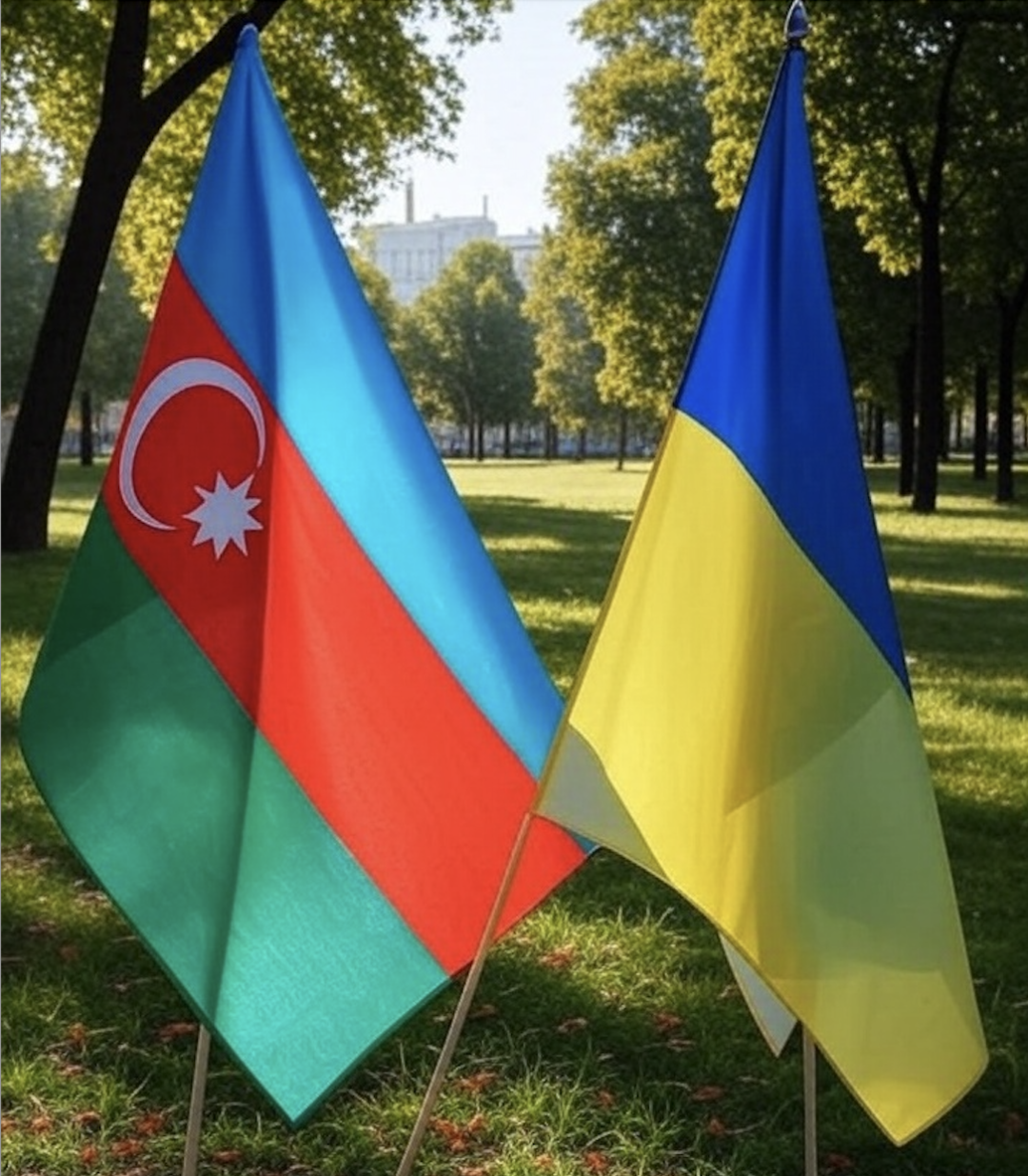
Relations between Azerbaijan and Ukraine remain strong and consistent since their independence. The wars affecting both nations have not weakened this bond; rather, they have reinforced it. Azerbaijan is the primary provider of aid to Ukraine among CIS states. New aid packages and high-level meetings in 2025 signal a renewed commitment to cooperation, which will likely be further solidified by Azerbaijan’s participation in the Ukraine Recovery Conference 2025, scheduled for July 10–11 in Rome.
Azerbaijan-Ukraine Relations
Azerbaijan and Ukraine established diplomatic relations on February 6, 1992, when Azerbaijan officially recognized Ukraine’s independence. This marked the start of a close strategic partnership. By the mid-1990s, both nations had opened embassies—Ukraine in Baku (1996) and Azerbaijan in Kyiv (1997). The relationship grew steadily, particularly after 2001, when Azerbaijan and Ukraine co-founded GUAM with Georgia and Moldova to promote economic and regional cooperation.
High-level exchanges have been frequent. President Heydar Aliyev visited Kyiv multiple times between 1997 and 2004, while Ukrainian Presidents Leonid Kuchma and Viktor Yushchenko made state visits to Baku. More recently, Presidents Ilham Aliyev and Volodymyr Zelenskyy have strengthened ties. Zelenskyy visited Baku in December 2019, and Aliyev made a working visit to Kyiv in January 2022. In 2023, both leaders met at the European Political Community summit in Moldova. Key agreements, including the 2000 Treaty on Friendship and the 2022 Joint Declaration, have solidified their partnership.
Throughout regional conflicts, the partnership has remained steadfast. During the Second Nagorno-Karabakh War in 2020, Ukraine reaffirmed its support for Azerbaijan’s territorial integrity. Azerbaijan reciprocated following Russia’s full-scale invasion of Ukraine in 2022, providing not only verbal support but also significant humanitarian aid, including power generators, medical supplies, and essential goods for front-line soldiers, Kyiv residents, and Ukrainian refugees in Moldova.
Azerbaijani diplomatic missions in Ukraine were affected by Russian attacks. The Azerbaijani embassy in Kyiv sustained damage from an explosion in a nearby residential building, causing shattered windows and structural cracks. Similarly, the honorary consulate in Kharkiv was damaged.
In response to the forced involvement of Azerbaijani citizens in Russia’s military efforts, Azerbaijan took decisive diplomatic action. In 2024, three Azerbaijani nationals—Nihad Rzayev, Elkhan Shirinov, and Vugar Maharramov—were detained in Chechnya for allegedly crossing borders illegally and were subsequently sent to the war zone. In September, Azerbaijan sent a formal note to Russia’s Foreign Ministry demanding answers. While Russia has faced criticism for using prisoners as cannon fodder, the forced conscription of foreign nationals with military obligations to their home countries is a distinct and serious violation. Azerbaijan successfully secured the return of its citizens from the conflict zone.
Azerbaijani Aid in 2025
In January, President Ilham Aliyev met with Ukrainian President Volodymyr Zelenskyy in Davos to discuss political, economic, and humanitarian ties, focusing on energy cooperation and regional security. Zelenskyy offered condolences for the December Azerbaijan Airlines crash and stressed the need to pressure Russia for transparency. Aliyev updated him on the investigation. The meeting also emphasized boosting bilateral trade and energy collaboration. Zelenskyy thanked Azerbaijan for its humanitarian support, including energy aid, rehabilitation programs for children, demining assistance, and the involvement of Azerbaijani companies in reconstruction and investment projects.
Following the meeting, President Aliyev signed a decree in early February allocating $1 million from the presidential reserve fund to the Ministry of Energy for humanitarian aid to Ukraine. The funds were designated for purchasing and delivering Azerbaijani-made electrical equipment. On February 7, 2025, Azerbaijan dispatched a shipment of humanitarian aid, including cables, wires, and transformers, from Sumgait Technologies Park to support the restoration of electricity in war-damaged Ukrainian regions. According to Azerbaijan’s Ministry of Energy, the total assistance to Ukraine now exceeds $40 million, including approximately 120 transformers and transformer stations, 70 generators, and over 3.3 million meters of cables and wires. The Ministry shared a press release and video reports from Azerbaijani TV channels on its Facebook and X accounts, underscoring Azerbaijan’s commitment to supporting Ukraine through humanitarian relief and infrastructure aid. Dialogue continued with a meeting in April in Baku between Ukraine’s Ambassador to Azerbaijan, Yuriy Husyev, and Azerbaijani Deputy Foreign Minister Samir Sharifov.
Azerbaijani View on War and Peace
On April 9, President Ilham Aliyev participated in an international forum titled “Facing the New World Order” at Baku’s ADA University. Commenting on Russia’s war in Ukraine, Aliyev emphasized that no country would realistically sacrifice its territorial integrity for peace, describing such expectations for Ukraine as unfair and unrealistic. Drawing on Azerbaijan’s experience with Armenia, Aliyev noted continued hostilities despite a 1994 ceasefire, including the 2016 clashes that showcased Azerbaijan’s military capability to reclaim territory. He argued that sustainable peace requires resolving core territorial disputes and rejected the notion that Ukraine could cede its internationally recognized lands, which Azerbaijan fully supports. Aliyev expressed skepticism about peace prospects between Ukraine and Russia, stating: “[…] regarding our position on the war between Russia and Ukraine, we have always supported and will continue to support Ukraine’s territorial integrity and sovereignty. As a country that has suffered from occupation and the undermining of our territorial integrity, we fully understand this situation. Everyone will say, ‘We want the war to stop immediately.’ Yes, we also want that. However, the key question is how, and whether this ceasefire—or a potential temporary ceasefire—will be sustainable. As a country that has experienced two active wars with a period in between, I can tell you that a ceasefire never stops a war. It’s just temporary relief for countries to regroup, mobilize, and start again. Second, what does a ceasefire mean? This is also important because these terms are critical for those who want to help stop the war to clearly understand what we’re talking about. Everyone will say, ‘I want the war to stop.’ Yes, let’s applaud. Then what? Does it mean there’ll be no artillery, no air bombardments, no sniper fire, no sabotage groups? […] I, personally—being a realist—do not see, in the foreseeable future, any prospect for peace between Ukraine and Russia. Russia has declared occupied territories as part of Russia. How can they step back from that? Ukraine considers, as does the whole world, these occupied territories as part of Ukraine, and Azerbaijan considers them as part of Ukraine. How can they sacrifice and say, ‘No, it’s not part of Ukraine’? If that happens, then I understand nothing about international politics. Unfortunately, wars end when there is a final capitulation act.” In essence, Aliyev compares the war processes, highlighting the risks of a ceasefire, like the one after 1994 in Karabakh, rather than a peace aligned with international law.
He does not view the two conflicts as comparable, recognizing Ukraine’s territorial integrity and rejecting comparisons between Azerbaijan’s Karabakh reclamation and Russia’s so-called special military operation. Azerbaijan’s Foreign Ministry recently reiterated this stance in response to Russian statements.
In June, Vladimir Medinsky, aide to Russian President Vladimir Putin and head of the Russian delegation in talks with Kyiv, compared the Karabakh conflict to Russia’s war in Ukraine in an interview. Medinsky warned that without a full peace agreement, unresolved conflicts like Karabakh could create “gigantic” frozen disputes, potentially leading to broader conflict, including nuclear war. Azerbaijan’s Foreign Ministry strongly rejected Medinsky’s statements, calling them regrettable and surprising. They emphasized that Karabakh has never been a disputed territory but an integral part of Azerbaijan, a fact recognized by Russia. The Ministry criticized Medinsky for misrepresenting the Karabakh conflict and Russia’s official position, noting that Azerbaijan has never violated another country’s territorial integrity or waged an aggressive war. They described Azerbaijan’s 2020 and 2023 military actions as legitimate efforts within its sovereign territory. Azerbaijan urged Medinsky to refrain from inaccurate claims that harm interstate relations and stressed the inappropriateness of equating Azerbaijan’s lawful defense operations with Russia’s aggression against Ukraine.
The Russian news agency RIA Novosti quoted an “informed source” stating that Moscow expects Baku, given the allied nature of Russia-Azerbaijan relations, to adopt a more balanced position on Ukraine and recognize the legitimacy of Russia’s claims to Crimea, Sevastopol, the DPR, LPR, Zaporizhia, and Kherson regions, just as Russia does not question Azerbaijan’s sovereignty over Karabakh. Given Baku’s firm stance, this is unlikely, and Azerbaijan and Moscow will likely remain at odds on this issue while Azerbaijan continues to strengthen its bilateral relations with Ukraine, consistent with its support for Ukraine’s territorial integrity.
Ukrainian Foreign Minister in Baku to Prepare for URC2025
In May, rumors circulated about an upcoming visit by Ukraine’s Foreign Minister Andrii Sybiha to Azerbaijan. Political scientist Farhad Mammadov noted that Azerbaijan leads CIS countries in humanitarian aid to Ukraine and has significant investments in Ukraine’s economy. This visit, the first regional ministerial trip in three years, underscores Azerbaijan’s importance as a partner. The visit was expected to irritate Moscow, but Mammadov recalled that during Armenia’s occupation of Azerbaijani territories, Russia formalized a military-political alliance with Armenia, which joined the CSTO and received Moscow’s support.
Russian Foreign Minister Lavrov’s recent statement that Armenia used Russian weapons to occupy and retain Azerbaijani territories is telling. Lavrov also confirmed that Russia sought to defer the “status” of Karabakh to “future generations.” Mammadov concluded that Russia cannot demand consistency from Azerbaijan in mutual relations when Moscow itself has not demonstrated such consistency over decades and continues to fall short.
On May 25, President Ilham Aliyev met with Foreign Minister Andrii Sybiha in Baku to discuss bilateral relations and ongoing cooperation. Sybiha conveyed greetings from President Volodymyr Zelenskyy and expressed gratitude for Azerbaijan’s humanitarian aid, particularly for rebuilding efforts in Irpin and its support for Ukraine’s territorial integrity and sovereignty. Aliyev affirmed continued humanitarian assistance and mutual support for sovereignty. Discussions covered energy, renewable energy, transport, trade, and agriculture. Sybiha emphasized the importance of ending Russian aggression and establishing lasting peace, thanking Azerbaijan for its support during Ukraine’s winter energy crisis. Both leaders highlighted strengthening the strategic partnership, with Azerbaijan’s planned participation in the Ukraine Recovery Conference in Rome as a key step in supporting Ukraine’s reconstruction.
The Ukraine Recovery Conference 2025 (URC2025), scheduled for July 10–11 in Rome, continues the annual series dedicated to Ukraine’s recovery and long-term reconstruction following Russia’s invasion. Co-hosted by Italy and Ukraine, the conference will gather governments, international organizations, financial institutions, businesses, and civil society to coordinate efforts for Ukraine’s resilience and reconstruction. URC2025 will focus on four thematic areas: business, human, local and regional, and EU integration, encompassing energy, infrastructure, green recovery, healthcare, and education. A Recovery Forum and a Business Fair will also be integral to the event.
Given Ukraine’s priorities and the four thematic areas of URC2025, Foreign Minister Sybiha held significant meetings with Azerbaijan’s Minister of Economy Mikayil Jabbarov and Foreign Minister Jeyhun Bayramov. Jabbarov focused on boosting economic ties, organizing business missions, and enhancing trade through improved transport corridors. Bayramov emphasized discussions on trade, energy, transport connectivity, humanitarian assistance, and demining, stressing sustained high-level political dialogue and multilateral cooperation. Sybiha described the meetings as productive, focusing on expanding collaboration in political, economic, trade, and energy sectors, alongside Black Sea and Caspian region security. Plans were made for a Joint Intergovernmental Commission on Economic Cooperation and a Ukrainian-Azerbaijani business forum alongside URC2025. Sybiha also discussed Ukraine’s EU accession progress and opportunities for Azerbaijan, emphasizing the restoration of pre-war trade levels and the involvement of Azerbaijani companies in Ukraine’s post-war reconstruction, seen as a major 21st-century investment opportunity.
After his rare Caucasus visit, Sybiha posted on Facebook about its strategic and emotional significance, noting it occurred amid intense Russian attacks on Ukraine. Despite initial doubts, the visit proceeded due to Azerbaijan’s critical role in strengthening Ukraine’s resilience, particularly in the energy sector, and advancing peace efforts among Turkic and Islamic nations.
Ukraine and Azerbaijan aim to deepen their strategic partnership, with Ukraine positioned as a key transit hub for Azerbaijani gas to Europe. Discussions highlighted the growing presence of Azerbaijani businesses in Ukraine and investment protection despite the conflict. Sybiha’s visit also honored shared sovereignty struggles. Cooperation on demining, leveraging Azerbaijan’s expertise, was a key focus, laying the foundation for post-war collaboration and investments.
Contributed by Dr. Marilisa Lorusso
Insights,
Politics,
Azerbaijan |
Vladimir Putin, Ilham Aliyev, Volodymyr Zelenskyy, Russia-Ukraine War, Azerbaijan-Ukraine Relations, Marilisa Lorusso