
From War to Highways: How Armenia and Azerbaijan Could Reconnect the Region
Introduction
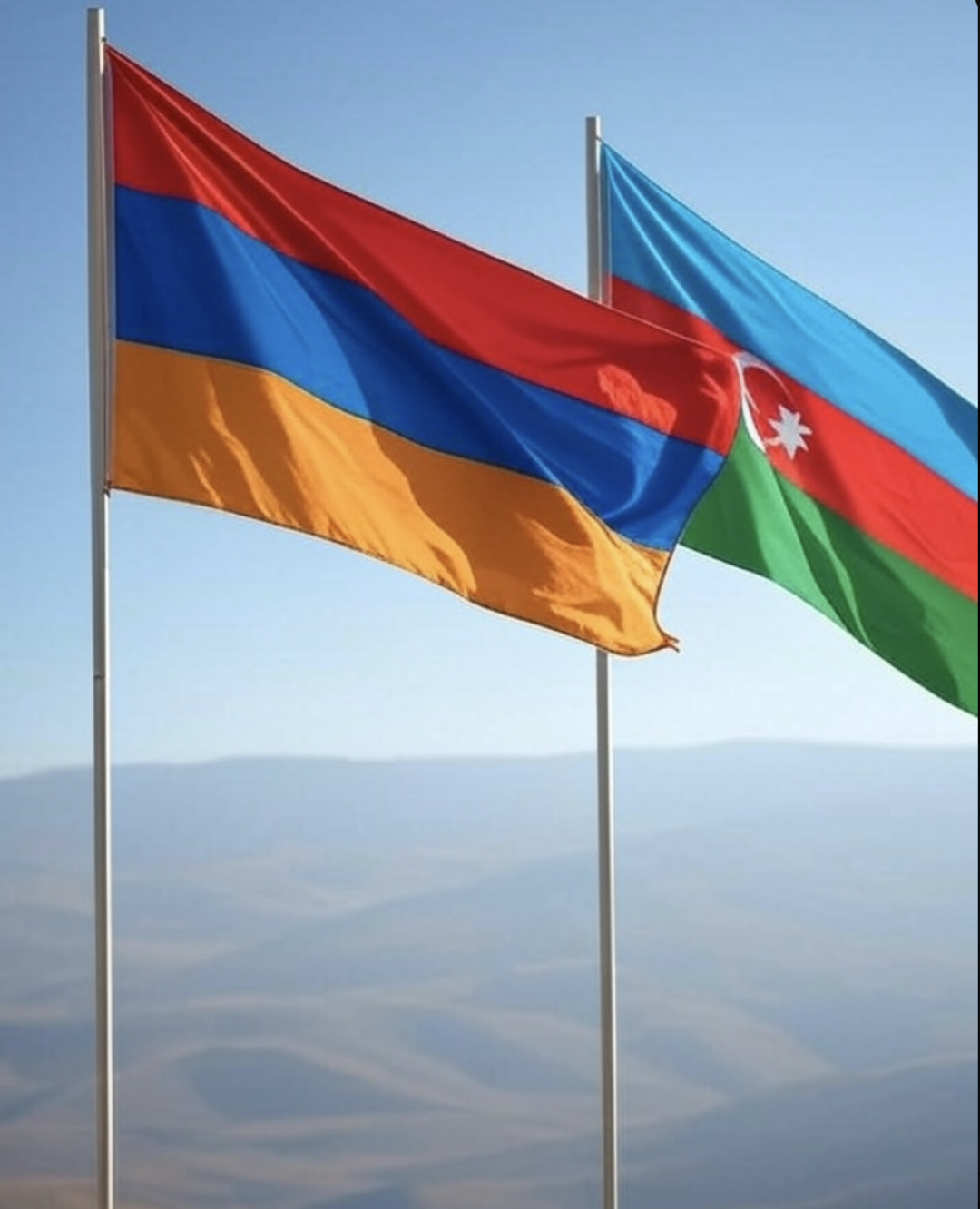
On November 10, 2020, the presidents of Azerbaijan and Russia, along with the prime minister of Armenia, signed a trilateral statement marking the end of the 44-day war. As part of this agreement, all transit routes that were closed due to the conflict in Karabakh are to be reopened. This development drew attention to the proposed Zangezur corridor (recently labeled as the "Trump Route for International Peace and Prosperity"). Azerbaijan has been concentrating its efforts on opening this link, which is planned to comprise motorways and rail links running through Armenia's Syunik region.
According to Article 9 of the November 10 agreement, "all commercial and transportation connections in the region will be unblocked. The Republic of Armenia shall ensure the security of transportation connections between the Republic of Azerbaijan's western areas and the Nakhchivan Autonomous Republic in order to facilitate unrestricted movement of people, vehicles, and goods in both directions.”
Almost five years later, both countries signed a landmark Washington Agreement on August 8, accompanied by a joint declaration. This declaration emphasized the need to continue efforts toward the signing and final ratification of the peace agreement, mediated by United States President Donald Trump. Analyzing both the November 10 and August 8 agreements, it is evident that addressing security concerns and restoring economic links through the reopening of transportation corridors are critical steps for fostering confidence, stability, and long-term peace in the post-war period.
This newly-gained access to alternative markets is expected to boost the economic potential of the transit regions in both Armenia and Azerbaijan. Furthermore, regional actors and the local population along this route could accrue significant economic benefits through deepening inter-state exchanges. Azerbaijan’s potential gains from this plan are quite obvious, especially since the route aligns with the "Middle Corridor"—a critical component of China’s "Belt and Road Initiative". Therefore, the broader implications of this agreement for the latter should also be discussed.
Benefits and Drawbacks for Regional Countries
Armenia
Armenia, like other states in the region, may benefit from the establishment of the Trump Route. To begin with, the corridor's opening will help Armenia to break free from its economic isolation. It is a well-established fact that Yerevan has long been devoid of access to a safe and sustainable land route to Russia, its primary economic partner, due to closed borders with Turkey and Azerbaijan. In the first half of 2025, the trade turnover between Armenia and Russia was about
$3.406 billion, and Russia was Armenia’s largest foreign trade partner. There has been no railway link between Armenia and Russia since the start of the Armenia–Azerbaijan conflict. The Upper Lars highway, which passes through Georgia, has been the only land route connecting Armenia with the Russian market. However, this route created delays in the delivery of products from Armenia to Russia and vice versa since it travelled through geographically challenging terrain and had to be closed during the winter. Furthermore, political tensions between Georgia and Russia have further strained Armenia’s ability to reach external economic partners. In August, even Armenian Economy Minister Gevorg Papoyan noted that in the event of a conflict between Armenia and Azerbaijan, for example, China and European countries, which exchange millions of cargo, will be directly involved and interested in a quick resolution of the situation, as their economic interests are at stake and the launch of this road will be another factor in ensuring security.
The conflict between Armenia and Azerbaijan also resulted in the termination of railway connections to Iran. The railroad that connected Armenia and Iran through Nakhchivan was blocked at the start of the First Karabakh War (1988–1994). Because it travels through mountainous terrain, the highway that continues to be utilized for transit between Armenia and Iran is inefficient for transportation. Armenia wanted to build an auxiliary railway to Iran through the Meghri region during the conflict, but the exorbitant construction costs made this unfeasible. The railroad's cost of construction was estimated to be between $3.5 and $5 billion. Yet, if the Tramp Route is opened, Armenia and Iran will be able to restore their railway link, along with participating in the International North-South Transport Corridor (INSTC). As a result of the establishment of the TRIPP, Armenia will be able to end its economic isolation and regain access to Russia, Iran, and the Eurasian Economic Union. If the route is established, it would spur the development of additional highways, which would benefit Armenia directly. As the country's political situation improves and the benefits of opening the Trump Route and other highways become clear, Armenians' attitudes about the corridor may alter, given that Yerevan will become more open to U.S. support, and it aims to build economic relations with Turkey.
Speaking of drawbacks, the agreement would limit Armenia’s ability to control Baku's movements through its territory, considering the joint management of the route. Moreover, the plan also exacerbated already heightened domestic political and social inconvenience and played into the hands of the opposition, who blamed the current Pashinyan government for the further loss of sovereignty and rights over part of the Syunik region. Additionally, Armenia hopes for the normalisation of relations with Türkiye after Azerbaijan's approval and meeting its demands from Yerevan. However, it can face a lot of obstacles, the clash over the Armenian Genocide narrative in both countries' societies being one of them, and internal opposition is another. It is worth remembering that the relations between Armenia and Azerbaijan remain tense, and it could potentially hinder the level of rapprochement between Ankara and Yerevan to the level the current government wants it to be in the future. Considering the declining power of the Kremlin in the region, especially in Armenia, the internal opposition remains concerned about Türkiye's high-level influence in the country and the non-existence/low-level existence of Russia as a balancing actor.
All these details, disadvantageous claims, and negative possibilities stemming from the agreement, as well as the launch of the Tramp route, will negatively affect society's support for Nikol Pashinyan's policies. In the June poll, the Armenian Prime Minister’s approval rating decreased to 13% and this shows a drop from 16% one year earlier. Despite Foreign Minister Ararat Mirzoyan ranking second with 5%, followed by former President Robert Kocharyan with 4%, the businessman Samvel Karapetyan, who newly formed a political union around and entered the list of favorites for the first time, gained 13.4% and showed a 10.6% rise in popularity in the September poll compared to 17.3% support for Pashinyan. Moreover, the September poll showed that about 60 percent of Armenia’s citizens are against the Trump Route plan. 17.4 percent of respondents viewed it positively, 18.1 percent said it was rather positive, while 14.3 percent said it was rather negative, with 47.6 percent finding the proposal completely negative. This situation would tempt Russia to prevent Pashinyan's further policies that are not coordinated with Russia or considered the Kremlin's opinion by supporting the opposition either openly or covertly, as Karapetyan himself and the majority of Armenian opposition support strong ties with Moscow and inclusion of it in the final plan of the route management.
Georgia
Georgia has long served as a crucial link in the transit of Azerbaijani energy resources and other export items to Turkish and European markets in recent decades. In terms of connectivity, Azerbaijan had to use Georgian territory to access Türkiye and the Black Sea area. This allowed Georgia to profit economically, improve its standing in the area, and establish itself as a significant player in the movement of commodities along the South Caucasus' international transportation routes.
The opening of the Trump Route has significant geopolitical implications for Georgia’s standing in the region. For some, the corridor's realization is not meant to diminish the importance of the roads that run through Georgia; rather, it's meant to expand the region's transportation network. Azerbaijan and Türkiye will not forsake transportation projects with Georgia in which they have significantly invested. These highways are difficult to replace; thus the TRIPP will serve as a supplement to the region's primary transportation arteries rather than a competitor. Depending on the eventual destination of the cargo transit, both routes will be used when the corridor opens. Georgia, on the other hand, will continue to play an essential role as a transit country for Azerbaijan's energy resources even if all communications links in the area are restored. The completion of the Southern Gas Corridor, in particular, demonstrates that Georgia's position as a regional middleman will continue in the long term.
A day after the Washington Agreement, Georgian Prime Minister Irakli Kobakhidze congratulated the Presidents of the U.S. and Azerbaijan, and the Prime Minister of Armenia on closing a landmark peace deal. However, the official statements from the Georgian officially mostly lacked the mention of the Tramp route. Mikheil Saakashvili, the former President of Georgia, issued strong criticisms of the TRIPP plan. He called TRIPP a “geopolitical catastrophe” for Georgia, warned that it will strip Georgia of its role as a regional transit hub, which has been an important part of its economy, foreign policy leverage, and stability and noted that plan would cause Georgia to drift into geopolitical isolation, aligning more with Russia and Iran (in a negative sense), as new routes bypass Georgia. Due to its location at the crossroads of trade (Türkiye, Azerbaijan, Central Asia, and Europe), the country already enjoys an advantage. If TRIPP allows a new route to bypass Georgia (with the route between Azerbaijan and Nakhchivan being the most critical), some of that transit trade may be routed through Armenia. This would result in a decrease in Georgia's transit revenues and logistics business. Consequently, U.S. and regional attention could be redirected towards Armenia's South (Syunik), at the expense of Georgia's significant role in some infrastructure and trade networks.
Russia
From the standpoint of the Kremlin, the worsening of Russian-Georgian ties following the 2008 conflict has severely restricted Russia's capacity to establish a land connection with Armenia. Russia was unable to build long-term land routes to Armenia, its only ally in the South Caucasus, due to the shutdown of the Abkhazian railway and problems with the Upper Lars highway. Because of these issues, Russia had to rely on Iran for the transit of supplies to Armenia, particularly military weapons. As a result of this corridor, Russia will have a direct connection to Armenia via Azerbaijan, allowing it to build more feasible long-term commercial ties with Yerevan. Through a new corridor that will serve as an alternative route to the Middle East, Russia will have extra access to Iran.
In spite of this, the route will certainly pose a number of strategic and geopolitical risks to Russia's influence in the region. It is through the promotion of this route that the US consolidates its political position in the South Caucasus and further enhances its role as an external guarantor of normalization between Armenia and Azerbaijan. This initiative has reduced Moscow's ability to exert its traditional influence over regional transit and border arrangements. Investments by the United States in these sectors are expected to not only generate profit opportunities but also prove to be a tangible assurance that the United States will continue to engage in these sectors. Additionally, this plan sends a strong signal to other countries, since it replaces the Russian-managed "Zangezur corridor" under FSB control with a U.S.-managed route. As a result, Moscow is effectively excluded from the region. Despite the fact that Armenia has gradually taken over control of its borders from Russian personnel, it is not yet ready to abandon the EAEU in light of its economic dependence on Russia. Tramp routes can assist Armenia in reducing its dependence on Russia and accelerating its economic diversification. Even though doing it without institutional preparation and political consensus is difficult, it still poses a threat to Russia's future in the country.
The Kremlin already voiced its concerns about the "TRIPP" project. In August, the Russian Foreign Ministry noted that it plans to study the details of the Trump Route and The involvement of extra-regional forces in the South Caucasus in this case should contribute to the advancement of the peace agenda, and not create new problems and new dividing lines highlighting Armenia’s membership in the Eurasian Economic Union and the presence of Russian border guards in the Syunik region as the important factors. The northern neighbour will try to get into the consortium and accompany it by active participation from regional countries, particularly itself and by doing this control the possible development of the project in the future by limiting other actors’ influence in the region.
Iran
Iran has been a vocal proponent of the Persian Gulf–Black Sea Transport Corridor in recent years. The primary issue with this project was the lack of a long-term transportation link between Armenia and Iran. Through the planned transit corridor, Iran wants to get access to the Black Sea via Armenia and Georgia, avoiding Azerbaijan and Turkey's main regions. The reopening of the Trump Route and the establishment of a railway link with Armenia may provide Iran with chances to carry out this project. Moreover, the Lagan port project, the repair and expansion of Iranian ports in the southern part of the Caspian Sea, and other transportation infrastructure projects implemented by Russia and Iran in recent years demonstrate that Russia and Iran are working to reduce their reliance on Azerbaijan within the North-South corridor. Because Russia's Caspian ports ice in the winter, it is reliant on Azerbaijan's land routes. As a result, the reopening of the railway between Iran and Armenia will help Iran and Russia reduce their reliance on Azerbaijan.
There was a lack of support for the Tramp route plan among the Iranian authorities. Besides Tehran's opposition to any "corridor" through Armenia, they even threatened to block it as a security risk contributing to instability in the region. After Armenia's instant diplomatic visits to assure Iran that the route will not pose a threat to the country, the Islamic Republic has changed its position. In spite of this, the Iranian government continues to oppose any foreign military presence in the South Caucasus, as well as the involvement of an American company in the implementation of the project. The Tehran government is concerned of the route being used by the American companies to make surveillance against Iran in the future. Recent US and Israeli attacks on Iran pushed these security concerns to the next level. Moreover, the route is viewed by Iran as an opportunity for Turkey to expand its geopolitical influence over the Turkic world, causing Tehran to be concerned about the rise of Azerbaijan's power, which it views as a challenge to its historical position. Tehran is wary of Turkic nationalism potentially inciting separatism among its Azerbaijani minority.
Türkiye
The establishment of the Trump Route will provide Türkiye with significant benefits. The corridor would offer Türkiye a direct land connection to Azerbaijan. The country had a direct land link to Nakhchivan, but not to Azerbaijan’s other regions. As a result, transportation links with Azerbaijan were constructed across Georgian and Iranian territory, increasing the distance and transit expenses. Türkiye needs the Trump Route not just to gain access to Azerbaijan, but also to build a shorter route to Central Asia through the Caspian Sea. Türkiye will also be able to reduce its reliance on Iran with the inauguration of the TRIPP, as it will shift the cargo transit from Iranian territory to Azerbaijan. Its position in the area will be considerably strengthened, and its influence will grow with the opening of the Trump Route. Türkiye would benefit from the opening of the border as it would gain direct access to Armenia's emerging transit routes, strengthening its ties with the South Caucasus. In both countries, this shift may transform their frontier into a nexus for trade, energy, and political dialogue, providing an anchor for a more sustainable regional order.
As a result of the recent groundbreaking, the Kars-Dilucu project has been officially launched with a four- to five-year completion timing, but some are questioning whether the groundbreaking signifies the actual construction or if it is just a political gesture. Ankara issued tenders in late 2024 for consultants to assist in the design of the Kars-Dilucu route, however, no contracts have been awarded to the consultants, and no tenders for construction have emerged as yet. The project is estimated to cost $3.4 billion, with only $61 million allocated to the project as of now. This includes $50 million in external credit. However, substantial financing appears to be in place, as Ankara recently secured a €2.4 billion package led by Mitsubishi UFJ Financial Group, involving several international credit agencies, though confirmations are still pending.
Economic Gains Versus Strategic Risks for Central Asias
While it would be premature to discuss the positive implications of the agreement for the Central Asian region, it is worth mentioning possible advantages for the countries beyond the Caucasus. Considering Georgia’s recent diplomatic manoeuvres with Russia and China, new deep-sea port at Anaklia that will be built by Chinese firms, Georgian route for the Middle Corridor running close to Russian troops stationed in the separatist South Ossetia, this route can be problematic in the upcoming years or decades in case the relations would become more tense with the United States and it will be felt in the Central Asia as well. Having at least an alternative route reaching the European countries through Azerbaijan, Armenia and Turkey could ease the leverage of Georgia and mitigate the risks that would occur in the future. As the Central Asian countries are reaching critical minerals, the United States is getting more interested to secure the route for the future trade agreements. This route also will increase the interaction in terms of trade with Türkiye that has been willing to have more influence in the Central Asia region. The Central Asian countries may benefit from this plan to diversify their trade and political relations in the region by reaching Europe with the help of Türkiye. If implemented as planned, the route would bring more Turkish investment to the region.
However, it should be noted that the increase of Turkish influence in the region can lead to more strained relations with Iran and Russia that see these developments as a security threat to itself. Moreover, the current railroad between Baku, Tbilisi, and Kars is running at less than 20% capacity. Nonetheless, the Turkish government is building a railway from Kars to the border of Nakhchivan, according to the estimations, the capacity of that railway will only be 2 million tons per year. This means that the Middle Corridor is not without errors and difficulties for the Central Asian countries. Even though the American government would financially and politically support it, the regional countries would act cautiously in order to avoid any open clash with Russia and making the Kremlin think that it loses the leverage in the region would lead to domestic problems in the countries, as they are economically and politically connected to Russia-led EAEU and CSTO. Considering possible delays in cargo because of weather, receding shorelines, and lack of ships, the corporate habits towards the Northern route despite strained EU-Russia relations, it still includes lots of possible risks.
What China Will Gain?
Starting in Southeast Asia and China, the Trans-Caspian International Transport Route passes through Kazakhstan, the Caspian Sea, Azerbaijan, Georgia, Turkey, and on to Europe. The dramatically changing geopolitical and geoeconomic structure of the region has provided new prospects for the growth of routes connecting Asia and Europe within the Middle Corridor. Azerbaijan, along with other Middle Corridor partners connecting Asia and Europe, may help achieve a greater balance between the eastbound and westbound train traffic, which has been a major goal of New Silk Road operators. The Belt and Road Initiative that aims to reduce China's reliance on US-controlled supply chains, redraws the Eurasian transport map by reinvigorating the Silk Road through the South Caucasus, among other things. This is a feasible alternative to existing sea lanes for China, whose maritime transit is constrained by the so-called "First Island Chain," which runs from the Kamchatka Peninsula to the Malay Peninsula. As a result, Azerbaijan's transport logistics capability, along with other transcontinental route partners, is capable of carrying comparably high-value-added commodities that are the most important EU exports to East Asia.
China must be concerned about the current tensions among Belarus, Russia, Iran, US and Europe as the primary railways connecting China and Europe travel through Russia and Iran, and China is obviously interested in diversifying these routes. All of these might entice Beijing to use the Trump Route and strengthen the Middle Corridor. However, there is an essential point to be made here. Although the Trump Route provides a shorter route to Europe than routes through Russia, it is more essential for China that freight transit is not delayed and goods be delivered with few impediments. When products from China arrive in Europe via the Russia-Belarus-Poland or Kazakhstan-Russia-Belarus-Poland routes, for example, they transit through a single customs area. That is, the majority of the delays occur on the Belarusian-Polish border. Cargo travelling via the Trump Route will be subjected to a variety of customs procedures. To make the TRIPP more appealing to China than routes that travel via Russia, all barriers and delays in the transit of products must be removed, and freight traffic between the nations participating in the corridor must be optimized to the fullest extent possible. In this context, China’s increasing involvement in the industrialization of the South Caucasus and investments in connectivity projects may add a new impetus for the further opening of transport links within the region.
Nevertheless, the TRIPP plan is increasingly being framed as a strategic alternative to China's Belt and Road Initiative by forging a geopolitical counterweight to China's hegemony over the region, echoing Washington's overall efforts to counter Beijing's expanding reach over Eurasian trade and infrastructure networks. The TRIPP corridor would fall under the U.S.-led supervision, which could pose potential challenges for Chinese interests, such as limitations on decision-making power, exposure to foreign regulatory policies, and the risk of disrupted trade if affronts between the U.S. and China grow bolder. China's current web of trade corridors already consolidates much of its clout over Eurasian logistics. The Middle Corridor, which spans Central Asia, the Caspian Sea, and the South Caucasus, has emerged as a primary connector joining Chinese producers with the markets of Europe. This corridor was recently superseded by the inauguration of the China-Kyrgyzstan-Uzbekistan Railway, a high-profile infrastructure plan for cutting transit time, reducing expenses, and increasing trade effectiveness. These plans enable China to retain a considerable amount of leverage over the movement of goods while, at the same time, forging strategic alliances with regionally based countries. Despite the hypothetical advantage of a supplemental east-west corridor like TRIPP, Beijing is likely to perceive the U.S.-led corridor as a vantage for strategic competition rather than cooperation.
Conclusion
Unblocking the communication roads in the region, especially TRIPP, could open up new economic possibilities and contribute to an eventual peace agreement between Armenia and Azerbaijan based on mutual recognition of territorial integrity. The two countries may open a new chapter in bilateral relations and put an end to the animosity via economic cooperation. It could also be in the interest of neighbouring major powers to have a stable South Caucasus on their doorstep so that they can focus their attention on the other regions.
Central Asian countries and China could utilize the route to make supply chains more diverse and to expand trade connectivity to Europe, but operational and bureaucratic hurdles may limit its utility in the short term. The corridor signals greater external power engagement in the South Caucasus, especially by the United States and Turkey, which could potentially realign regional power relations and diminish Russia’s historical influence. In sum, the Trump Route is a case study of the interface of economic considerations and strategic competition in Eurasia, which will require more careful coordination of both regional and extra-regional actors to fully realize this potential.
When it comes to external powers such as the U.S., the European Union, and China, the opening of transport lines between Armenia and Azerbaijan may offer new geo-economic and geopolitical opportunities for their engagement with the South Caucasus. Among them, the EU looks the best-placed to offer its expertise on putting conflicts behind and charting a whole new future based on economic cooperation while the US provides financial opportunities for both countries. On the basis of the coal and steel analogy, Azerbaijan and Armenia could come together to build a complementary economic cooperation system that could later spill over to the other spheres of bilateral relations.
About author: Ziya Kazimzada is a board member of the Milliyyet Research Center and is currently pursuing his master's degree at Masaryk University.
Insights,
Politics,
Armenia, Azerbaijan |
China, Russia, Turkey, Iran, Robert Kocharyan, Nikol Pashinyan, Central Asia, USA, Samvel Karapetyan, Donald Trump, Syunik, Zangezur Corridor, Ziya Kazimzada, TRIPP