
Fueling Controversy: Azerbaijani Petroleum Imports into Armenia
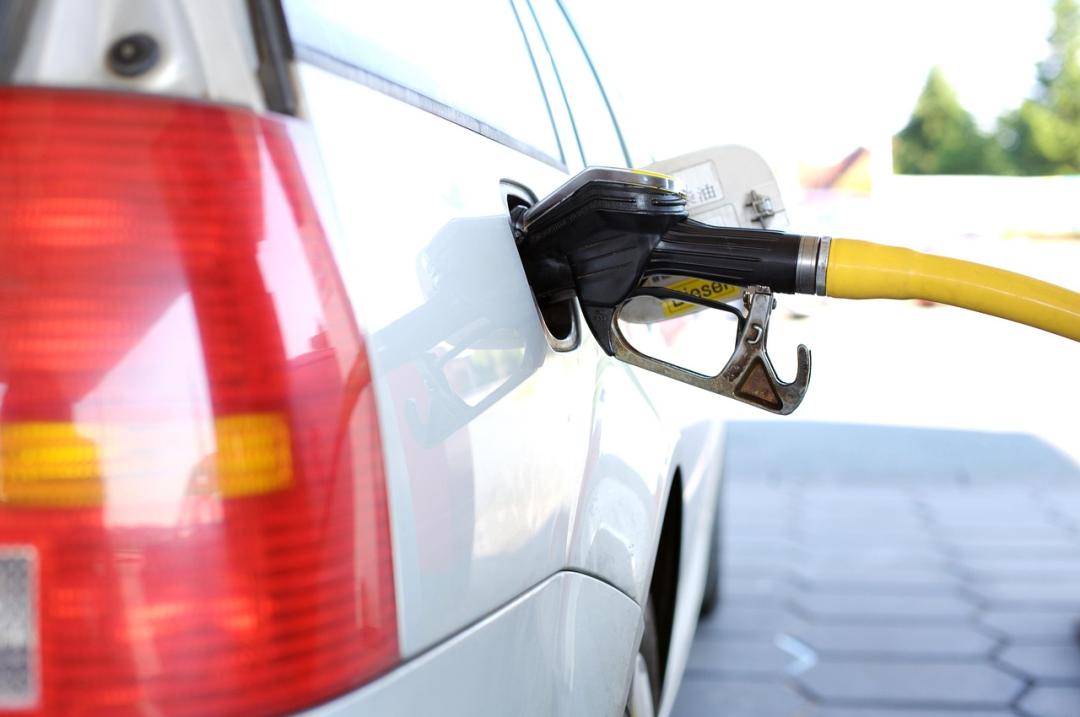
The end of 2025 was marked by the first trade deal between Armenia and Azerbaijan since their independence and the fragile Washington-brokered peace. Specifically, during a discussion held in Doha on December 6, Azerbaijan’s presidential aide Hikmet Hajiyev announced that Yerevan and Baku are discussing the export of oil and petroleum products from Azerbaijan to Armenia. Georgia immediately confirmed it will waive transit fees for the first shipment. Officials framed the deal within the peace process, with Armenia highlighting economic diversification and new market opportunities. On December 19, 22 wagons of 1,300 tons of SOCAR AI-95 gasoline arrived in Armenia via the Azerbaijan–Georgia–Armenia railway. Note that AI- 95 octane (95 RON) gasoline is generally considered a premium or mid-grade/regular fuel. Armenian sources confirm one of the two wholesale buyers of Azerbaijani gasoline delivered to Armenia is ‘Mega Trade,’ owned by ruling-party MP Khachatur Sukiasyan. It should be noted that gasoline and diesel in Armenia’s retail market have consistently been higher than in neighboring countries, more than twice the market prices in Azerbaijan. According to GlobalPetrolPrices.com, which provides updated and comparative fuel price data (gasoline and diesel), the average fuel prices in December 2025 were as follows: Armenia – $1.36 per liter of gasoline, $1.31 per liter of diesel; Azerbaijan – $0.60 per liter of gasoline, $0.50 per liter of diesel. Will Azerbaijani petroleum imports lower fuel prices in Armenia? It’s hard to say. One thing is clear: restoring direct links with Azerbaijan (and later or simultaneously Turkey) will reduce Armenia’s logistics costs, while increasing connectivity and creating alternative supply options.
Economic Benefit or Political Gamble?
Economist, Associate Professor of the Armenian State University of Economics, Suren Parsyan in a conversation with us, emphasized that any step aimed at establishing long-term peace in the region should be welcomed. He notes that recently Armenia and Azerbaijan have been attempting such active steps to show both domestic and international audiences their commitment to the peace agenda. Wheat transport through Azerbaijan has also occurred in this context. According to Parsyan, the key point of these deals is primarily the political message, and secondarily their economic component and potential.
Regarding the economic component, Suren Parsyan first points out that Armenia is an oil-importing country with no reserves, relying mainly on Russia for fuel. Annually, Armenia imports about 300,000 tons of fuel, 90% of which comes from Russia. Small quantities are also imported from Romania, Iran, Bulgaria, and other countries. It is important to note that, as a member of the Eurasian Economic Union (EAEU), Armenia enjoys favorable conditions for importing fuel from Russia. For example, Russia does not apply customs duties on gasoline or diesel exports, and export taxes are also exempt under interstate agreements, allowing Russian fuel to be competitively priced. However, this does not mean that the competitive or low price reaches Yerevan, as significant costs are incurred, especially for transportation, before the fuel arrives. It is no secret that the Georgian side regularly reviews its transit fees, which have roughly doubled over the past 15 years, significantly increasing the cost of fuel imports to Armenia. Under these circumstances, Armenia inherently needs to seek alternative import routes. “Armenia faces two issues: fuel diversification—having alternatives to Russian imports from other countries—and reducing dependency on a single route,” the economist notes, by alluding that a direct Armenia–Azerbaijan link, particularly via the Gazakh–Ijevan section, would significantly improve efficiency and alternatives. This route would bypass Georgian territory, shorten transport to Armenia, cut costs, and potentially enhance the competitiveness of Azerbaijani petroleum products.
According to Parsyan, the key factors are the price at which Azerbaijan is willing to sell fuel in Armenia, which could significantly affect its competitiveness, and the potential long-term sustainability of imports from Azerbaijan. At the moment, there is still no information on the price at which Azerbaijan is willing to sell gasoline and diesel to Armenia. Suren Parsyan notes that Azerbaijan has only one main gasoline refinery, the Heydar Aliyev Oil Refinery, and they export regular gasoline, not premium Super types, so Armenia cannot fully replace Russian imports, as Azerbaijan is not ready to sell high-grade Super gasoline to Armenia. Therefore, according to Parsyan, the quality and standards of the product will be crucial for imports from Azerbaijan. As an EAEU member, Armenia requires imported goods to meet these standards. Whether Azerbaijani fuel meets the standards will be determined through testing, and each batch entering Armenia must be tested, unlike Russian fuel, which is exempt as it is considered EAEU territory gasoline. Suren Parsyan is reassured that Azerbaijan cannot fully replace Russian fuel for Armenia, because firstly, Azerbaijan does not have that much capacity in terms of export, and secondly, it cannot provide Armenia with gasoline or diesel of all appropriate qualities. The economist argues that Armenia should view this as an opportunity and a long-term project, while also recognizing the crucial role of Russian gasoline and petroleum products, which remain competitive in Armenia at the moment. He also recalls that historically, Armenian industrialists played a major role in the development of Azerbaijan's oil industry before the Soviet Union, as well as during the Soviet Union, a large number of Armenians were involved in this sector, and for years Armenia received a significant portion of its fuel from Azerbaijan.
“Currently, we can discuss this in the context of broader regional processes. Each side has its own motivations in this deal: for the Armenian side, it is also a good opportunity to send a message to the public about the peace agenda ahead of the 2026 elections and, essentially, to expand its electorate. For the Azerbaijani side, this is an opportunity to demonstrate to the West, Europe, and other circles its willingness to uphold international agreements, the economist believes”, Parsyan alludes.
Professor of Political Sciences and expert on energy security issues, Vahe Davtyan, believes that, from a pragmatic perspective, the economic benefit of this deal is almost zero. The political scientist claims that "…this is not about market diversification, but about a one-time, politically conditioned supply. The existing oil refining issues in Azerbaijan are a key factor that is often, perhaps deliberately, overlooked. Yes, Azerbaijan has oil, but it faces serious challenges in producing petroleum products. Azerbaijan is not a stable petroleum product exporter. It has only one oil refinery, commissioned in the 1970s, which is technologically outdated, regularly halted for maintenance, and its output is mostly sold or consumed domestically. And in Azerbaijan per se, most of the domestic demand—over 80%—is covered through imports. In other words, the fuel arriving in Armenia via Georgia is most likely re-exported from third countries, offering no real price or logistical reliability advantage. Accordingly, I believe there is merely no economic logic here. For this reason, I believe that talking about long-term petroleum supplies from Azerbaijan is simply unrealistic. The energy influence experiment here is more of a political simulation than a real economic capability," Vahe Davtyan believes.
Director at Center of Economic Researches, Chair of Mathematical Methods in Economics at Armenian State University of Economics, Ashot Tavadyan draws attention to the fact that roads generally open when a country is capable to export its goods, not import them, and it is only during export that the country gains its benefits; this is one of the main factors of economic growth. And in this regard, according to Tavadyan, Azerbaijan primarily gains economic benefits from this deal, which is natural, because if it avoids customs through Georgia when importing, its price will of course be lower, and its products will be more competitive. Tavadyan believes that after capturing the market, Azerbaijan may continue to lower the price, because exporting petroleum products is a serious political factor.
Armenian Experts Flag Risks in Azerbaijan Deal
According to Vahe Davtyan, the risks in this transaction are systemic. He claims that energy in the South Caucasus region has never been a purely commercial economic sector; if it has been economic, then primarily geoeconomic. And if such schemes begin to be institutionalized, even on a small, symbolic scale, they can certainly turn into a tool of political and security pressure, that is, first oil products, then gas. The political analyst recalls that in recent years, official Yerevan has, more than once, announced at various levels its readiness to import natural gas from Azerbaijan—again with the idea of diversifying the domestic market, or, as per Vahe Davtyan, aimed at “de-Russifying” it. That is, petroleum products and natural gas—and if the scenario of regional unblocking is implemented in the format currently promoted within the TRIPP/“Zangezur Corridor” framework—there is also the prospect of electricity imports, which Azerbaijan regularly mentions, viewing this communication route through southern Armenia as a corridor that will also have an energy significance, with the potential to integrate into Armenia’s electricity system. "In other words, I think this geo-economic chain is very clear. This is dangerous, especially in conditions when our relations continue to be conflictual. The conflict potential is quite high, and the parties have not been able to ensure a minimum level of trust at this stage," concludes Vahe Davtyan.
Ashot Tavadyan also highlights a political risk in this deal: the fact that political relations between Armenia and Azerbaijan are still unresolved, and there may be certain pressures on these issues in the future. In terms of economic risks, Tavadyan believes that problems will also arise, since Armenia is a small country and its main economic growth factor is exports, and in this regard, this import transaction could harm Armenia's trade balance, because the deficit will increase, which is a serious problem for the country along with unemployment, as these are interrelated indicators. Economist Tavadyan also considers the issue of monitoring the quality of imported goods to be a separate concern for Armenia. He particularly recalls the fact that goods imported from Azerbaijan to Armenia must undergo EAEU expertise and in this regard, he expresses concern that this issue could have certain political implications in Armenia.
According to economist Suren Parsyan, "Armenia must be quite cautious and avoid extremes, as it is dealing with rather complex processes, including political and security-related ones."
An Attempt to Isolate Russia from the Region
Viewed more broadly in a geopolitical context, all three of our interlocutors are reassured that the supply of petroleum products from Azerbaijan to Armenia is another attempt to push Russia out of the region.
According to Vahe Davtyan’s analysis, it fits into the logic of the Middle Corridor, which in turn is part of the Europe-Caucasus-Asia international transport corridor, aimed at ensuring stable transport connections along this route while bypassing the Russian Federation. This project was first implemented in the early 1990s within the TRACECA (Transport Corridor Europe-Caucasus-Asia) framework and today finds its regional expression—covering the South Caucasus and Central Asia—within the Middle Corridor Project.
“Azerbaijan is doing its best to show the West, and particularly the European Union, that it is not only a purely transit country but also a very constructive player, ready to participate in unblocking communications in the region, especially bypassing Russia. All of this aligns closely with the proposal made to Armenia months ago to join the Global Gateway initiative. Within the framework of the Global Gateway, this is a very important and symbolic step for Baku. It is an initiative aimed at creating a global transport network that will, first of all, generate competition or provide an alternative to China’s Belt and Road Initiative. On the other hand, in terms of Eurasian communications, it will establish a transport architecture that includes the South Caucasus while bypassing the Russian Federation. This was Ursula von der Leyen’s initiative. The capitalization of this project currently amounts to around €300 billion, and Armenia has also been offered €2.5 billion to carry out transport modernization—again within the framework of the Global Gateway concept. It is important to emphasize here that the Global Gateway, as a key project in Eurasia aimed at connecting Europe with Asia, specifically focuses on the Middle Corridor. The Middle Corridor, in turn, is seen as a very important route that should also be diversified through Armenia’s southern territories—meaning, that we again come to TRIPP or the so-called Zangezur Corridor. And accordingly, the risks for Armenia are quite significant. In this scheme, Armenia acts not as an equal player or a full-fledged subject, but, unfortunately, as a territory, as an object. At the very least, it is viewed as such by a number of external actors, including our neighbors, through which a certain architecture is unfolding—one in which, for example, there is no place for Russia, and under which Iran’s geoeconomic influence in the South Caucasus has been fundamentally reduced”, Vahe Davtyan asserts.
Suren Parsyan also believes that this move is an attempt to weaken Russia’s influence in the region, since Russia has significant involvement in various energy infrastructures in this area.
Professor Ashot Tavadyan, in his turn, recalls that Russia sells gas to Armenia at a significantly lower price: "We receive a thousand cubic meters for $169. We also get gas from Iran and provide them with electricity, and the amount is roughly $90, which raises the question—why can’t we continuously buy gas from Iran? The matter is that Iran cannot sell us gas directly at a cheaper price than to neighboring Turkey. Russia, on the other hand, sells it more cheaply for a simple reason: we are members of the EAEU, and we benefit from receiving energy carriers at prices lower than global rates. It is very important here to see the economic consequences behind any arbitrary statement”, Tavadyan concludes.
Georgia’s Stake
Regarding Georgia’s decision to allow Azerbaijani fuel one-time transit to Armenia for free, our interlocutors say it is pursuing its own pragmatic interests.
Suren Parsyan believes that the Georgian side is trying to demonstrate its support for establishing long-term peace in the region, which also aligns with its own interests. At the same time, Georgia clearly understands that once the direct Armenia-Azerbaijan connection is restored, its role will significantly diminish, as Azerbaijan and Turkey will have the opportunity to transport cargo east-west through Armenian territory, thereby substantially reducing Georgia’s monopoly position in transit.
"In the long-term perspective, I think Georgia will be more interested in strengthening its position. That is, we must realize that different countries have their own interests, and just as it is important for Armenia to open its borders, it should also be important for Azerbaijan to open its border, since they will have an alternative option that will also help reduce transit costs," Suren Parsyan concludes.
In Vahe Davtyan's opinion, Armenia should observe and evaluate Georgia's move very coolly, without any unnecessary illusions. "Tbilisi, of course, understands very well that if the Middle Corridor is diversified through Armenian territory, this scenario could sharply reduce its role in transit. We have already heard predictions from various Georgian experts more than once that if the blockade is lifted in the region, Georgia's transit role will sharply decrease, in particular, cargo transportation will decrease by 20-25%. And this gesture of providing the railway for free, which Tbilisi is making, I believe, is an attempt to establish itself as a very important—perhaps irreplaceable—link in the regional logistics system. And yes, this can be seen purely as a friendly gesture in diplomatic rhetoric; however, I believe it fits squarely within pragmatism, aimed at preserving its own position. Apart from this, it should be noted, based on information obtained—again from expert circles—that Azerbaijan, especially recently, has repeatedly tried, in its discussions with Georgia, to present the so-called Zangezur Corridor project as a mechanism for reducing or negotiating freight tariffs through Georgian territory. In other words, this is also, I believe, a fairly effective tool for Azerbaijan to obtain certain tariff discounts from Georgia when transporting cargo, particularly via the Baku–Tbilisi–Kars railway. Being under such transport pressure, and also soberly assessing the prospective risks, Georgia is today trying to position itself within this newly emerging logistic logic, and its step was aimed precisely at that”, Vahe Davtyan believes.
Professor Ashot Tavadyan also believes that Georgia will gain certain economic benefits from this deal, since it purchases both petroleum products and gas from Azerbaijan. As per Tavadyan, on the Georgian side, the political factor may also play a role, to emphasize that although Armenia and Azerbaijan have political problems, we act as an economic mediator between them.
Contributed by Anna Vardanyan, an Armenian political journalist and researcher with over 18 years’ experience in defence policy, international relations, and security in Eastern Europe and the Caucasus, has worked for Armenian media and held advisory roles in the National Assembly of Armenia.
Insights,
Politics,
Armenia, Azerbaijan |
EU, Russia, EAEU, Hikmet Hajiyev, Armenia-Azerbaijan Relations, Middle Corridor, Anna Vardanyan, Suren Parsyan, Vahe Davtyan