
Iran’s Connectivity Vision in the South Caucasus: Ambitions and Challenges Amid Shifting Geopolitical Dynamics
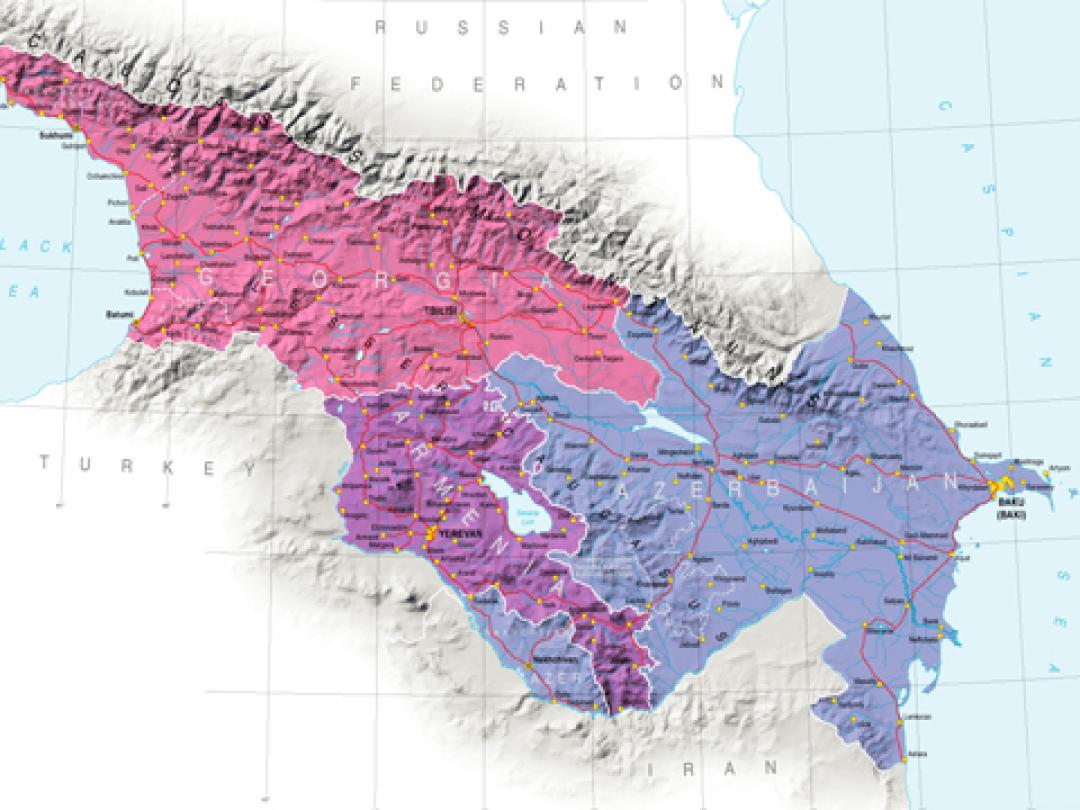
Brief Overview of Iran-backed Initiatives
The South Caucasus sits at the crossroads of vital Eurasian routes linking Russia with the Middle East and the EU with Central Asia and China. As the world is witnessing rapidly changing connectivity, Iran has promoted transit projects to integrate the South Caucasus into its wider transport network, whereby the Islamic Republic would position itself as a center of transcontinental commercial routes. Major initiatives include the International North–South Transport Corridor (INSTC), a project connecting Russia, the Caspian, Iran, and the Persian Gulf. In June 2024, Iran opened the first 37 km segment of the Rasht–Astara railway (from Rasht to the Caspian port of Kaspianshahr). This line, to be extended by the end of the decade via the remaining 162 km to Astara, will connect the land segments of the North-South Corridor and boost commerce through the Caspian Sea. Moscow is financing this project, pledging a $1.3 billion credit toward the overall $1.6 billion cost. When completed, the project will connect the north of Eurasia with the Indian Ocean and even the eastern half of the African continent. In February, Iran and Russia formalized a new agreement aimed at expanding infrastructure and transit capabilities with a special focus on the Rasht–Astara railway.
Iran has also worked on the “Araks corridor,” which goes through northern Iran and bypasses Armenian territory from the south. The route consists of rail and road projects, is slightly longer than the Zangezur path, and links mainland Azerbaijan with Nakhchivan via northern Iran. Notably, Ankara backed the Iranian plan as an alternative transit route.
Armenia unveiled its “Crossroads of the World” initiative, which seeks the opening of all communications in the South Caucasus and envisions Armenia as a regional hub. Tehran has generally liked the idea and even agreed to route Iranian cargoes via Armenia to Georgia’s Black Sea ports. To improve connectivity, the Iranian side has been looking into expanding infrastructure with Armenia. In 2024, Tehran suggested building a new bridge on the border with Armenia. Iran also views Georgia’s Black Sea gateways as vital outlets for its trade with the EU. Tehran has long been in favor of transit via Georgia under the broader TRACECA initiative, and Iranian officials have repeatedly offered to engage in exporting goods through Armenia to the Georgian ports. This reflects Iran’s ambition to tap into Europe-bound corridors via the South Caucasus.
Overall, these initiatives demonstrate Iran’s growing interest in regional infrastructure. Each project aims to enhance Iran’s connectivity with the South Caucasus states, aiming for growth in bilateral trade between Iran and the EU market. Yet Iran’s view goes beyond this, as Tehran wants to benefit from shifting Eurasia-wide connectivity, namely, the Middle Corridor and Russia’s ambition to reach the Indian Ocean.
Geoeconomic Drivers and the Contest for Connectivity
Iran’s push into the South Caucasus is driven by geoeconomic necessity as much as by traditional historical ambitions. Iranian policymakers openly seek new export routes and transit revenues to offset US-led sanctions. Iran’s "transport attractiveness" in the Caucasus via rail links to Russia, Black Sea ports in Georgia, and the Eurasian Economic Union through Armenia is seen as a way to overcome the consequences of Western sanctions and emerge from economic isolation. The INSTC is particularly prized: Tehran describes the north-south corridor as a potential Suez Canal alternative, enabling Russian and European trade to reach the Persian Gulf by land. Iran estimates that the new Rasht–Astara rail will allow Caspian cargo to bypass Middle East shipping choke points such as the Strait of Hormuz.
A more detailed picture reveals that all three branches of the INSTC which lead from Russia end in the Islamic Republic. For instance, the western branch runs along the western coast of the Caspian Sea through Russia and Azerbaijan to Iran, passing via Astrakhan, Makhachkala, Baku, Rasht, and Bandar Abbas. The eastern branch passes along the eastern coast of the Caspian Sea through Russia, Kazakhstan, and Turkmenistan to Iran via Olya (Russia), Aktau (Kazakhstan), the ports of Turkmenistan, and the Iranian border crossings of Sarakhs and Inche-Burun. Then there is also the Trans-Caspian route, which goes via the Russian ports of Astrakhan, Olya, and Makhachkala, and Iranian ports such as Enzali, Amirabad, and Nowshahr. Though scholarly debate is mainly concentrated on Iran’s efforts to develop the INSTC’s western branch, Tehran has lately made major moves to develop the eastern branch too. For instance, on May 12, 2025, a meeting in Tehran among senior railway officials from Iran, China, Kazakhstan, Uzbekistan, Turkmenistan, and Turkey was held on developing the transcontinental rail network.
Overall, there has been a steady growth in freight traffic along the INSTC; in the period from 2021 to 2024, total cargo volumes transported expanded markedly from 16.3 million tons in 2021 to 26.9 million tons in 2024. In 2024, cargo transported across the Caspian exceeded 6 million tons, a 37% year-on-year increase. Containerized cargo along the INSTC is also expected to grow significantly. Projections for 2030 suggest throughput could range from 325,000 to 662,000 TEUs (twenty-foot equivalent units), translating to approximately 5.9 to 11.9 million tons of goods. Therefore, the outlook for the INSTC remains highly positive, and in 2025 freight volumes may climb to 28.1 million tons, meaning that by the end of the decade, there could be 35 million tons transported through the INSTC. For the corridor to fulfill its loftiest ambitions, sustained investment and, more importantly, cohesive multilateral cooperation will be essential. Streamlining customs, aligning standards, and removing technical bottlenecks must become shared priorities for all stakeholders involved. Only then can the INSTC evolve from a promising trade route into a fully optimized, high-capacity artery for Eurasian commerce.
At the same time, Iran faces competition from other actors. China and Central Asian states are building the east–west Trans-Caspian or "Middle Corridor" via Central Asia, the South Caucasus, and Turkey. China increasingly prioritizes east–west corridors (evidenced by various treaties signed with Georgia, Azerbaijan, and Central Asian countries), while Russia and Iran emphasize North–South connectivity. Russia’s backing of the INSTC aligns with Iran’s interests, for Russia sees the North-South as a sanctions-evasion route for its exports, whereas China’s Middle Corridor via Azerbaijan–Georgia–Turkey draws away some freight. An Iranian analyst argued that “Iran is navigating contradictory interests as it wants to expand its political and economic influence in the South Caucasus, but its capacity is limited by the US sanctions.” Hence, Iran has a strong incentive to use infrastructure diplomacy; by investing in transit projects, particularly with Russia and Turkey, Tehran gains alternative lifelines to markets. At the same time, Iran is wary of any corridor that might cut it out of regional connectivity. For example, Tehran warned that the “Zangezur Corridor” would not be tolerated, fearing it could sever Tehran’s access to Armenia and Georgia. In sum, Iran’s strategic calculus is shaped by sanctions pressure and by the desire to exploit the South Caucasus as an economic outlet.
The Complex Triangle of Cooperation and Competition: Russia, Turkey, and Iran
The developing connectivity projects have thrown Iran, Russia, and Turkey into a tangled triangle of cooperation and competition. All three vie to shape the transit map of the South Caucasus. In practice, their objectives overlap and clash in complex ways.
On the one hand, Iran and Russia share interests in some corridors. Russia is a major investor in Iran’s INSTC projects, and both powers have traditionally cooperated on security in the South Caucasus. For example, Russian border troops have long patrolled the Iran–Armenia border without causing Iranian alarm. Iran also believes that Russia continues to play an important balancing role in the region. Indeed, Iranian officials have signaled readiness to work with Moscow to open regional links, consistent with Iran’s growing cooperation with the Eurasian Economic Union (EAEU). Yet there is also friction. In September 2024, the Iranian side was angered at Moscow for backing the Zangezur road project, in one instance calling it a "stab in the back" and vowing that Iran’s national interests were a "red line." Tehran views Azerbaijan’s closer ties with Russia, but especially with Israel and Turkey, as a geopolitical threat. A scholar based in Tehran argued that if any of these countries push projects that omit Iran, Tehran reacts strongly, even as it remains reliant on Moscow’s goodwill in other areas (e.g., arms negotiations or nuclear diplomacy).
When it comes to Turkey, Ankara and Tehran have cooperated on some connectivity projects: notably, Turkey quickly endorsed the Iran-proposed Araks Corridor. The latter is a 107 km long corridor and has for decades served Azerbaijan as a secure route to reach its exclave of Nakhchivan. Since 2021, work on the corridor has been expanded as Baku, Tehran, and Ankara agreed that the transit between Azerbaijan proper and Nakhchivan would continue traversing Iran’s territory. Potentially, the Aras corridor could emerge as a regional route by becoming part of the Trans-Caspian International Transport Corridor, effectively parallel to the Middle Corridor. The Aras route consists of both railway and road projects, and presently there is only one missing section along the Iranian-Armenian border – an approximately 60 km-long railway line which needs to be completed to expand the corridor.
Despite the progress on the Aras route, Tehran remains wary of Ankara’s influence: Turkish diplomats regularly raise the idea of linking Azerbaijan proper with the Nakhchivan exclave, a vision that runs counter to Iran’s interests. Moreover, Turkey has deepened cooperation with Georgia, further tightening the so-called Azerbaijan–Turkey–Georgia trilateral format. Another analyst based in Tehran argued that the tripartite cooperation between Baku, Ankara, and Tbilisi in energy and other sectors limits Iran’s goals in the South Caucasus. This explains why the Iranian leadership regards Armenia as a counterweight to a Turkic corridor running from Anatolia to the Caspian Sea. Because of this, Iran clings to its Armenian ties as a buffer against Turkish-Azerbaijani influence.
Bilateral Ties and Transit Diplomacy
Iran’s transit initiatives in the South Caucasus cannot be separated from its bilateral relations with the regional countries. In each case — Armenia, Azerbaijan, and Georgia — Tehran’s engagement has an infrastructure dimension. Iran’s closest partner in the Caucasus, Armenia, has long been Iran’s main southern trade outlet. Iran and Armenia share a land border, and Iran was Armenia’s lifeline during blockades. Armenia’s membership within the EAEU gives Iran much-sought-after access to the Russia-led customs union, making Yerevan strategically valuable.
Iran’s relationship with Baku is complex and often tense. On paper, the two are fellow Shiite-majority countries, but Baku’s foreign policy is more aligned with Turkey and Israel, Iran’s competitors. Indeed, Tehran has often complained about Azerbaijan having deepened military or intelligence ties with the Jewish state. Though Baku and Tehran have completed their normalization of bilateral relations, tensions are always present, and one of the issues is connectivity, given the fact that except for the INSTC, Baku’s pipeline and railway projects aim to bypass Iran. For instance, until recently Iran ferried Azerbaijani gas to Nakhchivan (charging 15% in kind), but Baku has begun to supply Nakhchivan via Turkey instead. In many ways, Azerbaijan’s 2020 victory radically altered the regional balance of power, undermining Iran’s position. In response, Tehran has tried to regain influence by promoting the Araks Corridor, which bypasses Armenia. Still, Iran’s relations with Azerbaijan remain limited by mutual distrust.
Iran’s ties with Georgia are more pragmatic, and Tehran’s approach for decades has been impacted by Georgia’s Western orientation, which often constrained bilateral ties. Yet both are interested in connectivity opportunities (energy transit, container routes), and Iran specifically seeks access to the Black Sea. For now, Iran mainly relies on Armenia and Azerbaijan to reach Georgia: cargo from Iran can go north through Armenia into Georgia, or west through Azerbaijan–Georgia. Georgia is indeed becoming increasingly interesting for Iran because of the official inauguration of Georgia’s first dry port, the first such facility in the South Caucasus region. Located in the Georgian capital, the dry port will handle multimodal cargo and will enhance Georgia’s maritime infrastructure (including the Anaklia port) and the growing East–West connectivity. Then there is the Baku–Tbilisi–Kars (BTK) Railway, connecting Azerbaijan to Turkey via Georgia, and the latter’s proximity to the INSTC makes the country even more attractive for the Islamic Republic.
Iran’s connectivity strategy reflects its desire to become a transit hub: it seeks to build routes to Armenia and Azerbaijan and to reach Russia and Georgia’s Black Sea ports. The goal is simple: to build as many parallel routes as possible. An Iranian analyst argued that diversified connectivity would allow Iran to avoid dependence on any single corridor. The Islamic Republic's relations with each South Caucasus country are important in different ways: Armenia as a gateway to Russia and Europe, Azerbaijan likewise as a transit but also as a competitor, and Georgia as an outlet for reaching the EU market.
Cooperation, Competition, and Security Challenges
When it comes to other big powers, Iran’s approach to infrastructure in the South Caucasus is rooted in its strategic partnership with Russia, centered on the INSTC. In the context of Western-imposed sanctions that constrain access to global financial networks and maritime shipping channels, the INSTC has emerged as a vital economic lifeline for Iran and a key conduit for Russian exports subject to similar restrictions. This mutual dependence has engendered a robust, albeit occasionally asymmetric, bilateral alliance. Russia’s investment in various infrastructure projects, notably the Rasht–Astara railway, alongside its commitment to multilateral regulatory harmonization within frameworks such as the Eurasian Economic Union (EAEU), exemplifies the strategic depth of this cooperation.
An Iranian analyst argued that “Iran’s engagement in the development of the infrastructure is a complex effort to leverage geography, infrastructure, and regional relationships to regain economic relevance and geopolitical influence.” Through projects like the INSTC and the Rasht–Astara railway, the Araks corridor, and the push to access Georgia’s Black Sea ports, Iran is striving to build a web of connectivity that minimizes the isolation and sanctions that the country has experienced. The sanctions are especially important as they continue to hamper Iran’s transit and trade ambitions. Tehran’s integration with Russian-led blocs such as the EAEU attempts to mitigate this, but political isolation limits foreign investment and access to technology. Additionally, Iran will have to carefully navigate its relations with China, which has its own Silk Road ambitions in Central Asia and the Caucasus. While Tehran welcomes Chinese involvement, it is wary of becoming a secondary actor in Beijing’s vision.
Looking Ahead
Iran’s evolving approach toward connectivity in the South Caucasus could, however, be subject to geopolitical headwinds. One of the problems is the persisting conflict with the United States and Israel. Should the Islamic Republic undergo intermittent bombings, there will be less interest in investing in the INSTC. Relatedly, the Persian Gulf countries, India, and others will likewise express less interest in using the corridor for overland trade with Russia. Another persisting problem is the sanctions regime imposed on Iran by the United States. With no signs of abating, the sanctions are likely to remain in place for the foreseeable future.
Yet, Russia and Iran remain committed to the development of the INSTC. Igor Levitin, Adviser to the President of Russia and Special Representative for International cooperation in the field of transport, argued recently in an interview with the Russian state media, TASS, that the corridor remains a priority for the Russian leadership. The Iranian side too remains hopeful that a final contract to begin construction of the Rasht-Astara railway will be concluded soon, despite remaining unresolved technical and financial issues that have slowed momentum. Meanwhile, there are other big actors which are increasingly interested in the INSTC and especially its western branch, which would likely sustain the idea of the corridor.
For instance, India regards the INSTC as a means to expand its economic influence across the Eurasian continent. The corridor enables Indian goods to reach Afghanistan and Central Asia without transiting through Pakistan, offering a more secure and efficient trade route. New Delhi has already invested $24 million in developing Iran’s Chabahar port, a vital node for sea cargo on the Persian Gulf. India eyes trade with Russia, which explains the doubling of shipments to Russia in the past year. Indian exports moving through the corridor include a diverse mix of rice, clothing, plastics, construction materials, and spices. On the other side, Russia is supplying India with lumber, paper goods, hygienic products, furniture, processed food, and various industrial items.
As the geopolitical landscape evolves and trade patterns shift across Eurasia, the success of the INSTC will be contingent upon how effectively its key players – Russia, Iran, India, and now Pakistan – can minimize technical bottlenecks, facilitate the operation of regulatory frameworks, and resist external political pressures. If successful, the corridor has the potential to become a defining infrastructure project for Eurasian integration in the coming decades. Within this framework sits the South Caucasus, and especially its eastern half. The corridor has always been in place, from ancient and medieval times, and now it has a chance to evolve into a true rival to maritime routes.
The various infrastructure initiatives supported by Iran in the South Caucasus aim to enhance Iran’s connectivity with the regional states and tap into broader continental trade. A notable example is the revived Meghri corridor, the Iran-Armenia road, which earned the moniker “road of life” during periods of blockade, underscoring its critical importance. In essence, Iran’s transit diplomacy is built around an interconnected network of proposed rail and road corridors, including the INSTC corridor, supplementary routes across Iran’s northern provinces, and new transit arteries through Armenia and Georgia that extend toward the Black Sea and the EU market.
Emil Avdaliani is a research fellow at the Turan Research Center and a professor of international relations at the European University in Tbilisi, Georgia. His research focuses on the history of silk roads and the interests of great powers in the Middle East and the Caucasus.
Insights,
Politics,
Armenia, Azerbaijan, Georgia |
China, South Caucasus, Russia, Iran, Central Asia, Black Sea, Emil Avdaliani, India, Zangezur Corridor, North-South Corridor, Middle East