
“Is it my fault that I lived in Karabakh?” A struggle for a decent living among Nagorno-Karabakh Armenians
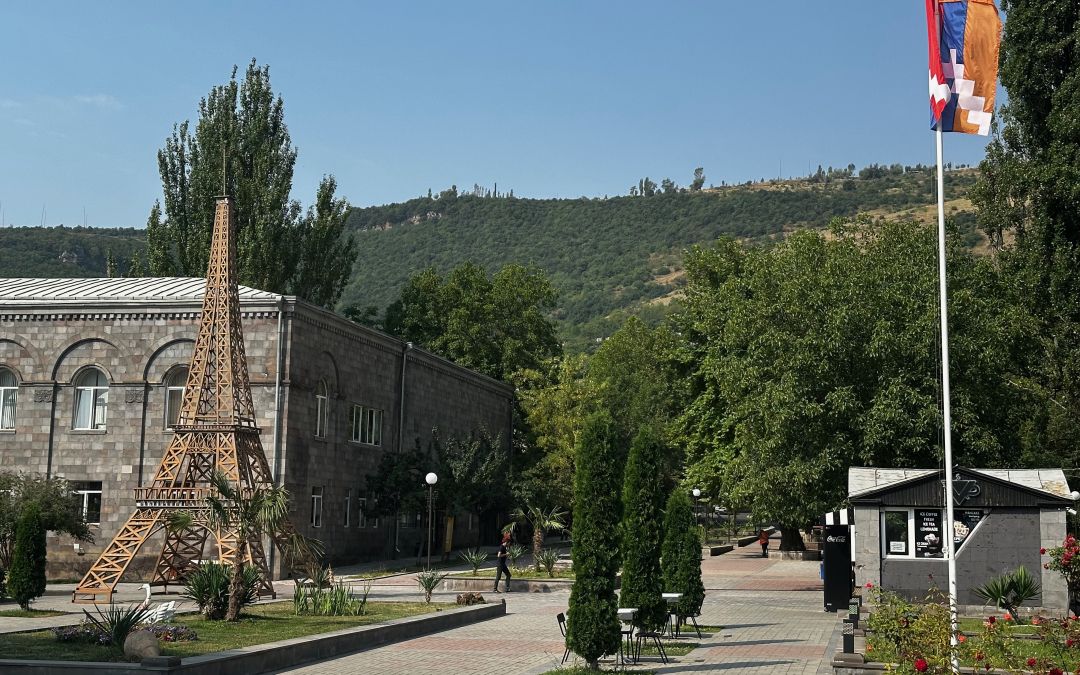
Locals describe the Armenian town of Goris, located in Syunik province, as a "Little Paris". With a population of 25,000, this town has a very clean, well-groomed appearance, and today the municipality is improving the streets and sidewalks. A French accent is really felt here, as evidenced by the recently opened consulate, an "Eiffel Tower" replica, and the Centre Culturel Francophone de Goris. But unlike the real Paris, here you rarely see smiling tourists in the crosswalks wishing you good morning as they pass. The smell of Armenian lavash, not croissants, wafts from the bakeries, and guestless hotels are occupied by Indian workers who came to Armenia for a “good life”. They have jobs right in the hotels, washing dusty carpets and sweeping the yards.
This town was the first stop for the Nagorno-Karabakh Armenians who left their homes in 2023. But why don't they want to live here, if it’s "Paris"? Many of them have since emigrated with their families to the real Paris, again “for a better life,” just like the Indian workers in Armenia.
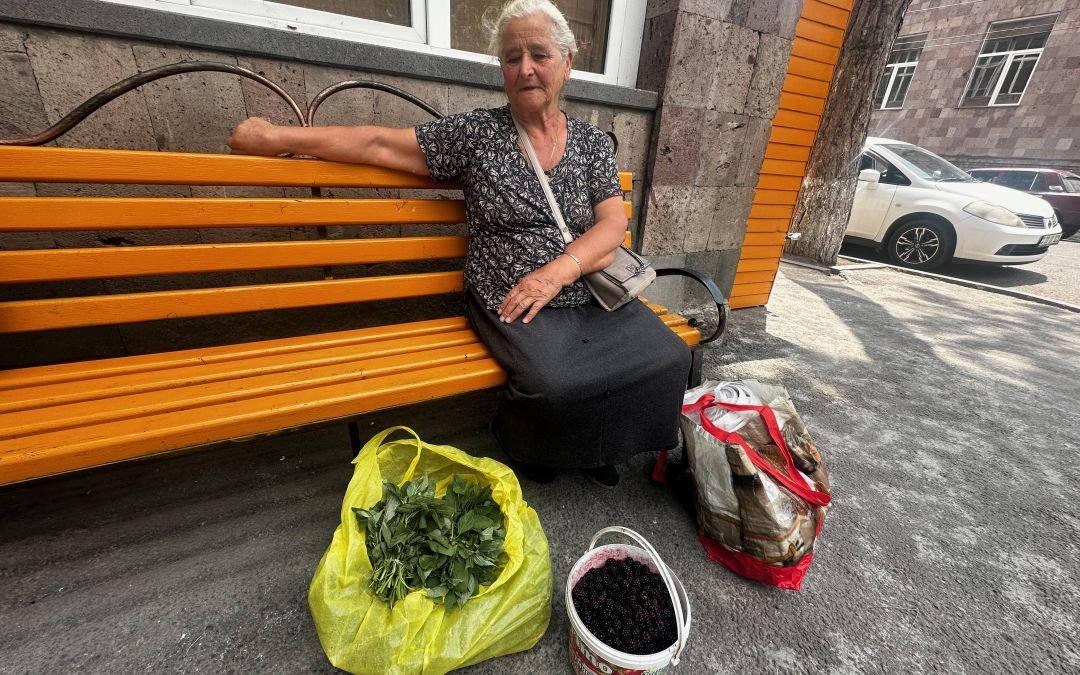
Mrs. Armanush, a mother of seven, lives in Kornidzor village, not far from Goris, or as she says, “under the gunfire”. Two of her seven children died in 2004 under mysterious circumstances. “Their frozen bodies were dissected and given to me,” she says. “It was winter; they were in the mountains. My son-in-law was also killed in the battles of Jermuk. I don't want to speak to anyone, not even my relatives or neighbors. Today I own nothing”.
Mrs. Armanush lived in Lachin, Nagorno-Karabakh, for 30 years, which she considers the best years of her life. Today, she sells blackberries and greens in Goris when public transport is available. By the end of 2025, the financial assistance program for Karabakh Armenians—which was reduced from 50,000 to 40,000 and then 30,000 Armenian drams this year—will expire. It is currently available only to vulnerable families, and its continuation depends on the Armenian government.
Insulting comments about Karabakh Armenians are often made on social media in Armenia when they complain about their status. One post compared them to Palestinians, saying, “They are dying but they are not leaving. You should have stayed and died too; there would have been fewer problems”.
“Is it my fault that I lived in Karabakh?” asks Mrs. Armanush ironically. “'Are you from Karabakh?' they ask me. 'If yes, then get out of here'”.
“But why? I don’t live in Yerevan like everyone else, but in Kornidzor, which many consider a risky place to live. They say, ‘Go and demand money from your Arayik Harutyunyan.’ I have lived in Karabakh for 30 years, but today I am neither a Karabakh nor a Kornidzor resident. I live by my own strength, collecting blackberries and herbs from the forest to sell in Goris. My husband is blind; he was a teacher his whole life, but today he is disabled. I shave him, take care of him, and make his bed. He has problems with his eyesight and memory. We live in a house that was shelled during the first Karabakh war in the early 90s. The Ministry offered me two bags of cement as ‘support,’ which turned to stone in the bags. Can I build a wall with that? How can I lay tiles? Are they kidding me? I had 50 beehives in Karabakh; I can still hear their buzzing. I don’t beg for food, I earn my daily bread, but I need a house. Let them build my house. I am an old woman; I can't do it alone”.
The Zangezur Corridor, where Mrs. Armanush lives, has become a major geopolitical issue, and she has her own ideas about trade, routes, and politics. “Remember my words, you will see how Pashinyan will be trampled by Aliyev. If there is no Kornidzor, there will be no Goris, nor Yerevan. This village is our last citadel. It wasn’t like this before; I had many friends in Sumgait and Baku. What was that district called? Ermenikend, right? Now, this is how Armenians and Azerbaijanis have become enemies. Once they were friends. I used to visit my friends and relatives in Baku. One of them worked at a tobacco factory, the other at an oil refinery. Both passed away in Russia”.
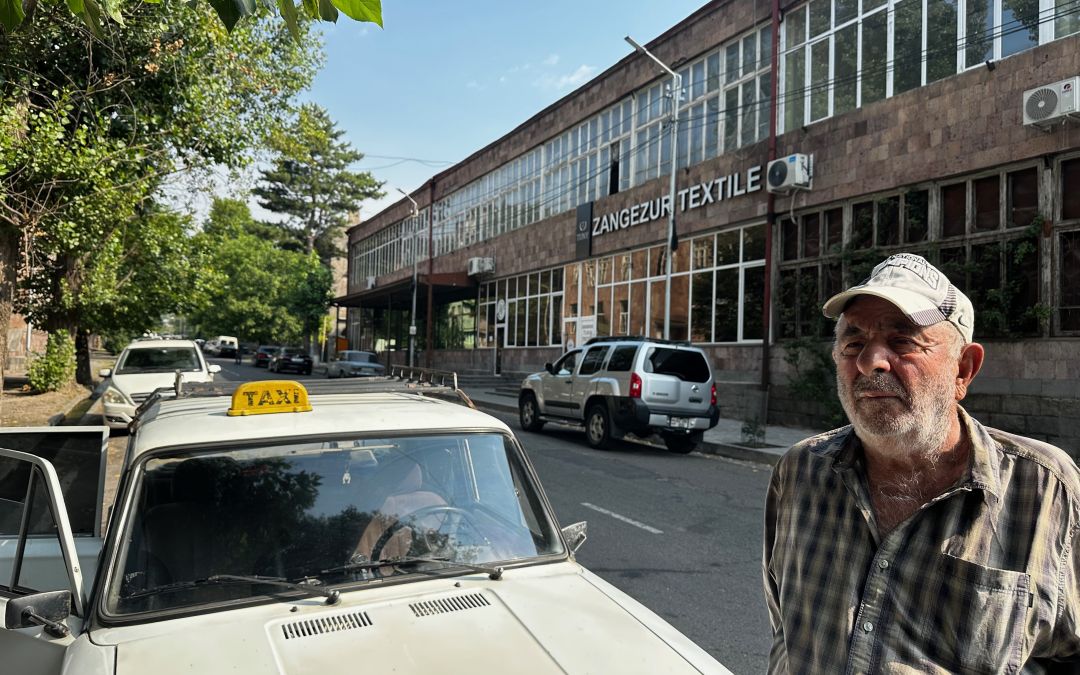
Yura Parsyan parks his forty-year-old Zhiguli in front of the Zangezur Textile shop in Goris and waits for customers. There is also a hotel in Goris called Zangezur, which is experiencing a lack of clients, just like Yura. “One way or another, this corridor will open. Look, they wrote Zangezur in English on this shop; I can't read it. I assure you, the same thing will happen to Goris as happened to Stepanakert. They will close it and leave people hungry”.
“They will close the Meghri road, and we will find ourselves in a blockade here. The same thing will happen as in Stepanakert. Karabakh Armenians have come to Goris, but where will we go? It was not the Azerbaijanis, but the Russians who emptied Karabakh. I’ve been told that the Russians entered the villages in Karabakh and urged people to leave, otherwise the executioners would come and behead them. At two o’clock in the morning, Russian armored personnel carriers stopped in front of people’s houses, and they started beating down the gates. ‘Leave in two hours,’ the machine gunners said. What could those poor people do? They just released their chickens, cows, and sheep and left. The same story will happen to us. We are living here like foxes caught in a trap. We did what we could; we hosted Karabakh Armenians here in Goris, in this house of culture. It was terrible. I felt sorry for one family, so I told my wife to invite the little ones to our home to bathe and feed them, and let their mothers come too. In a word, we did everything in our power. We have a big house; we even spread blankets on the floor so they could sleep and rest. Anyway, the government needs to think about these people. This is a long-term process”.
The Armenian government has launched a housing program providing Karabakh Armenians with certificates to purchase homes. The government provides 5 million drams for a house in a border settlement and 3 million for one in or around the capital, Yerevan. Since the program's launch, apartment prices have increased in Armenia, which the government considers normal: “If there is demand, naturally prices should increase”.
“Goris is called ‘Little Paris.’ Our mayor is a really good guy; no one has ever cared for Goris as much as he has. It is the most beautiful city in the Syunik region, but there is no work. That is why there are no Karabakh Armenians left. It is a dangerous area; people are afraid. Yerevan is not a good place to live either. Our city is beautiful and clean, but you can see that we have been left in the gloom. Since the Karabakh war, the roads have changed. The hotels are empty, they sell gasoline in canisters. It wasn’t like this before; there was a boom in the city. The Iranians used to pass through our city, bringing all kinds of goods—sugar, oil, everything—it was very cheap. We used to take advantage of their supply, and they used to buy our produce too. Now we are left on the margins. I remember they used to bring grapes and figs from Hadrut to Goris. I have never seen such large fruits. Now all that has disappeared. My daughter lives in America, but I don’t want to go there. I saw on TV how people are being deported. I don’t want to be humiliated like that. I will live here,” says Yura.
The Armenian Migration Service reports that the number of housing applicants among Karabakh Armenians has increased. In parallel, apartment sales prices have also increased. As of May 15, 1,942 applications for citizenship were received from Nagorno-Karabakh refugees, and 1,274 people received citizenship.
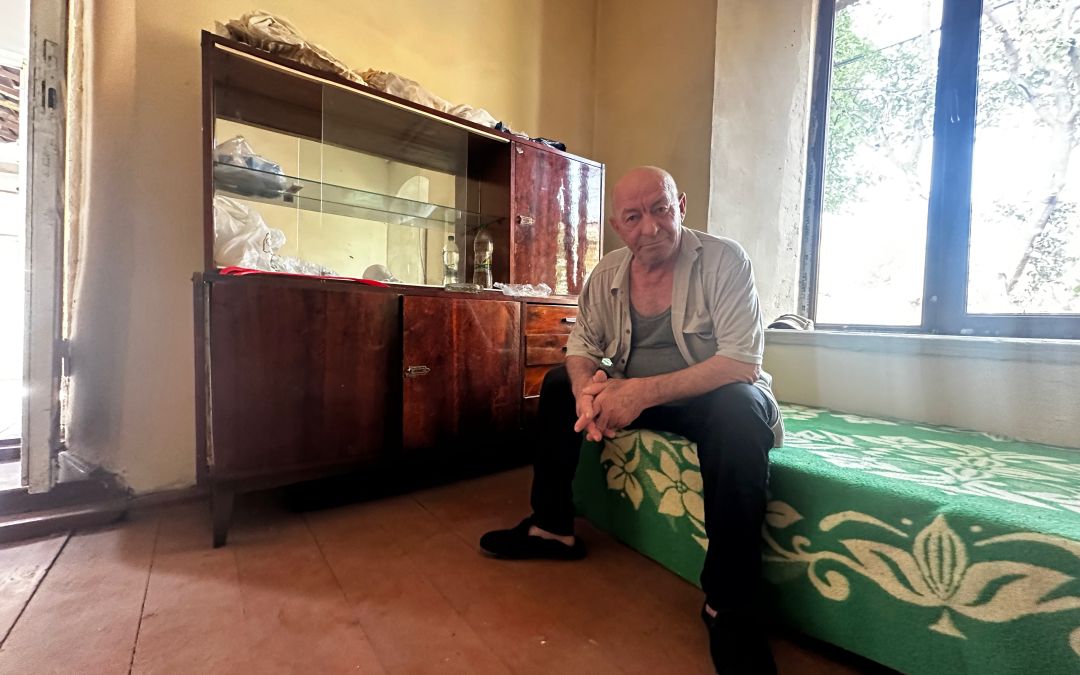
Maxim Hambardzumyan says he has become a refugee twice. The first time was in 2020, when his village of Aknakhbyur/Karabulakh came under Azerbaijani control, and the second time was in 2023, when the entire population of Nagorno-Karabakh fled. Days ago, the owner of his apartment arrived from Moscow and told them to vacate the house. So, he had to find another house in Goris and move his belongings there. “We are tired of dragging this washing machine from one place to another,” says Maxim.
“Only my wife works. I am not healthy; my jaw is full of metal. The doctor had to fix it with screws. It was during the New Year holidays when I fell off the roof while repairing it. I was in the first Karabakh war; my hair and eyebrows have fallen out. I thought I was dying. Now, I ask myself, am I made of steel? How am I able to cope with all of this?” asks Maxim.
There are traces of dampness on the walls of Maxim’s new house; the pipes in the bathroom have burst and water flows endlessly. His son has repaired it as best he can, but it all comes down to money, which his family doesn’t have. “I don’t know, it’s summer now, but they say that this house is very damp, you see the walls. I can’t stand the cold. In the previous house, I used two electric heaters to keep myself warm. It’s a house from the 1800s. Maybe we should put a wood stove here. My son is a father of five children; he also lives in a rented house. Some of my grandchildren live with us; this is how we try to lighten their burden a little. I am a pensioner; my wife will reach that age in three years. We add what my wife earns to my pension and pay our rent. They gave us 50,000 drams in assistance, which was decreased to 30,000, and in the end, they cut that too. What should we do? What should someone living in Yerevan do? My daughter lives there, and they pay almost $700 for rent. I had a huge house in Karabakh, I could have organized a wedding for two hundred guests on the balcony alone, and now I’m in this shack. There are no amenities, no matter what you do, it’s dirty, the tap doesn’t work, the bathroom isn’t even normal, there are only two chairs in the kitchen. Should we sit on the floor? But when it comes to money, they take it away in the blink of an eye,” Maxim complains.
The social conditions for Karabakh Armenian pensioners in Armenia have become even more difficult. While young and large families can take the risk and purchase an apartment on credit, it is almost impossible for pensioners.
While young and large families can take the risk and purchase an apartment on credit, it is almost impossible for pensioners. By the end of 2025, the Armenian government’s financial assistance program will be stopped. The program is at present available only to low-income families. The program may or may not be continued - it all depends on the decision of Armenian government.
Contributed by Marut Vanyan
Insights,
Politics,
Armenia, Azerbaijan, Nagorno-Karabakh |
Russia, Goris, Zangezur Corridor, Marut Vanyan