
Nagorno-Karabakh Armenians Face Challenges in Syunik Borderland
Almost no village in Armenia’s Syunik province has public transport. Transportation between cities is also challenging. From its second-largest city, Goris, to the administrative center of Kapan, the only minibus leaves in the afternoon. The lack of transportation has prompted taxi drivers to raise prices so high that it is simply impossible for an average person to take a taxi. From Goris to Kapan, they charge 20,000-30,000 AMD ($78), and even more when traveling from Kapan to Meghri, which is 70 km away; then the total price is $156. Strangely enough, taxis from Yerevan to Goris (238 km) are cheaper than from Goris to Kapan. “You know, it’s an isolated place and no one wants to take those twisty roads,” locals explain. If someone takes a taxi from Yerevan's Zvartnots Airport to Goris, one pays just 30,000 AMD ($78). Moreover, if someone were to leave Goris for Yerevan and then fly to Kapan, it would cost less than taking a taxi from Goris to Kapan. A plane ticket from Yerevan to Kapan is 20,000 AMD ($52), but there is another problem here: it is only an 18-seat plane, and recently the airport management announced that flights are temporarily suspended due to technical issues.
Goris residents say that since the 2020 Karabakh war, neither Karabakh Armenians nor Iranians pass through their town, leaving them isolated, but the surrounding villages seem more isolated, even from Goris itself.
“The marshrutka drivers don’t get sufficient income; the fare was only 350 AMD ($0.91), but there are no passengers coming or leaving. Just one share-taxi serves the entire community. Everyone has his phone number; they just call him, make an appointment, and go to Goris for 600 AMD ($1.57). For the locals, it’s expensive too, but there’s no alternative. That’s why the taxis charge double the price. The entire population of Karabakh used to pass through our village, but now it seems as if the movement of people and life has stopped here. I used to sell tons of fuel, but I swear, I haven’t sold even a bottle of petrol all day today,” says a service station attendant in Tegh.
“Beyond the village Tegh lies the Republic of Azerbaijan”
After Nikol Pashinyan's famous phrase, "Beyond the village of Tegh lies the Republic of Azerbaijan," the community is living in a new reality. The highway leading to Nagorno-Karabakh is blocked with barbed wire and cement blocks, where armed soldiers patrol 24/7 and access is prohibited. Giant Armenian and Azerbaijani flags wave on the hills; military roads slither through the mountains.
In 2023, Samvel’s family settled in the last Armenian house in the village of Tegh. It is a small village home where he rents with his wife Valya and son Arthur. Samvel says that the air here is fresh since it blows from the Karabakh mountains. Opposite is the town of Lachin. “I don’t know if people live there or not, but in the evening, the electric lights flicker like a giant mass. It looks really impressive,” he says. Samvel has been disabled since the First Karabakh War, but he doesn’t like to talk about it much and doesn’t want to be photographed. “I went to Yerevan for prosthetics, but even staying there for two months was too much for me,” he says. The family is planning to acquire a house through a government housing program in Tegh or Goris. “We don’t need Yerevan. Many Karabakh Armenians complain because of bureaucracy and other reasons, but in Goris, they processed our papers really quickly, and we already have a certificate to buy or build a house,” says his wife, Mrs. Valya.
“As of September 9, the number of Karabakh Armenians who received certificates within the framework of the governmental housing program was 2,711, and the number of issued certificates was 823,” the Minister of Labor and Social Affairs, Arsen Torosyan, said in the National Assembly on September 9. Torosyan also noted that 60 certificates were issued within 10 days, and the process is moving forward.
However, the housing program remains inaccessible for many, and not all Karabakh Armenians are ready to live in border villages due to two main reasons: job opportunities are lacking, and the fear of living in the vicinity of military trenches. The Armenian government is implementing the housing program in border settlements not only for Karabakh Armenians but also for other Armenian citizens. Large-scale road construction work is also underway in the province. In the Tegh community, for example, you can see unfinished one-story houses, but the place is far from busy. Locals themselves say that young people are leaving for the capital in search of a better life, and it is not only Karabakh Armenians who do not want to live here. Almost all villagers in Syunik point to the same issues: scarce water and pastures, and a lack of employment. The young do not want to live in the village and often do not marry. “We are barely able to care for ourselves, how will we take care of our wives?” they say. The shared border with Azerbaijan is psychologically difficult to overcome, especially for Karabakh Armenians. Young people who want to live in the village are rare, and the elderly claim that they have already lived their lives.
“Yes, it’s hard, but I don’t ask for cash or food. I would be more than happy if someone provided me with a greenhouse or beehives through some support program so I could produce my own goods. No one can provide financial assistance to Karabakh Armenians forever; they should also be motivated to work. I think it will be better for them that way. I acquired 4 beehives with the support of the ICRC. This is a new profession for me as well, but I am trying to develop it,” says Arthur.
“If I had a sewing machine, I could sew sheets, blankets, tablecloths, towels, everything. I am ready for any job,” Arthur’s mother also has her own business ideas.
Mrs. Valya taught in Askeran secondary school for 27 years. Today, she has a job as a cleaner in Tegh, receiving a meager salary. Her son works for the municipality as a laborer, and her husband Samvel supplements the family budget with his disability pension. Mrs. Valya believes that it’s impossible to live on a salary in Armenia, especially for Karabakh refugees.
“I go to my little garden for food more often than to the grocery store. I live on this 5-square-meter plot of land. When the tomatoes run out, I plant beans; when the beans run out, I plant potatoes; when the potatoes run out, I grow other vegetables and preserve them for the winter,” says Mrs. Valya, leading me to the warehouse where she has stored her winter goods. “If I didn’t have this little piece of land, I would go insane. This is a kind of therapy for me as well. We don’t have much space; otherwise, I'd keep chickens, turkeys, pigs, everything. We used to keep rabbits and chickens, but there’s not enough space, really,” she says.
While she is talking about gardening, she cannot help but recall her pomegranate garden in Askeran, which brings her to tears.
“When the police called us and ordered us to leave Askeran, it was like an electric shock hit my body. They also told us to take only the most necessary things, like passports and other documents. I was left standing in the middle of the living room confused, and I don’t know why I picked up these scissors, which are a nutcracker at the same time. Then I remembered my wedding dowry, the six-piece set of spoons. I took it as well, but when we arrived in Tegh, one spoon was missing (she laughs), but anyway, at least I took a memory with me. My neighbors in Tegh surround me with warmth; they are brilliant people, but this is still not my home. Our house was right next to the Askeran fortress. I built it with my own hands; longing suffocates me. Even if only the ruins remain, I wish I had the opportunity to be there. Lately, when I’ve been busy cleaning at work, I noticed a swallow weaving a nest in the corner of the ceiling. My colleague asked what to do, how would they live inside the room? I confronted him and asked him to let them build a ‘house,’ because I, like this swallow, built my ‘nest’ in Askeran. I know what it means,” Mrs. Valya says, holding back her emotions. To keep his wife from crying, her husband Samvel humorously interrupts her: “During the construction work in Askeran, my wife did the hardest part of the job; she was the one who laid the heavy bricks and mixed the cement mortar with a shovel when we were building our home.”
Mrs. Valya does not consider Karabakh’s chapter to be closed. Moreover, she has assumptions about how it will be done technically and predicts the consequences: “What will the Armenian government do? They will probably take back the house I bought with the certificate. Let them take it, I don’t care. Let me sleep on the floor, just in my home. I don’t know what the politicians will decide, but I don’t want to lose hope. A small spark can start a big fire, and I want to keep that small spark in my heart,” she says.
It is good to keep hope, but for now, there is no other way out for the Nagorno-Karabakh Armenians but to live in Armenia. Since April 1, when the Armenian government announced the cutting of financial assistance to Nagorno-Karabakh Armenians, their lives have become even more difficult. The government has decided to support only vulnerable families, but almost all Karabakh Armenians consider themselves vulnerable, saying that everyone is in the same situation, everyone has lost everything, everyone faces social difficulties. Or what can a vulnerable family do with 30,000 drams ($78) monthly when for a local taxi driver, it’s just a one-way fare?
Social difficulties are faced not only by the Karabakh Armenians living in border settlements but also in settlements considered safe in Armenia, like Toma, who lives in a Soviet-era dormitory in the town of Tashir, Lori Province. “At least we are alive, I thank God, but life is hard in here. We were placed in this dormitory when we left in 2023. There are about 50 of us here, the bathroom is shared, the conditions are not so good. As a single mother, I get 30,000 AMD ($78) in support from the Armenian government, but what can I do with that? It’s already cold, my children don’t have winter clothes; one is eight, the other is four years old. I can’t find a job. Besides, even if I find a job, how can I combine it with the children and my bedridden mother? My youngest child has been banned from going to kindergarten because he coughs. They say he will infect others, so take him home. Do I have a home to take him to? I’m not saying I lived rich in Karabakh, but it’s harder in an unfamiliar environment like this,” says Toma, a refugee from Nagorno-Karabakh and a mother of two minors.
European support
Since 2023, the European Union has implemented numerous support programs for Nagorno-Karabakh Armenians. Another program was organized in Goris last week, called AgriFest, which was supported through the EU-funded Three4Resilient Armenia project. During the event, the EU Ambassador to Armenia, Vassilis Maragos, said that the EU keeps Karabakh Armenians in focus and such projects will continue.
“I know how important and difficult it is for the refugees; they have suffered, and they are traumatized by this situation. This is why we are supporting them through the projects that we have with the Impact Hub Goris, but not only in Goris: we are supporting the entrepreneurship and creativity of Karabakh Armenians. I know that there may be more needs, more opportunities in the future, but for the moment, we have significant actions: several million euros, which support precisely these kinds of projects, and we are ready to discuss with our colleagues from the member states how much more we can do together. We will keep them in focus; as you know, the EU has been giving financial and humanitarian assistance. Also, we have been supporting the government in the cash assistance they were giving. So, this is ongoing, and it will continue. I also want to stress that we have provided psychological and medical support. I know that this may not be enough, that’s clear, but I think that together, trying to understand the needs, we will be able to do even more in the future. Now the focus from the government is more on the most financially and socially vulnerable people. That’s fine; this is what the government has decided, but from our side, we are going to continue with our assistance, with our psychosocial support, but we will also give much more attention, I think, to business opportunities,” Ambassador Maragos told Caucasus Watch.
The EU Ambassador also said that the EU is supporting private banks to give loans, that part of the European Union’s investment is coming through cashbacks, and that it is very important to work together to make sure that Karabakh Armenians have better access to these kinds of loans.
Almost half of the participants in this agricultural festival were Karabakh Armenians who had come to Goris from Yerevan and other cities and villages of Armenia. “As long as there are such projects, as long as we are able to create, we will be able to preserve our cuisine, dialect, and traditions. Anyway, I’ve been looking for a donor for a long time to develop my business but haven’t been able to find one yet," says Nadezhda from Hadrut, who is also participating in AgriFest 2025 in Goris.
Karabakh Armenians and locals in Syunik very often mention the activities and support projects of the Czech NGO People in Need (PIN). Gago from Nagorno-Karabakh got a driver job at PIN and witnessed almost all the projects that the organization is doing in Syunik. “We were in such lost villages that only our car could get us around. They helped the NK Armenians with the most necessary things: beds, food boxes, cloth vouchers. They built safe spaces for kids. In short, they stood by us in 2023, which was the most difficult period for us. However, as far as I understand, at the moment the organization’s resources are limited and there are no job vacancies. I have worked for PIN for one and a half years. It was really nice to cooperate with them. I hope there will be new opportunities in the future,” says Gago.
People in Need’s spokesperson, Shushanik Nersesyan, told Caucasus Watch that at the moment the humanitarian projects are almost completed, but PIN is continuing to fundraise for more funds for displaced people and is meanwhile reaching out to those in need via development projects. For instance, in Syunik, through the EU-funded "Partnerships for Syunik," more than 1,000 people have received free social services since 2023. “We help the local communities to establish social services for people in difficult life circumstances, including Karabakh refugees. For example, through the Goris-based NGO ‘Cooperation Arch,’ we provide home and day care support to older and lonely people. It is also a place for them to come together. We have established social services with the same model—engaging the community and local CSOs—in all the communities (Sisian, Tegh, Tatev, Goris, Kapan, Qajaran, Megri). Although the funding for humanitarian projects is waning, we continue our efforts through governmental support as well. Child-friendly spaces in the extended Goris community were established back during the 2020 war and are operating to this day. The centers are equipped, activities and guidelines have been piloted and set up, and now those centers are operating under the municipality,” says Shushanik Nersesyan.
It's hard not only for Karabakh Armenians
After the August 8 Washington summit, guns are silent in Syunik's Khnatsakh and Khoznavar villages, where armed clashes used to take place. The road leading to Khoznavar has been repaired, but taking that road, you get the impression that it was built just for you. There are almost no cars passing by. “The locals haven’t seen asphalt for so long that they don’t know how to drive on the new road,” says Armen, a driver of an old Zhiguli. “The first tragic incident has already happened. A young guy with his girlfriend drove so fast that they crashed into a ravine. As a result, his 19-year-old girlfriend died, and he himself was hospitalized with injuries. No one was in the area to help; the military heard the crash and called 911,” Armen says.
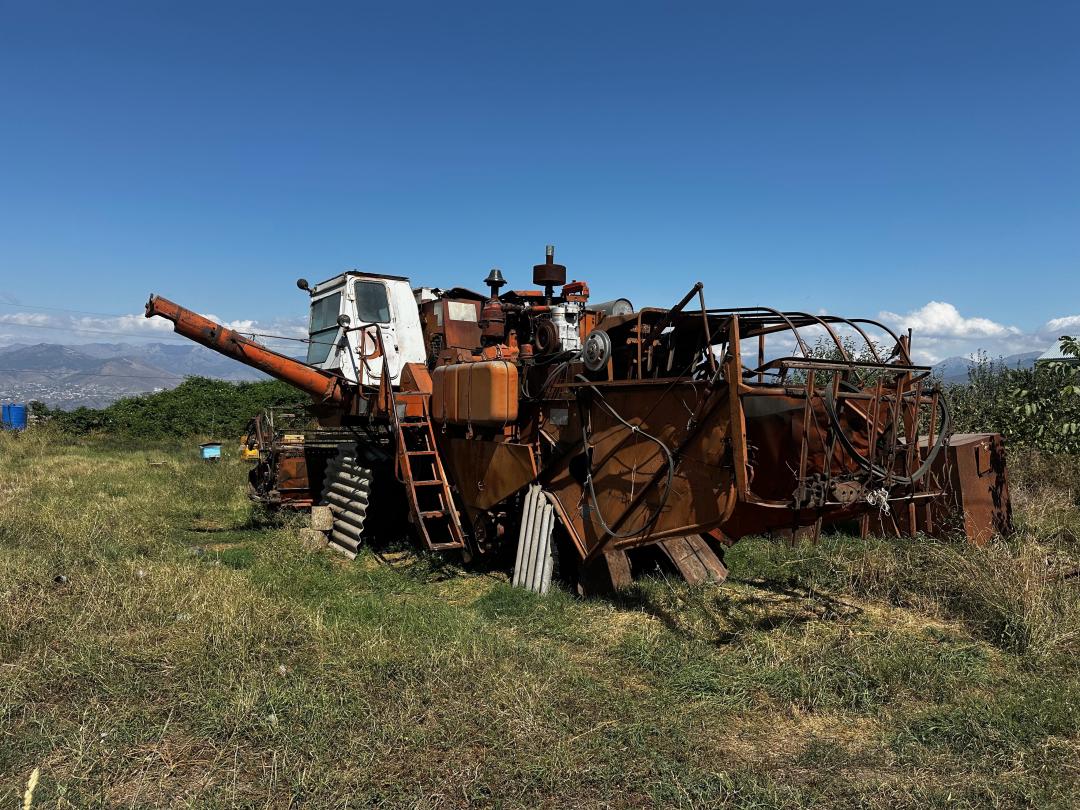
The scorching sun makes the villages of Syunik look even more deserted. New playgrounds have been built in some villages, but no children are seen playing. In the plowed fields, shepherds graze sheep, whose territory has shrunk. Scrap metal and malfunctioning tractors and combines from an unknown time period are scattered on the village streets and in the yards of locals. Although there is much talk about the beautiful nature and tourism potential of Syunik, tourists are rarely seen. Perhaps one reason that attracts them to visit Syunik is the Wings of Tatev cable car, initiated by Ruben Vardanyan in 2010. For many in the province, the main source of income is the Zangezur Copper and Molybdenum Combine, with its approximately 4,500 employees.
“Should the young people ask their parents for money? That’s why they go to work in the Qajaran mine or serve in the army. I know it’s hard, but what can they do?" asks an elderly man in Khnatsakh. “Yes, they don’t shoot now, but I’m not so worried about whether they’re shooting or not. I’m more worried about how I’m going to heat my home in winter. Last year, the Goris municipality provided 2 cubic meters of wood, but they say there won’t be that aid this year, and I can’t afford the electricity,” he continues.
“Almost only the elderly are remaining in the village like me. My ancestors' graves are here. If it continues like this, we will simply join them, and only our gravestones will remain as proof that Armenians once lived here. Freshly paved asphalt is good, but who needs a nice road that leads to a difficult life like this where people don’t want to live?” asks the villager.
Contributed by Marut Vanyan
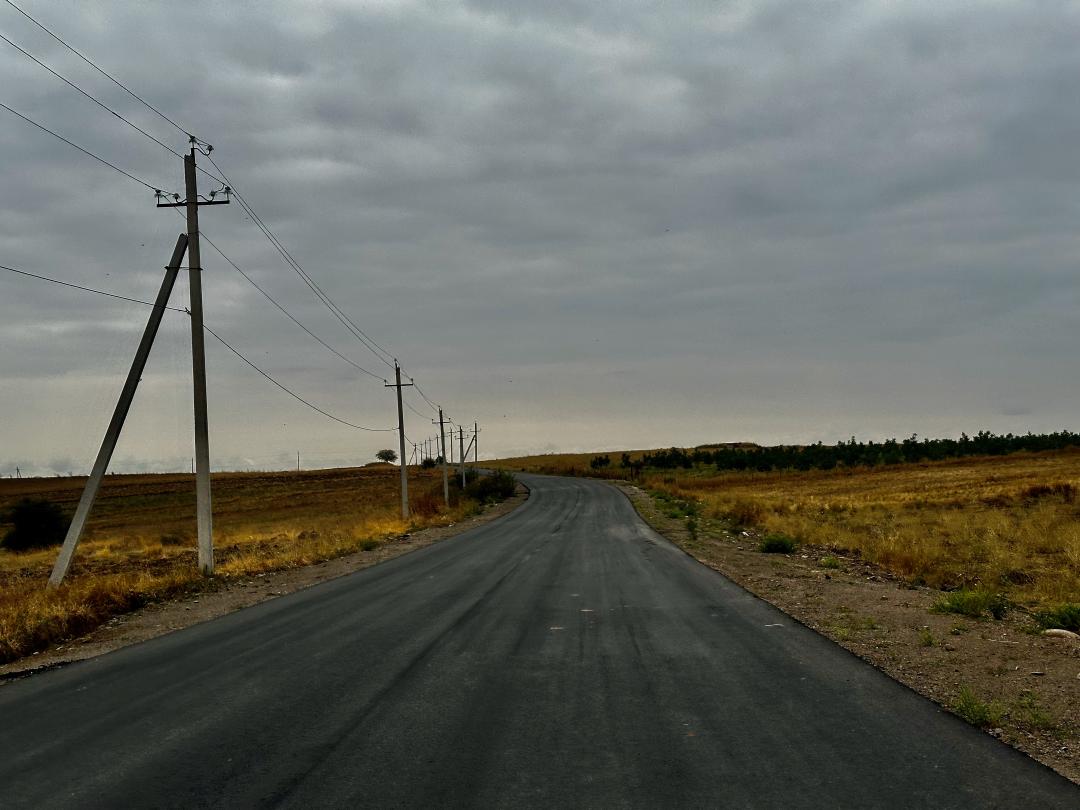
Road to Capan. Credit: Marut Vanyan
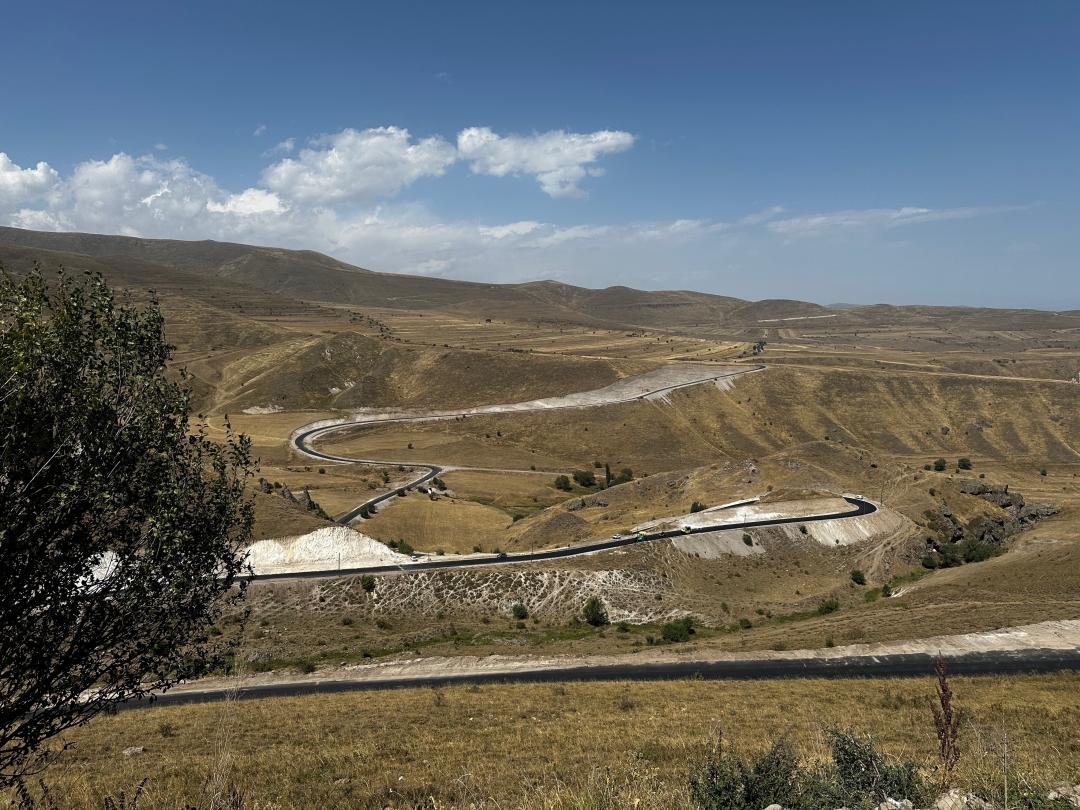
Syunik Roads. Credit: Marut Vanyan
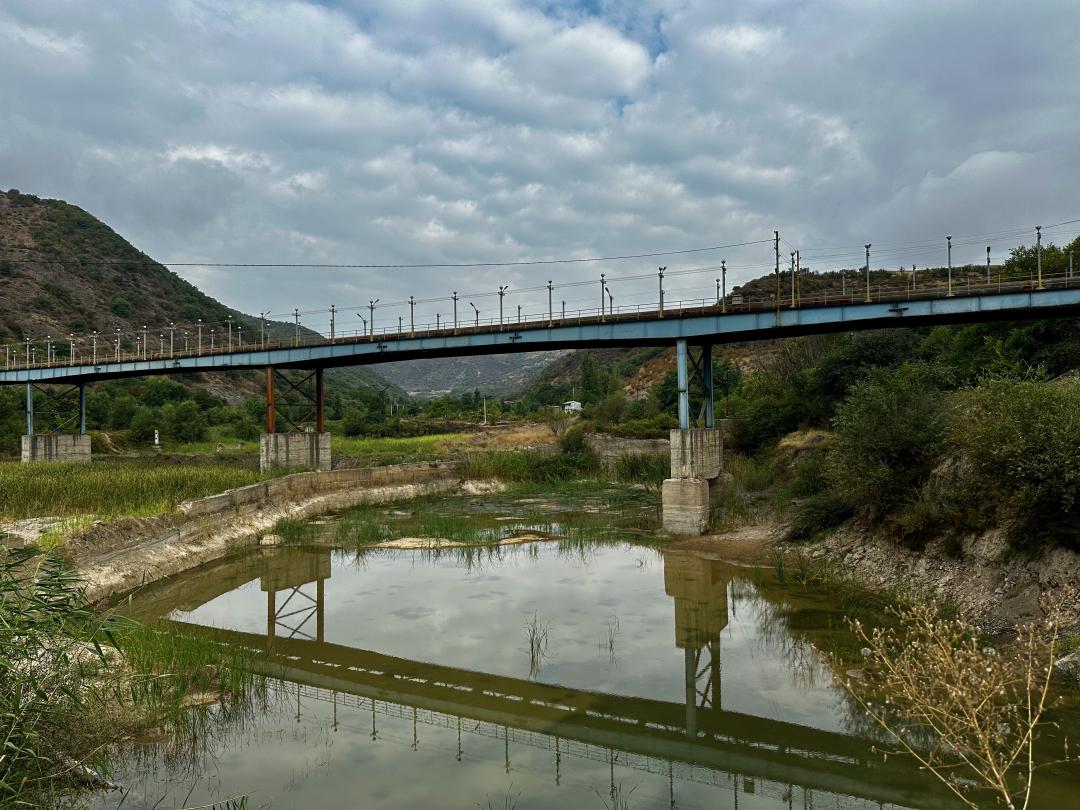
Kapan bridge. Credit: Marut Vanyan
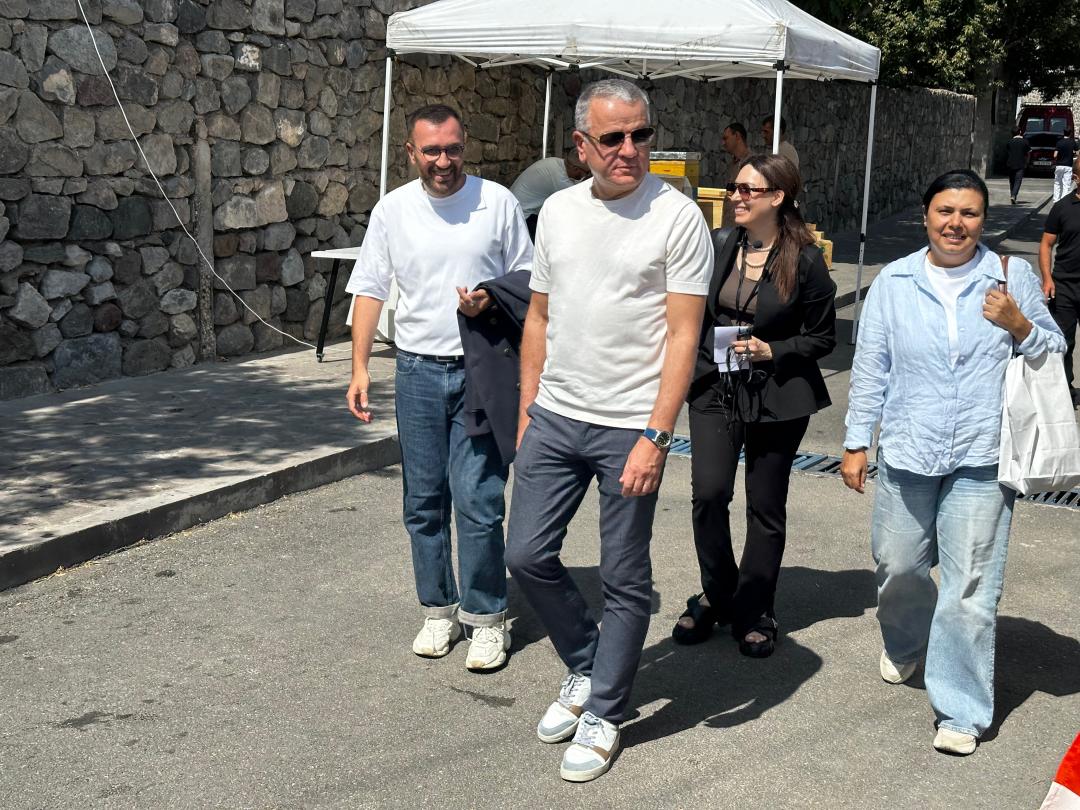
EU Ambassador visits Syunik. Credit: Marut Vanyan
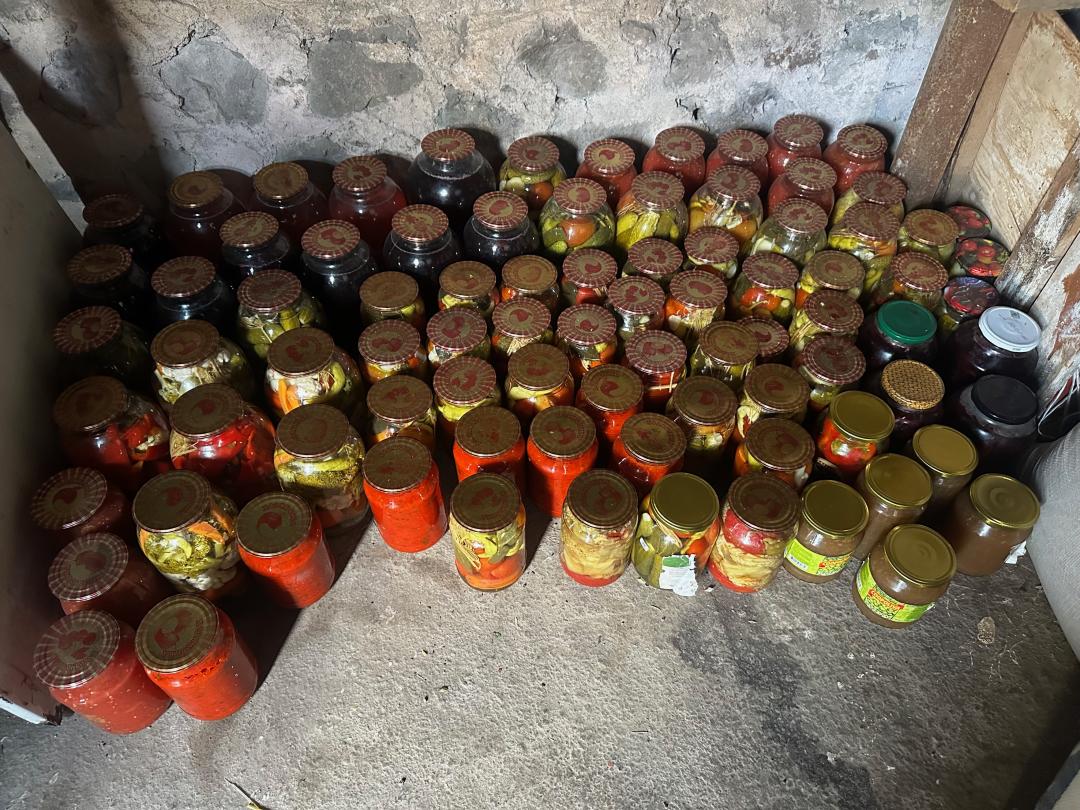
Valya's warehouse. Credit: Marut Vanyan
Insights,
Politics,
Armenia |
EU, Nikol Pashinyan, Syunik, Armenia-Azerbaijan Relations, Kapan, Marut Vanyan