
U.S.–Armenian Relations Amid Shifting Power Dynamics: Expectations and Challenges
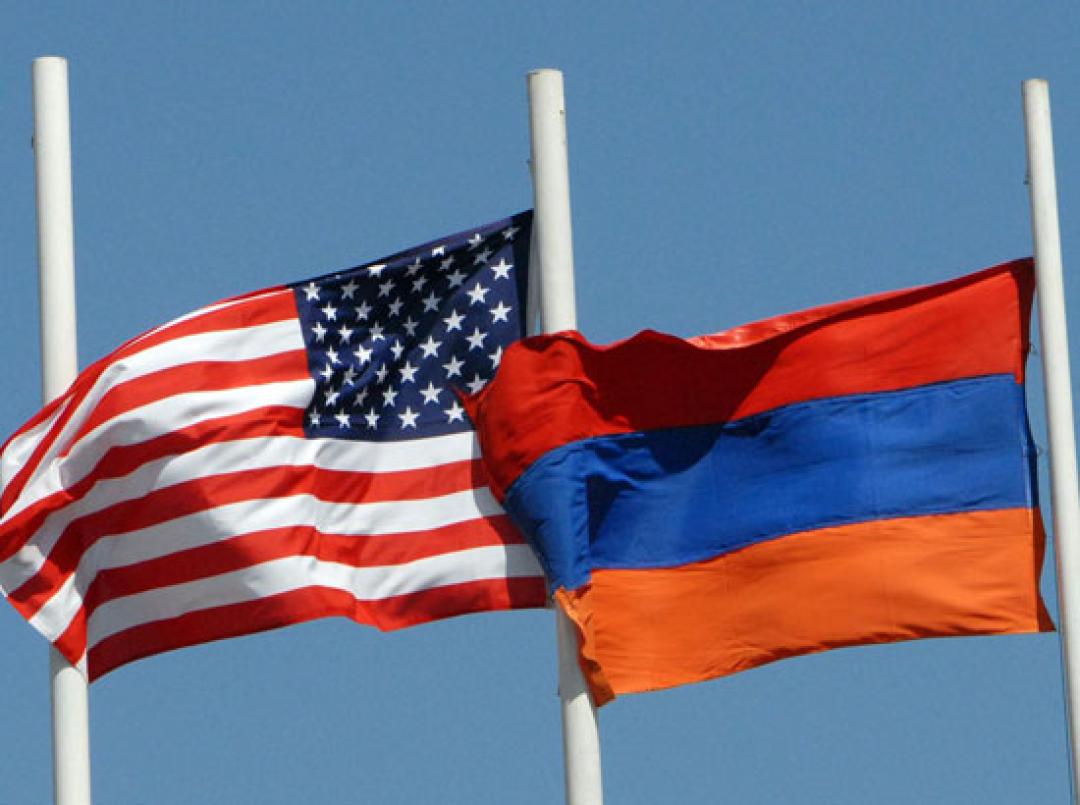
The South Caucasus is entering a new phase of political and geopolitical transformation, characterized by shifting power balances, contested connectivity projects, and the redefinition of external influence in the region. Against this backdrop, U.S.-Armenian relations are entering a critical and potentially transformative stage. Historically grounded in democratic cooperation, humanitarian assistance, and diaspora-driven engagement, bilateral relations are now being tested by Armenia’s heightened security vulnerabilities and its search for reliable external partners. The TRIPP proposal has intensified debates within Armenia regarding expectations of U.S. involvement—not only as an economic partner but also as a political and strategic actor capable of shaping post-conflict realities. For many in Yerevan, American participation in such a long-term infrastructure project is perceived as a possible counterweight to regional pressures and a signal of deeper geopolitical commitment. However, these expectations face major challenges, as U.S. willingness to turn economic and infrastructure engagement into lasting political or security guarantees remains uncertain amid competing interests from Russia, Turkey, Iran, and the EU.
On the other hand, rising tensions among Iran, Israel, and the United States are making Armenia’s regional environment increasingly sensitive. U.S. pressure on Iran threatens Armenia’s vital economic ties with Tehran, which help offset closed borders with Turkey and Azerbaijan. As Armenia navigates major power rivalries and deepens ties with the West, Iran’s political sensitivity and attention toward Armenian territory have intensified. To assess the challenges shaping bilateral relations amid rising U.S.–Iran tensions, we consulted Armenian experts.
U.S. Policy Uncertainty Sparks Global Concerns
Speaking to us, Dr. Benyamin Poghosyan, Senior Research Fellow at the Applied Policy Research Institute (APRI) of Armenia, noted that while discussing Armenia–U.S. relations—even setting aside the Iranian context for a moment—a potential challenge lies in the apparent tendency of the current U.S. administration to shift its attention very quickly from one issue to another, suggesting a lack of a clear strategic approach and long-term planning in addressing certain problems.
“Decisions on critical issues are made rapidly, often bypassing traditional diplomatic channels through a small circle close to the president, via so-called ‘WhatsApp’ or ‘Signal’ diplomacy. Such decisions can change quickly, creating unpredictability in U.S. long-term foreign policy, including its engagement and interests in the South Caucasus. While Russia’s presence and strategic interests there are longstanding, the U.S., particularly under the current administration, cannot guarantee sustained attention to the region,” the analyst notes.
Benyamin Poghosyan recalled that in early 2025, Azerbaijan signaled plans to open the Syunik corridor by force. Armenia sought ways to stop it, and the U.S. proposed easing Azerbaijan’s transit to Nakhchivan and Turkey while preventing Syunik’s occupation. U.S. involvement makes large-scale Azerbaijani action unlikely, but rapid shifts in Washington policy create unpredictability. The political scientist expresses concern that if, for some reason, US interests or attention to the South Caucasus or Armenia or TRIPP decrease in the near future, the only, so-called, deterrent factor that currently exists against Azerbaijan may be neutralized very quickly, and Armenia will again find itself in the situation of the first months of 2025. According to Benyamin Poghosyan, this is not solely an issue of US-Armenian relations and could apply to any other country as well.
Words Replace Action: Only Statements, No Strong Criticism
Regarding the context with Iran, Benyamin Poghosyan is assured that between 2021 and 2024, Iran helped prevent Azerbaijan from forcibly opening the so called Zangezur corridor, warning it could use military force. However, Iran’s influence has weakened since 2023 amid internal unrest and escalating tensions with Israel and the U.S., raising the risk of further military actions. In this context, Iran cannot be at all pleased with the prospect of a U.S. presence along the Armenia-Iran border. However, at this point, Iran has no means to express its dissatisfaction other than issuing statements, such as the recent remarks by Iran’s newly appointed ambassador to Armenia, which suggested that an impression is forming of Armenia becoming a hub for anti-Iranian activities. Iran sees its borders as increasingly insecure: Israel can operate via Azerbaijan, the Iran-Iraq border is affected by U.S. influence and local actors, and even the Armenia-Iran border is becoming less reliable, raising concerns in Tehran.
Regarding the question of how direct or mediated U.S. military action against Iran might affect US-Armenian relations at the political level, Benyamin Poghosyan believes that Armenia would likely be satisfied with statements alone, and would not issue direct criticism of the U.S., as was the case during the July 2025 strikes against Iran. At that time, Armenia responded by emphasizing that international law must be respected and that disputes should be resolved peacefully. Notably, this statement was made on the first day of the conflict, rather than after the U.S. strikes had occurred. Benyamin Poghosyan also does not believe that any renewed military operations would come solely in the form of a direct U.S. attack; rather, it would likely involve another Israeli strike, possibly with U.S. involvement.
TRIPP: Between Expectation and Constraint
Recently (on January 13), Armenia and the United States issued a joint statement on the Implementation Framework of the TRIPP project, stating that it is now effectively entering its practical phase. According to the published document, the TRIPP project has been set for an initial term of 49 years, with the United States holding a 74% stake and Armenia 26%. The partnership is expected to be extended for an additional 50 years—unless either party objects—by granting the Armenian government additional ownership, increasing its stake to 49%. In the areas of security and customs control, the document states that Armenia’s sovereignty and authority over border and customs operations will be absolute and unquestionable. Using a Front Office–Back Office operational model, Armenian officials will maintain a physical presence at all border and customs facilities in the country. While the Armenian government insists TRIPP respects Armenian sovereignty and jurisdiction over infrastructure on its territory, opposition voices remain cautious, questioning aspects of border delimitation and foreign involvement.
Armenian authorities have outlined a timeline aiming to finalize all details in early 2026, with construction expected to begin in the second half of 2026. This was reiterated by Armenian Prime Minister Nikol Pashinyan in parliament, noting that railways, roads, and pipelines are planned components.
On the challenges and prospects of the TRIPP project, Benyamin Poghosyan says the next step is establishing a joint US-Armenian company, after which construction can begin. “Establishing the company is complex, as it must be registered under Armenian law with the U.S. holding 74%, while also complying with American law—a major legal challenge”. Regarding the launch of construction in 2026, our interlocutor is also skeptical, noting that it will be a lengthy process: “Whether railway or highway, the project crosses private property that must first be declared public, compensated, and transferred to the state. Only then can the registered company hold an international tender and select contractors. Actual construction is unlikely before early 2027,” he added.
Azerbaijan–Nakhchivan–Turkey Transit Significantly Eased, But Not 100% Unhindered
Benyamin Poghosyan notes that the published text of the TRIPP Implementation Framework makes it clear that an effort has been made to reconcile Azerbaijan’s demand for unhindered transit with Armenia’s insistence on maintaining sovereignty. In other words, a model has been chosen that, on one hand, meets Azerbaijan’s demand—ensuring they do not have to face Armenians while passing through Syunik—while preserving Armenia’s authority over the territory. The so-called front office is expected to be operated by the American company. There is a view that foreign private firms will be involved, and that there will be virtually no human interaction. The front office is expected to function as an automated system—meaning that, through this arrangement, Azerbaijan’s conditions are effectively met. On the other hand, by demanding unhindered transit, Azerbaijan understood that Armenia should not have the right to block the movement of any person or cargo through its territory. However, according to the TRIPP Implementation Framework, while Armenian officials or state representatives will not interact face-to-face with Azerbaijanis, they will still make the decisions. At a minimum, this allows Armenia, for example, to deny passage through Syunik to a particular Azerbaijani individual or a truck carrying certain cargo destined for Nakhchivan. According to Benyamin Poghosyan, this naturally causes some dissatisfaction among Azerbaijanis, as it does not guarantee 100% unhindered transit. The Azerbaijani expectation was that Armenia’s relevant authorities would only be notified when a specific individual or cargo was being transported but would have no right to block the movement of anyone. Thus, some of Azerbaijan’s demands are met, but others are not fully satisfied. In other words, it creates a situation where, on one hand, Azerbaijani authorities can claim that they have largely achieved what they wanted—that a de facto corridor exists. On the other hand, the fact that Armenian authorities will still have the ability, in certain cases, to deny passage to specific individuals or cargo allows Armenia to assert that this is not, in fact, a corridor. So where does the reality lie? According to Benyamin Poghosyan, the reality lies somewhere in between. TRIPP provides significantly eased transit from Azerbaijan to Turkey via Nakhchivan—compared, for example, with Armenia-Georgia or Armenia-Iran crossings—but it does not guarantee 100% unhindered passage.
Iran’s Involvement in TRIPP Appears Unlikely
Armenia has not officially commented on whether it plans to discuss aspects of the TRIPP project with Iran, or whether such talks have already taken place. The project, which involves U.S. participation, could potentially touch on Iranian economic interests, though no official information has confirmed this. According to analyst Benyamin Poghosyan, citing statements from Armenian officials, no third-party involvement is anticipated, and the project can move forward only with the consent of Armenia and the United States. Specifically, statements by Armenia’s Prime Minister and Minister of Foreign Affairs indicate that at this time neither Turkey nor Russia’s participation is being considered, creating the impression that Armenia does not seek their involvement.
“I therefore assume that the same approach could apply to any country, including Iran, especially since Iran’s participation would be entirely unacceptable to the United States. In other words, while Turkey’s involvement might still be acceptable to the Americans, given its NATO membership, and Russia’s participation could be considered within the framework of a broader U.S.-Russia agreement on the post-Soviet region, Iran’s involvement, in my view, would be unacceptable to the United States. As far as I understand, the Armenian government is generally opposed to the participation of any third party. Consequently, both sides would likely oppose Iran’s involvement. Theoretically, the Americans may be in favor of Turkey's participation, but Armenia, I suppose, is not. Although, taking into account the current epopee of Armenian-Turkish relations, it is difficult to predict with certainty what Armenia's position will be. As for Russia’s participation, if a broader U.S.-Russia agreement on the post-Soviet region involves Russia in TRIPP—or hands the area to Moscow—Armenian leaders are unlikely to oppose it”, the analyst concludes.
Hopes, Fears, and Indifference Shape Local Sentiment
The attitudes and positions of communities located along Trump’s route—particularly regarding potential benefits, challenges, and consequences if the project proceeds as planned—remain unclear, as only fragmented information is currently available. According to recent media surveys conducted among local residents, approximately half of Meghri’s population views the TRIPP project with hope, while the other half express concerns that it may bring no economic benefits to the locals. Overall, however, both residents and local authorities remain largely unaware of what the project entails and what potential impact it could have on their communities. In Syunik, people are generally more skeptical. Those who support the current authorities believe the project could bring peace to the region, while opponents argue that it would be a humiliation for the country. The majority, however, remain indifferent (source: CivilNet).
Our interlocutor, political analyst Benyamin Poghosyan, notes that for anyone with a background in geopolitics, it is clear that after the loss of Artsakh, Armenia could not have denied Azerbaijan a significantly facilitated route to Turkey—otherwise, Azerbaijan would have taken it by force. Based on this, Poghosyan assumes that locals would likely prefer any facilitated route to involve a major external player, rather than result in the actual occupation of territory.
"The question is which country is involved: initially assumed to be Russia per the 2020 trilateral statement, while the August 2025 Washington declaration envisions U.S. involvement. But the world is changing rapidly; in a few years, Russian involvement could return, or U.S. involvement could remain,” the analyst concludes.
Destabilization in Iran Would Not Benefit the South Caucasus
Our second interlocutor, political analyst and Director of the Regional Center for Democracy and Security, Tigran Grigoryan, speaking about the challenges in Armenian-American relations amid tensions between Iran and the U.S., noted that the main strategic challenge is actually linked to the United States’ broader grand strategy, which highlights regions of vital interest, showing that neither the South Caucasus, the Middle East, nor Europe are included, raising questions about American involvement globally.
Tigran Grigoryan views TRIPP developments positively, nevertheless, the U.S. strategy emphasizes achieving results with minimal resources, mainly via presidential diplomacy, thus making long-term engagement uncertain. Tigran Grigoryan calls Iran’s situation problematic due to U.S. pressure and internal instability, stressing that any destabilization would serve neither Armenia’s nor the South Caucasus’s interests.
According to Tigran Grigoryan, overall, developments in U.S.-Armenia relations over the past two years have followed a more positive trajectory. These include the signing of the Strategic Partnership Charter, a number of initiatives stemming from it—such as projects in the IT and high-tech sectors—and the potential construction of a new nuclear power plant by the United States. “In other words, there are several areas where relations can be deepened, and most importantly, there is continuity between the two administrations,” the analyst emphasizes.
At the same time, Tigran Grigoryan believes that if the United States were to initiate a direct or mediated war against Iran, it would not have a significant impact on US-Armenian relations at the political level. “I believe it is equally clear to the United States that Armenia is situated in a geographically very complex situation. At the moment, Iran is one of Armenia's two open borders, and in that regard, the West has always had a softer approach towards Armenia when it comes to relations with Tehran. From an economic perspective, we have seen that tariffs and sanctions were imposed on countries trading with Iran. However, Armenia-U.S. trade does not reach volumes significant enough for this to have a serious impact on Armenia’s economy,” the analyst notes.
TRIPP Implementation Framework Set to Produce Unequal Conditions
Commenting on the joint statement by Armenia and the United States on January 13 regarding the Implementation Framework of the TRIPP project and the challenges arising from it, Tigran Grigoryan notes that the principle of reciprocity has not been upheld.
“I believe it contains key notes that, for the most part, provide clarifications on various details and help dispel certain concerns. On the other hand, it was clear from the outset that the main issue here is the principle of reciprocity, which will not be maintained. In other words, all these simplified procedures and mechanisms being created—such as front office/back office—will not function in Azerbaijan’s territory. This, in practical terms, will create far more serious issues for Armenia when traveling through Azerbaijani territory than it will for the Azerbaijanis themselves. In short, unequal conditions will be created. Another challenge lies not in Armenian-U.S. perceptions but in Armenia’s and Azerbaijan’s own views of the process. While the agreed border and customs arrangements appear acceptable to Armenia, it remains unclear whether Azerbaijan fully accepts the published details—especially the scope of Armenia’s authority over this process. Concerns from pro-government circles in Baku suggest that reaching a final agreement will be difficult," the analyst notes. Like our previous interlocutor, Tigran Grigoryan also believes that Iran will have no involvement in the TRIPP project. Even if Armenia discusses the matter with Iran, these talks are primarily aimed at clarifying details.
“In certain sections, Iranian trucks will likely at least pass through this route, and discussions on this matter are also underway. However, the most important issue for the Iranian side is, of course, the very U.S. security presence along this route. The statement regarding the Implementation Framework hints that the TRIPP project will involve private companies to ensure security. This will likely raise concerns on the Iranian side. The main task here is the diplomatic work aimed at mitigating Tehran’s reactions that are mixed: political and diplomatic circles are more constructive and measured, while the spiritual leader’s team and security officials take a harsher tone. This internal divide extends beyond this issue to others as well. And when it comes to communications, the primary goal of these exchanges will be to alleviate those concerns,” Tigran Grigoryan concludes.
Contributed by Anna Vardanyan, an Armenian political journalist and researcher with over 18 years’ experience in defence policy, international relations, and security in Eastern Europe and the Caucasus.
Insights,
Politics,
Armenia |
EU, South Caucasus, Russia, Turkey, Iran, Israel, USA, Donald Trump, Syunik, Benyamin Poghosyan, TRIPP, Anna Vardanyan, Tigran Grigoryan