
Armenian Parliament Debates Transport Issues, Regional Projects, And Security Policy
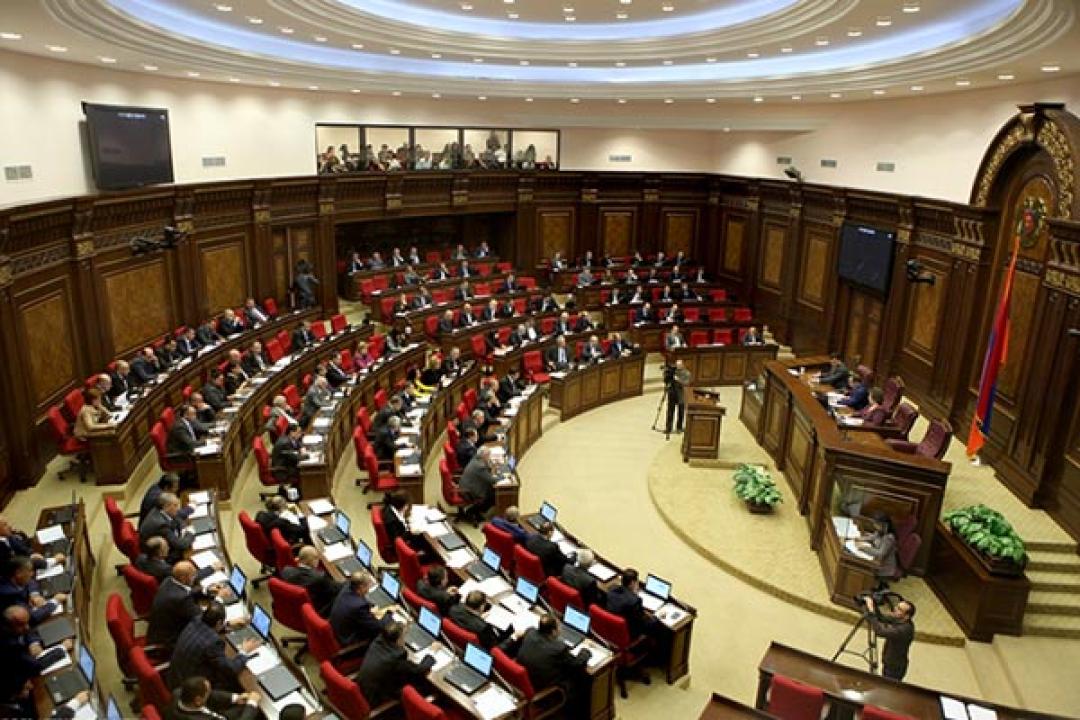
On March 4, Garnik Danielyan, a member of parliament from the Armenia bloc, raised concerns during Government Hour in the National Assembly of Armenia regarding difficulties faced by Armenian freight forwarders and business representatives in Georgia. He specifically highlighted problems affecting cognac producers and agricultural enterprises. "I’m receiving numerous materials stating that our compatriots are being harassed on this road and forced to stand in lines for weeks and months. The government is ignoring our citizens. Have you discussed this issue with your Georgian counterpart?" Danielyan asked Prime Minister Nikol Pashinyan.
In response, Pashinyan stated that all issues on the agenda — economic, political, and transportation-related — were discussed with Georgian authorities and that concrete agreements had been reached regarding future organization of work. When Danielyan pressed on whether the resolution was dependent on material incentives, Pashinyan accused him of provocation and emphasized that transportation, export, and import issues are being addressed by the government. He added that any additional information should be reported to law enforcement agencies.
Regarding the Trump Route for International Peace and Prosperity (TRIPP), Pashinyan addressed concerns raised by Shirak Torosyan, an MP from the ruling Civil Contract party, who said some in Georgia perceive TRIPP as a threat to their transit routes. The Prime Minister explained that TRIPP should be viewed in the broader context of freight transport from China to the European Union through the South Caucasus. "We are talking about trillions of dollars worth of goods, and even 20 railway and road links through the South Caucasus countries would not be able to handle such a flow," he stated. Pashinyan emphasized that Armenia, Georgia, and Azerbaijan should see regional communications as a shared opportunity to increase revenues and ensure secure transport routes, adding that his counterparts in Tbilisi share this perspective.
On the same day, Kristine Vardanyan, an MP from the Armenia bloc, played a recording of a past interview with Pashinyan in the National Assembly, in which he emphasized the need for international guarantors for any peace agreements. She questioned whether Pashinyan had changed his position by ratifying a document without guarantors. Pashinyan responded that understanding evolves over time, comparing it to Einstein’s theory of relativity: knowledge and adaptation are essential. "Yes, today we have peace, and we've realized one thing: if we ourselves aren't the guarantors of our peace, no one else will, because only we need peace; no one else needs peace, at least not more than we do," he stated. He added that Armenia had previously relied on a security guarantee but became a sovereign state by abandoning it, emphasizing the need for flexibility in an ever-changing geopolitical environment.
Also on March 4, Lilit Galstyan, a member of the Armenia faction, addressed rising domestic crime and youth violence during Government Hour. She cited four cases of brutal peer beatings in schools over the past four months and noted ongoing issues such as hazing in the army, which has contributed to non-combat deaths among conscripts — 36 in 2024 and 34 in 2025. Galstyan asked what preventative measures, studies, and accountability actions had been undertaken, and inquired about the status and results of the recently discussed crime prevention strategy.
Pashinyan responded by contextualizing the issue within the role of social media and broader cultural factors. He noted that incidents previously unrecorded online are now visible, amplifying public perception. Addressing army deaths, he explained that statistics also include non-combat cases such as accidents or natural causes. Pashinyan stressed that crime is embedded in Armenian society, pointing to a pervasive culture of violence instilled from childhood and perpetuated into adulthood and military service. He argued that addressing these problems requires confronting the broader criminal subculture.
Galstyan criticized the Prime Minister’s response as casual and insufficient, arguing that it failed to reflect the gravity of the issues and the responsibility of the ruling political force. She warned that without a serious approach to combating social and institutionalized violence, Armenian society has no future. Pashinyan countered that structural challenges, including the existence of certain political parties that perpetuate violence internally, also impact societal behavior. He emphasized that one of the government’s responsibilities is to address these systemic issues as part of a broader strategy to combat crime.