
Armenia's Church-State Tensions Deepen Amid Political Crisis
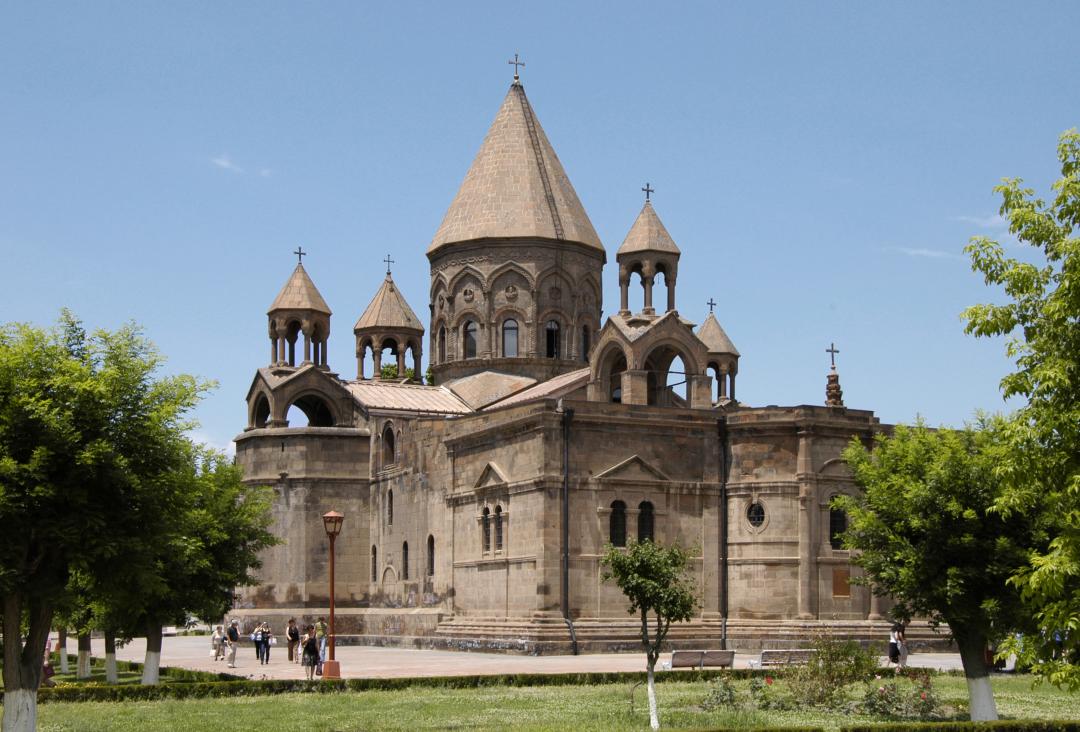
Source: Areg Amirkhanian, Wikimedia
Tensions between the Armenian government and the Armenian Apostolic Church escalated this week amid protests and criminal proceedings involving high-ranking clergy.
On July 1, Artur Poghosyan, Head of Armenia’s Investigative Committee, disclosed that authorities had uncovered a criminal group aiming to create "uncontrollable chaos" in the country. He linked these activities to the ongoing criminal proceedings against Archbishop Bagrat Galstanyan, a key figure in recent anti-government protests. Poghosyan added that more individuals would soon be named in the investigation.
The political-religious friction intensified as Prime Minister Nikol Pashinyan publicly addressed criticism from certain priests. Reaffirming his view of married priests as his "brothers" because they do not "deceive people or God," Pashinyan questioned the higher status of celibate priests like Ktrich Nersisyan, who reportedly has a child. He then demanded that Nersisyan, who is not the Catholicos, vacate the Patriarchal chambers or be forcibly removed.
In response, Bishop Gevorg Saroyan condemned law enforcement’s recent entry into the Holy See of Echmiadzin as "absolutely unacceptable." He rejected any politicization of the church, declaring, "It is better to remain a persecuted church than to become a tool." He framed the government's actions as an attack on the Armenian Church itself, not just on Catholicos Garegin II.
Parliament Speaker Alen Simonyan defended the police action, stating that law enforcement did not "invade" the Catholicos's residence. Instead, he claimed another cleric, Archbishop Mikael, had "run away and hid" there to evade a court order. Simonyan said the National Security Service later withdrew to prevent an escalation of the situation.