
Azerbaijan, Türkiye, Syria, And Qatar Unite To Restore Syria’s Energy Sector With 6 Million Cubic Meters Daily Gas Supply
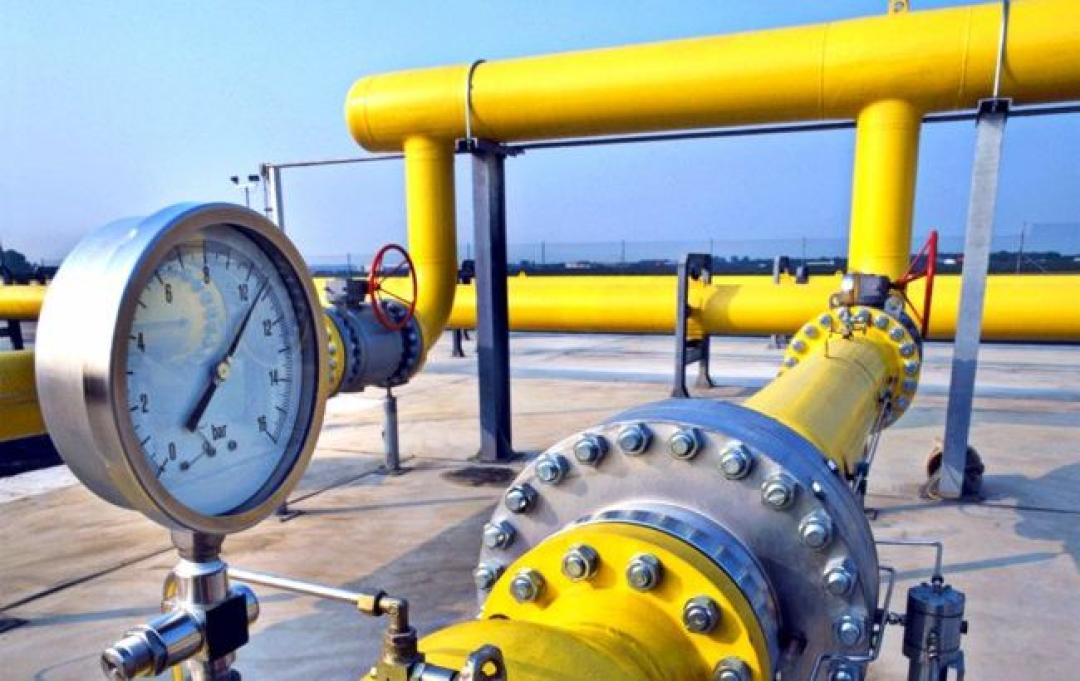
On August 2, the official opening ceremony of the Türkiye-Syria Natural Gas Pipeline, which enables the transportation of Azerbaijani gas to Syria via Turkish territory, was held in the village of Yavuzlu in Türkiye's Kilis province. During the ceremony, Mikayil Jabbarov, the Minister of Economy of Azerbaijan, Alparslan Bayraktar, the Minister of Energy and Natural Resources of Türkiye, Fahad Hamad Hassan Al-Sulaiti, the Head of the Qatar Development Fund, and Mohammed Al-Bashir, the Minister of Energy of Syria, participated in the event. After delivering speeches, the officials symbolically opened the gas valve on stage, marking the launch of Azerbaijani gas exports to Syria through Türkiye. According to the agreement signed between the State Oil Company of Azerbaijan (SOCAR) and the Syrian government, all technical preparations have been completed. In the initial stage, up to 1.2 billion cubic meters of natural gas will be supplied annually to Syria, particularly to power plants in Aleppo and Homs, through Türkiye's Kilis province, with the aim of producing 1,200–1,300 megawatts of electricity.
Mikayil Jabbarov emphasized that the project represents a major milestone in Azerbaijan’s energy diplomacy and underlined its significance in restoring Syria’s damaged energy infrastructure. He stated that this step was made possible by the political will of the leaders of Azerbaijan, Türkiye, Qatar, and Syria, and by joint efforts to strengthen regional economic ties. He also recalled that energy cooperation was highlighted during the presidents’ meetings in Antalya on April 11 and in Baku on July 12. Jabbarov stressed that the Azerbaijani government gave urgent instructions to complete the project promptly and acknowledged Türkiye's crucial support. He noted that the strategic energy partnership between Azerbaijan and Türkiye played a decisive role in the project’s success. According to Jabbarov, the gas exports mark a new chapter in Azerbaijan’s energy export history and create a bridge between the South Caucasus and the Middle East.
Alparslan Bayraktar, the Minister of Energy and Natural Resources of Türkiye, announced that the initial capacity for gas exports to Syria could reach up to 2 billion cubic meters annually. He stated that approximately 6 million cubic meters of natural gas would be transported daily via the Yavuzlu Measurement Station. Bayraktar emphasized that the project is a historic symbol of Türkiye-Syria cooperation and thanked Azerbaijan, Syria, and Qatar for their collaboration. He added, "This project will contribute to the normalization of life in Syria, improve people’s living standards, and accelerate the return of Syrian refugees." The minister also revealed the signing of a swap agreement with SOCAR for the gas delivery at the Türkiye–Syria border and highlighted that Azerbaijan’s consistent support has been evident in this project. He explained that this energy supply will enable power plants in Syria to become operational, leading to the activation of approximately 1,200 megawatts of installed power capacity.
Mohammed Al-Bashir, the Minister of Energy of Syria, expressed gratitude to Azerbaijan and Türkiye for their role in restoring Syria’s infrastructure. He called the cooperation with these "friendly and brotherly countries" a great source of happiness and confirmed that gas transportation had officially begun. Al-Bashir stated that the current infrastructure enables the transfer of 3.4 million cubic meters of gas daily, which will directly serve the welfare of the Syrian population and ensure a sustainable energy supply.
In his remarks to journalists, Jabbarov highlighted that Azerbaijani gas is now exported to 14 countries, with SOCAR planning further expansion into the Middle East. He clarified that the exported gas is directly managed and sold by SOCAR and is not part of any foreign consortium. The minister also noted that all gas and energy exports to Türkiye are coordinated through projects such as the Baku-Tbilisi-Ceyhan oil pipeline, the Baku-Tbilisi-Erzurum gas pipeline, and the Nakhchivan–Türkiye electricity interconnector. Jabbarov also underlined four key aspects of the gas export to Syria: Azerbaijan’s growing global role as a gas supplier, the importance of supporting Syria at a sensitive time, the success of Azerbaijan’s balanced foreign policy under President Ilham Aliyev, and the expansion of Azerbaijan’s gas export geography. He stated that the realization of this project in a short timeframe demonstrates international trust in Azerbaijan and praised SOCAR’s role in navigating complex logistical and commercial conditions.
Bayraktar, during a press briefing, underlined that future logistics and energy supply routes, including those from Central Asia, will transit Türkiye via the Zangezur corridor and Azerbaijan. He noted that Türkiye already exports electricity to Syria from eight points and aims to increase this volume by 25% initially, with further doubling expected after infrastructure development. The goal is to reach a connection capacity of 860 megawatts to supply electricity to 1.6 million Syrian homes. Bayraktar noted that the transported Azerbaijani gas would be used to generate electricity in Aleppo, supplying energy for around 5 million households. He emphasized the urgency of the project and the importance of the infrastructure, which had been completely destroyed during Syria’s 14-year civil war. According to him, the initiative was accelerated after the meeting between President Ilham Aliyev and President Recep Tayyip Erdoğan in Khankendi. Al-Bashir confirmed that discussions were held with Jabbarov regarding broader cooperation and upcoming projects between Azerbaijan and Syria. He noted that technical delegations would conduct mutual visits in the near future.
In a joint statement released by the Turkish Ministry of Energy and Natural Resources, Azerbaijan, Qatar, Syria, and Türkiye described the pipeline as an essential step in the post-conflict reconstruction of Syria. The 93-kilometer pipeline, constructed by the Turkish company BOTAŞ, begins in Kahramanmaraş province and reaches Syria through Kilis. With a capacity of 6 million cubic meters per day, the pipeline is expected to significantly increase the electricity supply in Aleppo.