
EU Commission on Georgia: “Candidate Country in Name Only”
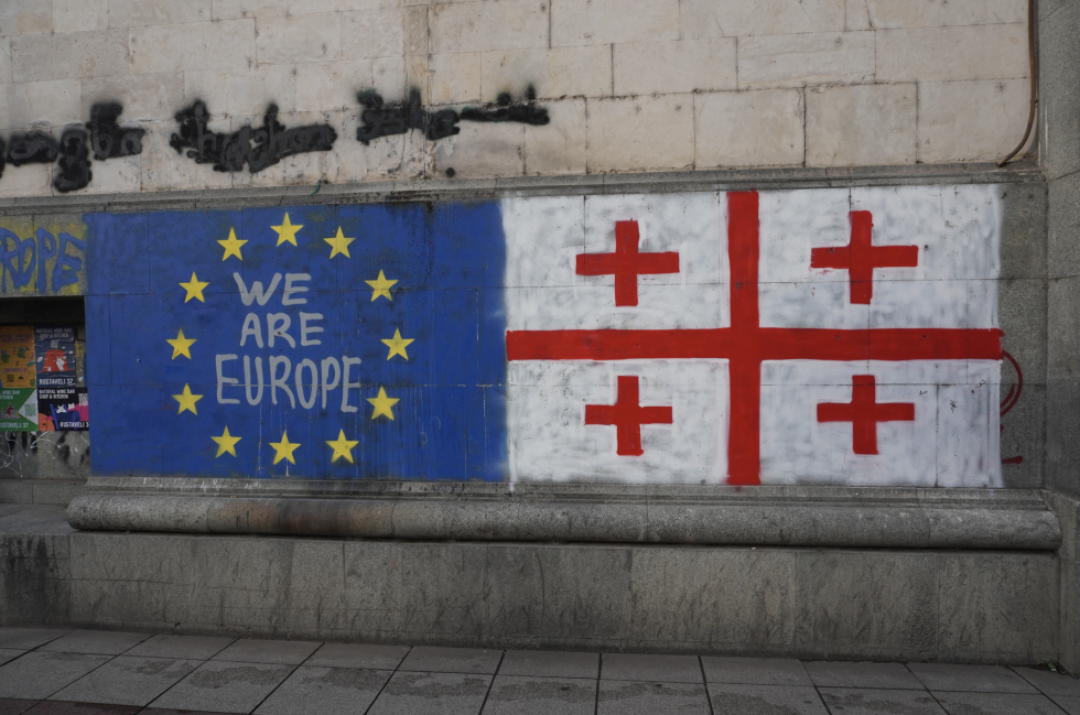
On November 4, the European Commission adopted its annual Enlargement Package, assessing the progress made by enlargement partners over the past year and reaffirming that EU enlargement remains a top priority. Ursula von der Leyen, the President of the European Commission, emphasized that the accession of new Member States was "increasingly within reach," and highlighted the importance of a merit-based process. She stated, "We are more committed than ever to turning EU enlargement into a reality. Because a larger Union means a stronger and more influential Europe on the global stage. But it must and will remain a merit-based process. Our package provides specific recommendation to all our partners. And to all of them we say: EU accession is a unique offer. A promise of peace, prosperity and solidarity. With the right reforms and a strong political will, you all can seize this opportunity."
The package assessed the progress of Montenegro, Albania, Ukraine, the Republic of Moldova, Serbia, North Macedonia, Bosnia and Herzegovina, Kosovo, Türkiye, and Georgia in their respective EU integration paths. It underscored that the pace of reforms—particularly in democracy, the rule of law, and fundamental rights—directly determined the speed of accession. These reforms were said to enhance prosperity, stability, and security, while also unlocking new opportunities through strategic investments and access to the Single Market. According to the Commission, the assessments came with detailed recommendations and guidance on reform priorities, serving as a roadmap for aspiring Member States. The Commission reiterated its full commitment to supporting these countries in their journey and to advancing gradual integration into the Single Market before full accession. Significant progress was noted over the past year, with the Commission reaffirming enlargement as a key policy goal under the current mandate. It stressed that both the preparedness of candidate countries and the EU’s internal readiness were essential for the process to advance. To ensure this, the Commission announced that a Communication outlining in-depth policy reviews and reforms would be presented soon. The Commission further emphasized that future Accession Treaties should include stronger safeguards to prevent backsliding on commitments made during accession negotiations. It highlighted the importance of protecting democracy, the rule of law, and fundamental rights even after joining the Union. Addressing challenges such as disinformation and foreign information manipulation was described as a "strategic imperative," with the Commission pledging to support Member States in maintaining public trust in the process.
Regarding Georgia, the Commission noted that following the European Council’s 2024 conclusion that its EU accession process had been de facto halted, the situation had "sharply deteriorated". The report cited serious democratic backsliding, including the erosion of the rule of law and severe restrictions on fundamental rights. It referred to legislation limiting civic space and undermining freedoms of expression and assembly as violations of core EU principles. The Commission urged the Georgian authorities to "urgently reverse their democratic backsliding" and take "comprehensive and tangible efforts" to address outstanding concerns through cross-party cooperation and civic engagement. In light of Georgia’s continued regression, the Commission stated that Georgia remained “a candidate country in name only” and called on the government to demonstrate a firm commitment to return to the EU accession path.
Response from Georgia
On November 4, the Georgian Foreign Ministry criticized the European Commission’s Joint Communication on Enlargement Policy and the individual country reports, emphasizing concerns over the portrayal of Georgia’s EU accession progress. During the statement, the ministry noted that the report included groundless negative assessments of Georgia and fueled political speculation, which the ministry described as regrettably biased. The Georgian side highlighted that the report ignored key events during the municipal elections on October 4, 2025, failing to recognize assaults on state institutions and the violence used by protesters. The ministry also criticized a joint statement by HRVP Kaja Kallas and Commissioner for Enlargement Marta Kos, warning that it could lead to misleading interpretations.
The ministry stressed that the Commission’s report is intended to reflect progress based on information submitted by candidate countries and work carried out within the Association Agreement dialogue formats. However, the ministry noted that, following the European Council conclusions of June 27, 2024, the EU had suspended political dialogue with Georgia, refused to hold any meetings under the Association Agreement over the past year, and did not assess Georgia’s Economic Reform Programme according to the established methodology for candidate countries. Against the backdrop of Georgia’s improving performance in global indices, including government integrity, bureaucracy, anti-corruption efforts, stable macroeconomic environment, and high economic growth, the ministry questioned the objectivity of the Commission’s assessments. The ministry emphasized that EU actions and statements regarding Georgia were concerning, as they seemed aimed at influencing internal politics and undermining the spirit of EU-Georgia relations. The ministry condemned any attempt to use EU accession as a political instrument that could harm relations between Georgia and the EU. The ministry reaffirmed Georgia’s full commitment to the Association Agreement, stressing the country’s dedication to aligning with European standards. The Georgian side concluded by emphasizing Georgia’s readiness for constructive, respectful, and mutually beneficial cooperation with the EU based on shared values and principles, rather than coercion.