
Georgian Leaders Discuss New World Order
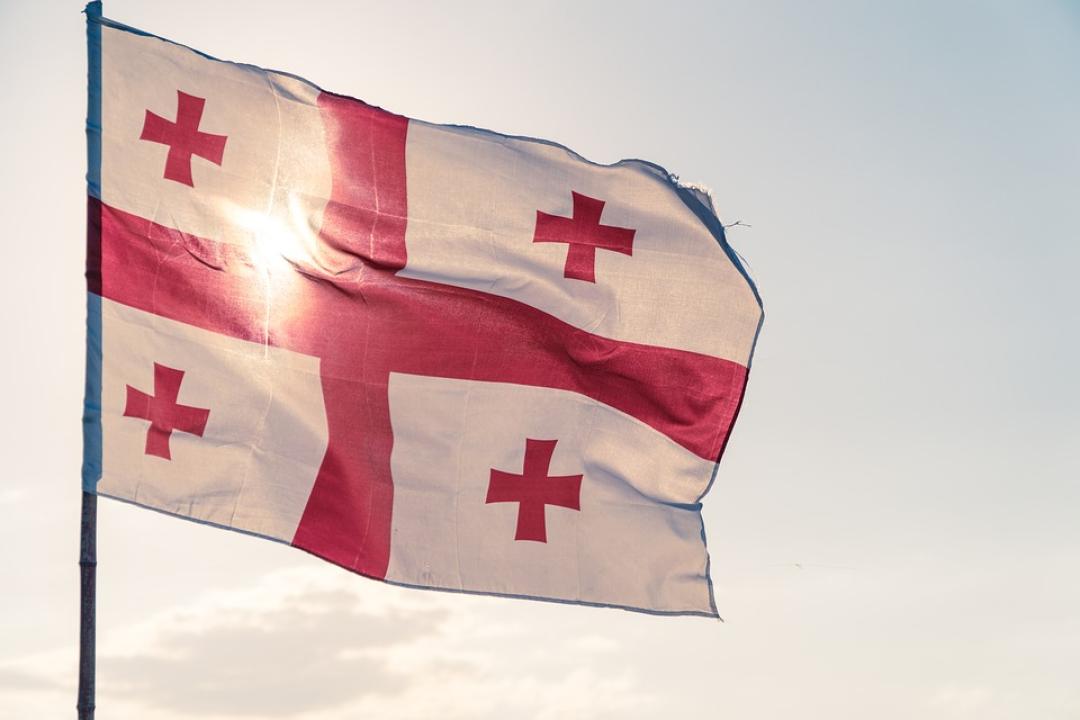
On December 22, the annual “Ambassadorial,” an ambassadors’ conference, was held in Tbilisi, where leaders from the Georgian Dream government delivered speeches. Georgian ambassadors from almost all countries arrived in Tbilisi; foreign diplomats accredited to Georgia also attended the event. Among them was the acting US ambassador, Alan Parsell. The leaders of Georgian Dream stated at the annual conference that “the global security architecture has collapsed” and “the unipolar world order no longer exists.” According to party leadership, “there is no longer a simple confrontation between geopolitical good and evil,” a statement used to justify Georgia’s foreign policy positioning. “My visits to neighboring countries… and then to the UN and Serbia, have shown me even more clearly that our foreign policy vector is without alternative,” Georgian President Mikheil Kavelashvili said. “Fundamental changes are taking place in the global international system, and the international agenda is changing,” Irakli Kobakhidze remarked. According to him, “under such transformations, for a country located in a complex region like Georgia, international relations based on rational and pragmatic policies are of vital importance.” In his speech, Shalva Papuashvili described 2025 as a year “full of global changes, drama, and contradictions” and highlighted two key points: “Georgia has withstood unprecedented external pressure and coercion”; “The global security architecture has collapsed” and “the unipolar world order no longer exists.” In Papuashvili’s own words, “the era of post-Cold War international relations is over.”
According to Foreign Minister Maka Botchorishvili, “the current security challenges, geopolitical changes, and growing uncertainty further increase [diplomats’] responsibility.” “In the current environment, the strength of the diplomatic service is of particular importance for a country facing the significant security challenge of the occupation of two regions and the pursuit of a peaceful restoration of territorial integrity,” said Botchorishvili.
Shalva Papuashvili described current global politics as follows: “States are desperately searching for a formula for a new balance of power. In this process, each player is trying to maximally protect their own interests and maintain favorable positions.” According to Papuashvili, taking all this into account, “there is no longer a bright and dark side of history, a simple confrontation between geopolitical good and evil, nor the hegemony of one civilization over another.” “Instead, there is global confrontation, competing superpowers, and a desire for dominance. The contours of a new, multipolar world are emerging, where no player has an absolute moral monopoly,” he said. According to Shalva Papuashvili, “the US is effectively abandoning the role of ‘world policeman’”: “The new American doctrines clearly state: the era when the US spent its own resources to impose civilizational models on other countries is over. The only absolute priority of American policy is its own national interest,” the Speaker said. He added that “Europe and the European Union have found themselves facing strategic uncertainty in this process.”
According to Shalva Papuashvili, it is against this backdrop that the essence of Georgia’s policy becomes clear: “It is clear how much pressure Georgia, which was forced to stand in the line of fire, actually withstood, refusing to play an active role in a doomed and losing scenario. In a process that would have ended with the facts described here. We withstood this pressure. We withstood it with the support and approval of the Georgian people.” “In this difficult and crucial process, special responsibility lies with Georgia’s ambassadors, those who represent the face of the state and are on the front lines of protecting national interests,” he said. Mikheil Kavelashvili, the Georgian President, stated that the foreign policy vector chosen by the government is “without alternative”; According to him, his visits to “neighboring countries – Azerbaijan, Armenia and Turkey, and then to the UN and Serbia” convinced him of this. “Our common goal is to further strengthen Georgia’s status as a major regional hub in the South Caucasus. At the same time, we should contribute to the economic and peaceful integration of larger geographical spaces – Asia, Europe and the Middle East,” he said. He also noted that “in parallel, the most important priorities of our foreign policy are the de-occupation of Georgia’s two historical regions and the policy of non-recognition.”
News,
Politics,
Georgia |
Georgian Dream, Irakli Kobakhidze, Shalva Papuashvili, Maka Botchorishvili, Mikheil Kavelashvili, Alan Parsell