
Iranian Ambassadors to Armenia and Azerbaijan Hold Press Conference; Condemn US-Led Attacks and Emphasize Right to Self-Defense
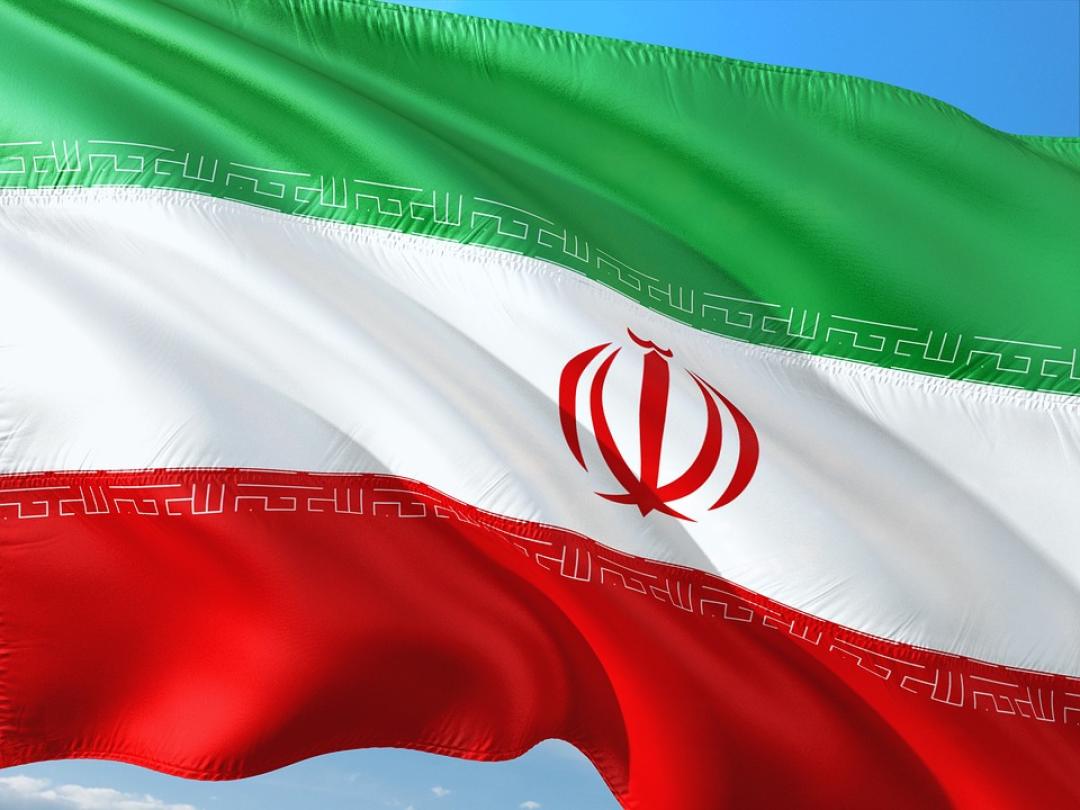
In a tense series of press conferences on March 2, Iran’s ambassadors to Armenia and Azerbaijan, Khalil Shirgolami and Mojtaba Demirchilu, spoke of ongoing US and Israel attacks on Iranian territory, condemning the deaths of hundreds, including schoolgirls in Minab, and mourning the Supreme Leader’s death, while reaffirming Iran’s strikes, legal protests to international bodies, and the deepening of ties with Armenia and Azerbaijan despite regional tensions.
Remarks by Iranian Ambassador in Armenia
Khalil Shirgolami, Iran’s Ambassador Extraordinary and Plenipotentiary to Armenia, held a press conference in Yerevan, addressing the recent attack on Iran and its regional implications. He stated that the strike occurred at a time when Tehran was demonstrating maximum goodwill in negotiations with the United States, submitting "prompt, precise, and fully implementable proposals." Shirgolami expressed surprise that a party "incapable of adhering to the principles of negotiations" had entered the diplomatic process at all.
Referring to Iran’s retaliatory actions, the ambassador emphasized that they are not directed against neighboring countries but target American military bases used in the aggression. "As long as this aggression continues, we will continue to defend ourselves," he noted. He added that US President Donald Trump’s advisers had warned that the conflict would be "difficult and costly," and that Trump is now aware of this reality.
Shirgolami also addressed the assassination of Iran’s Supreme Spiritual Leader, describing him as a lifelong defender against oppression and a supporter of Armenia and the Armenian community in Iran. "His martyrdom was in the name of the Iranian people. But real ideas and aspirations cannot be eradicated by the death of individuals; they do not die with the death of people. Neither the Zionist regime nor the Trump regime could understand this idea," he stated. He confirmed that Iran’s Guardian Council continues to govern during the transitional period, and that a new spiritual leader will soon be introduced. Mourning ceremonies began immediately after the leader’s death.
Regarding border security, Shirgolami reported that two of Iran’s borders were closed for 24 hours due to system malfunctions, including the Iranian-Armenian border. "As of 9:30 a.m., this issue has been resolved, and traffic from both sides is proceeding without any problems. There was no unusual flow of people that could be called refugees," he said, noting that only citizens with international travel plans were affected.
Shirgolami emphasized the long-standing, cooperative relations between Armenia and Iran. He noted that Armenia’s strategy of foreign policy diversification is respected by Tehran, and stressed that Armenia’s strength contributes to Iran’s regional goals. Economic cooperation, he said, continues smoothly, with Iranian companies participating in important infrastructure projects, and the war is not expected to affect these ties.
On the human toll of the conflict, the ambassador condemned the attack on the girls’ school in Minab, which killed 153 students, calling it "a shameful mark on history that cannot be justified." He reported that, overall, more than 555 people have died, including students and teachers, and reiterated that Iran’s counterattacks are legally justified defensive measures targeting bases used by the aggressors. He stressed that claims suggesting Iranians would rise against their government are false and that Iran has historically defended itself against foreign attacks.
Shirgolami also addressed the January demonstrations in Iran, distinguishing between legitimate peaceful protests and violent actions organized by armed groups. "They wanted to turn Iran into Syria, but they failed," he said, highlighting that the government provided a transparent accounting of casualties among civilians, security forces, and members of criminal groups.
On the international response, he criticized the silence of many countries that emphasize law and justice but remained passive during the aggression, while some secretly supported it. He reported that Armenian Foreign Minister Ararat Mirzoyan had called to express condolences and offer humanitarian aid, and that Armenian Prime Minister Nikol Pashinyan had sent a telegram of condolences to Iranian President Masoud Pezeshkian. Shirgolami also acknowledged support from civil society and individuals in both countries, contrasting it with analysts who, he said, repeat "Zionist viewpoints."
Regarding Armenia-Iran relations, Shirgolami reiterated Tehran’s commitment to good neighborly relations, including with Azerbaijan, and noted that a strategic document on comprehensive cooperation with Armenia is being drafted, with the goal of signing it in 2026. He concluded by highlighting the recent high-level visit of Armenian Defense Minister Suren Papikyan to Iran, underscoring that bilateral cooperation continues to develop despite the ongoing conflict.
Remarks by Iranian Ambassador in Azerbaijan
On March 2, during the press conference at the Embassy of the Islamic Republic of Iran in Baku, Mojtaba Demirchilu, the Ambassador of the Islamic Republic of Iran to the Republic of Azerbaijan, addressed media representatives and guests, expressing gratitude for their presence. He stated that while expert-level meetings were scheduled in Vienna as a continuation of the Iran–US dialogue previously held in Geneva, "we are unfortunately witnessing another blatant violation of international law." He emphasized that this was not the first time military action had coincided with diplomatic efforts, recalling that in June 2025, during ongoing negotiations, Iranian territory was attacked by the US and what he described as the "Zionist regime." According to him, such conduct demonstrates "a contradiction between words and deeds" and amounts to "blatant hypocrisy."
Demirchilu stated that the joint military aggression by the US and Israel had entered its third day. Citing Iran’s "legal and legitimate right to self-defense," he stressed that retaliatory measures had been launched exclusively against military bases used by the aggressors. He underlined that these actions were not directed against friendly or neighboring countries, but solely against facilities involved in attacks on Iran. Describing the developments as part of a broader "hybrid war," he stated that the aggression had resulted in the martyrdom of the Supreme Leader of Iran, along with numerous civilians, including children.
He reported that on the first day of the attacks, a girls’ elementary school in Minab was struck and completely destroyed, with the number of schoolgirls killed rising to 180 after bodies were recovered from the rubble. In Lamard, Fars province, a volleyball hall was targeted, resulting in the deaths of 18 young female athletes. He further noted that sports halls in Tehran, including wrestling and handball facilities, as well as Gandhi Hospital, were attacked, causing casualties among athletes, patients, and medical staff. The Radio and Television (Seda and Sima) building in Tehran was also struck, which he said had previously been targeted during earlier aggression. Given the technological capabilities of the modern world, he stated, it is "impossible and unacceptable" to believe that civilian facilities are hit accidentally.
The Ambassador emphasized that Iran would continue its defense "resolutely until the aggression is completely stopped." He stated that members of the Supreme Leader’s family, including his 14-month-old grandson, daughter-in-law, and son-in-law, were also killed in the attack on his residence and workplace. He noted that the Supreme Leader had always chosen to live modestly, without special protection or relocation, and that targeting a head of state constitutes a grave violation of international law. In addition to his political role, he described the Supreme Leader as a prominent religious scholar and marja-e taqlid with numerous followers across the Islamic world, asserting that his martyrdom has provoked strong reactions among Muslims globally. He reiterated that Iran’s actions fall within the framework of "legitimate defense" under international law and stated that expecting Iran to remain passive in the face of continued aggression is unrealistic.
Demirchilu expressed appreciation to the state and people of Azerbaijan for their condolences and solidarity. He referred to the message of condolence sent by Ilham Aliyev to Masoud Pezeshkian regarding the martyrdom of the Supreme Leader, as well as the statement issued following the telephone conversation between Jeyhun Bayramov and Abbas Araghchi. According to him, Azerbaijan’s position was clearly conveyed: it would not tolerate any threat against Iran. He added that Iran is confident that no threat will originate from Azerbaijani territory, while warning that one of the key policies of Israel is to create discord among neighboring states. He stressed the importance of vigilance to prevent Azerbaijan’s territory from being misused against Iran.
Responding to a question on legal measures, Demirchilu stated that alongside military responses, Iran has activated international mechanisms. A formal protest was submitted to the UN Security Council immediately after the aggression began, and an emergency session was requested. The Minister of Foreign Affairs also addressed letters to the President of the Security Council and the UN Secretary-General, urging decisive steps to condemn and halt the attacks. Additionally, due to strikes on Iran’s peaceful nuclear facilities, Tehran lodged a protest with the International Atomic Energy Agency and requested a meeting of its Board of Governors. He emphasized that cooperation with international organizations remains a key priority in efforts to stop and condemn the aggression.
Addressing statements from some Middle Eastern countries that Iran’s actions would not go unanswered, he reiterated that Iran’s defensive measures target only military bases used against it by the US and Israel. He emphasized Iran’s respect for the territorial integrity and sovereignty of neighboring states. He noted that Abbas Araghchi had held telephone consultations with officials from several countries in recent days to clarify Iran’s position. Concerning negotiations, Demirchilu stated that past experience shows that talks have been used as a "veil" for preparing military action. In such circumstances, he emphasized, genuine negotiations require guarantees that they will not serve as cover for renewed aggression.
Regarding the Strait of Hormuz, he stated that it remains open. However, he emphasized that traffic management in the strait falls under Iran’s authority, and vessels must comply with established regulations to ensure maritime safety. He noted that special attention is given to oil tankers due to potential environmental risks. Legal action had been taken against several tankers for failing to observe shipping rules. He added that if developments reach a critical stage and Iran deems it necessary to safeguard its national interests, the option of closing the strait could be considered.
Concerning casualties, Demirchilu stated that final figures are not yet available due to the ongoing nature of the attacks. According to the Iranian Red Crescent Society, as of noon the previous day, 201 people had been killed and 750 injured. He noted that these numbers have since increased and do not yet include casualties from Gandhi Hospital. He also clarified that when the initial figure of 201 martyrs was announced, the number of schoolchildren killed in Minab stood at 140, but has now risen to 180. The figures reflect casualties recorded from the start of the aggression until the afternoon of the second day. He concluded by stating that updated information would be provided regularly and expressed hope that the events would cease as soon as possible.