
Nine Georgian Parties Announce Formation of Opposition Alliance
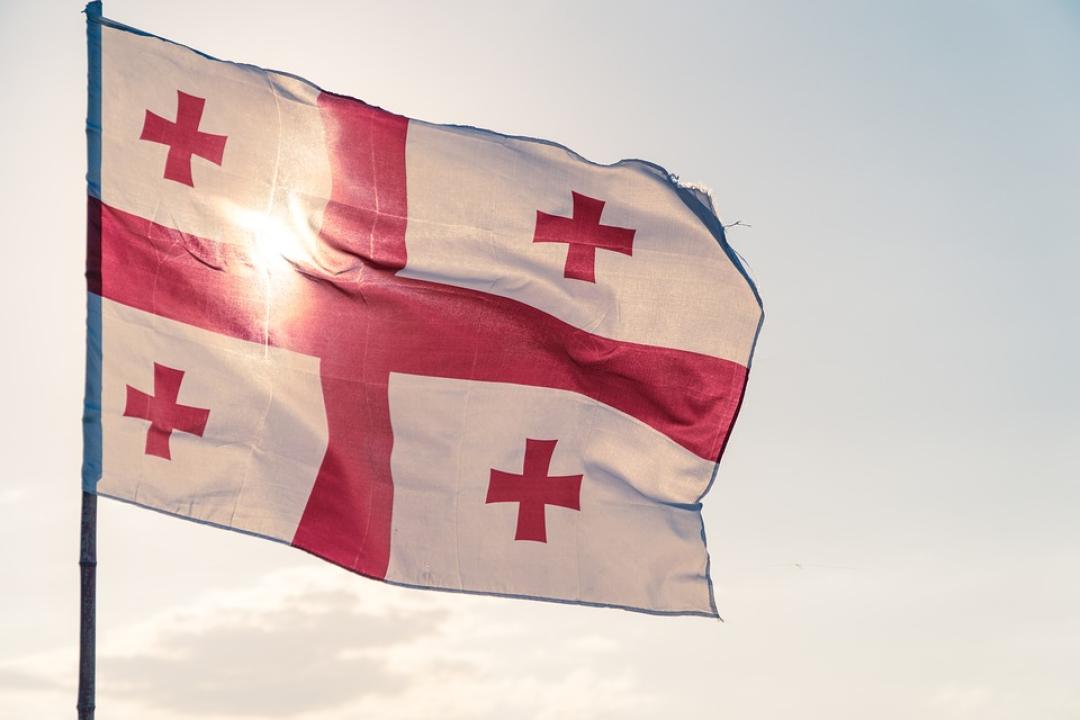
On March 2, nine Georgian political parties announced the formation of an "opposition alliance" and signed a coordination document aimed at "saving national independence and statehood." The signatories include Ahali, Girchi–More Freedom, Droa, United National Movement (UNM), Strategy Aghmashenebeli, European Georgia, the National Democratic Party, as well as the newer political forces Federalists and Freedom Square.
The coordination document is structured around four main chapters and is accompanied by a separate Code of Conduct outlining principles of cooperation, including equality, mutual recognition, political responsibility, responsibility in the protest process, and fair competition.
The first chapter defines the strategic goal as the "peaceful dismantling" of Bidzina Ivanishvili’s Georgian Dream "autocratic, criminal regime" and the preservation of Georgia’s sovereignty by ending isolation from the West and establishing democratic governance. It emphasizes that achieving this objective requires coordination among national democratic forces, arguing that only such unity can consolidate society around what it describes as the survival of the Georgian state.
The second chapter sets out the strategic principle that "regime change is the vital interest of the critical majority." It states that an autocratic system will change only when the overwhelming majority of citizens perceive that their freedom, security, and dignified future are under threat, and when they conclude that maintaining the current system leads to poverty, corruption, and injustice. It further asserts that change depends on public belief in the existence of a "strong, responsible, and democratic alternative" capable of transforming peaceful protest into political transformation and safeguarding Georgia’s Euro-Atlantic future. The document stresses that peaceful popular protest has no alternative and must become a shared conviction of the majority.
The third chapter outlines the alliance’s strategic mission: to demonstrate to the majority of citizens their vital interest in change and to persuade them that action is necessary. To this end, the parties pledge to expose what they describe as Ivanishvili’s repressive and corrupt system in order to broaden peaceful resistance, counter the regime’s propaganda, and argue that the current authorities threaten peace by isolating Georgia internationally and leaving it vulnerable to Russia. They also commit to intensifying discussions on a joint strategy for regime change and coordinated steps to be taken immediately afterward. The document underlines that the opposition seeks to serve citizens’ interests rather than the "instincts of any oligarchic and/or autocratic leader," and rejects replacing the current system with another autocratic or oligarchic model.
The fourth chapter introduces the principle of "unity without uniformity." It clarifies that the agreement does not entail ideological unification, party mergers, or the creation of a bloc around any single leader, although it leaves open the possibility of future electoral cooperation. The signatories declare that they do not recognize the current authorities and will not participate in processes that legitimize the regime or undermine peaceful protest. They state that victory can only be achieved through the release of political prisoners and the conduct of new, free, and fair elections.
The alliance identifies peaceful protest as the primary instrument for achieving political change and prioritizes mobilization, organization, and expansion of resistance. It also commits to strengthening international pressure on the authorities, developing a unified communication strategy, and preparing a campaign outlining immediate steps to be taken after regime change. The parties pledge to pursue free and fair elections and the release of political prisoners through a unified strategy, and, following electoral victory, to form a democratic coalition government tasked with implementing reforms aimed at protecting independence, sovereignty, and advancing Euro-Atlantic integration.
The document also references the Georgian Charter initiated by Salome Zourabichvili, the fifth President of Georgia. The Charter includes provisions on establishing free and fair electoral rules, reforming the judiciary, repealing so-called "Russian" laws restricting freedom of speech, media, and civil society, reforming the security system, and restoring Georgia’s path toward Euro-Atlantic integration.
News,
Politics,
Georgia |
Georgian Dream, Bidzina Ivanishvili, UNM, Girchi, European Georgia, Strategy Agmashenebeli, Droa