
Pashinyan Addresses Captive Armenians, Peace with Azerbaijan, Defense, Wheat Policy, Intelligence, Infrastructure, And Negotiation Transparency
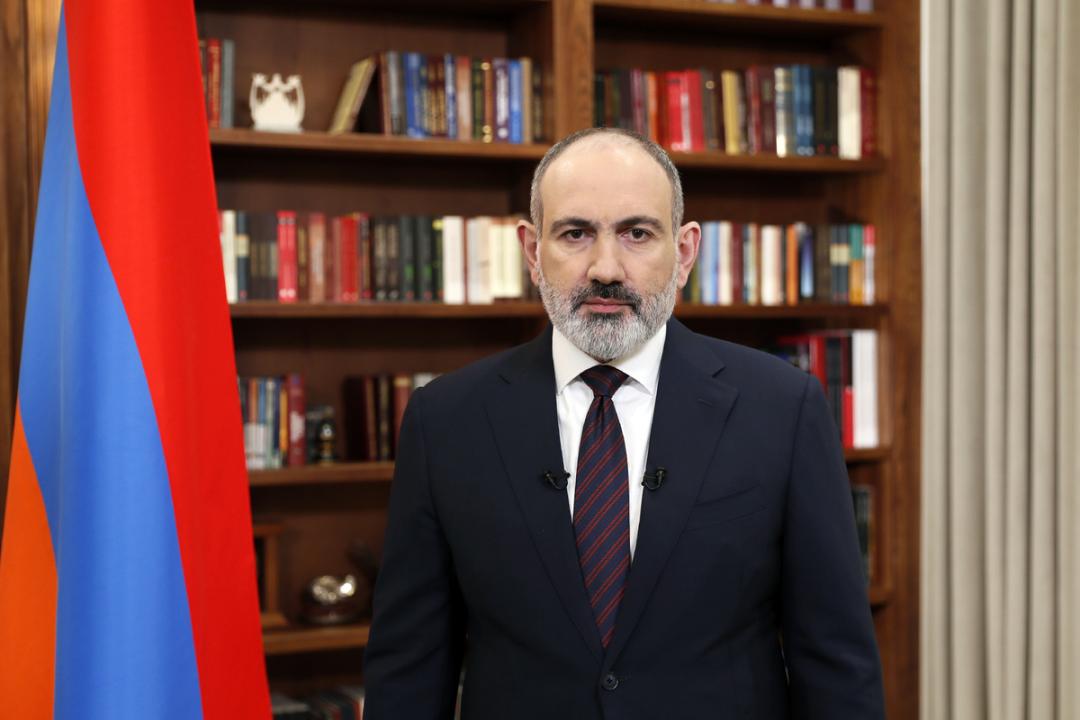
On November 12, Armenian Prime Minister Nikol Pashinyan addressed issues including prisoner releases, peace with Azerbaijan, territorial integrity, defense, wheat policy, infrastructure, and transparency in negotiations, reaffirming Armenia’s sovereignty and strategic priorities.
Pashinyan emphasized that authorities are working daily to resolve the situation of compatriots held captive. He noted that a more favorable environment between Armenia and Azerbaijan would simplify the process and stressed that peace would help resolve many other issues. "The perception that we will resolve all issues and only then sign a peace agreement is not exceptional. This is a living process. If we were guided by the above-mentioned logic, we would not have reached the current state of peace. We are trying to demonstrate flexible approaches that best serve Armenia's national interests at this time," he stated.
Pashinyan recalled that Azerbaijani President Ilham Aliyev claimed Sevan was named differently on Tsarist Russian maps. "And I'm saying that Armenia is on these same maps, but Azerbaijan isn't. And what does that mean?" he concluded.
During the interview, Pashinyan also addressed statements made by Karen Karapetyan on behalf of Serzh Sargsyan, the third President of Armenia. He clarified that while Karapetyan suggested releasing him during the 2018 revolutionary process if the revolution was halted, he refused. "There was no hint or discussion with anyone about the position of deputy prime minister. In fact, there was no discussion with anyone about any position. I would not have allowed such talk. It's out of the question," Pashinyan assured. Pashinyan elaborated that Serzh Sargsyan twice proposed postponing his resignation in 2018. He explained that when he was in pretrial detention, Karapetyan implied the detained could be released only if revolutionary demands were removed, and even offered to assume power himself. "I said this was unacceptable, and Serzh Sargsyan must step down," Pashinyan noted. He added that Sargsyan initially suggested resigning after the Francophonie summit and later in June, but Pashinyan insisted on immediate resignation.
On the topic of religious liturgies, Pashinyan stated he would continue participating, noting the importance of the process. "This is a living process. A dialogue is underway with society, with God, and each person with themselves," he added.
Pashinyan discussed the Artsvashen issue, assuring that Armenia cannot abandon sovereign territories or the agenda of restoring territorial integrity. He emphasized that the matter should be resolved through delimitation based on the Alma-Ata Declaration. "There is talk that other scenarios could be pursued regarding Artsvashen. No one can pursue a different scenario without taking into account the will of the Armenian people. Even if we're not talking about a referendum, it still cannot happen without the consent of Armenian citizens," he stated.
Addressing statements by Azerbaijani Foreign Minister Jeyhun Bayramov regarding shifts in his negotiating positions, Pashinyan asserted he never contradicted his publicly expressed positions since 2018. "You know my positions, you know their changes, you know the transformations, you know my speeches," he emphasized.
Regarding territorial integrity and occupation, Pashinyan explained the complexity of areas under Armenian and Azerbaijani control and stressed that a delimitation process is necessary for clarity. He confirmed that a package of negotiating documents on Nagorno-Karabakh would be published by the end of the year following the dissolution of the OSCE Minsk Group. "I have already said that this package of documents does not belong only to us," he reiterated. Pashinyan clarified that discussions about three former Armenian presidents negotiating with Russia during the 44-day war were handled transparently. "I said, 'Take the plane with the inscription 'Armenia' and fly.' Let them fly," he emphasized. He also highlighted a forthcoming declassification of a letter from Serzh Sargsyan detailing proposals from 2016, noting the military balance had been disrupted.
On defense matters, Pashinyan expressed readiness to show journalists newly acquired Armenian weapons, countering claims that Armenia was disarming its army. "Previously, people clearly hinted to us that they could not sell us weapons, since there was no guarantee that they would not be used for needs outside our sovereign territory," he concluded.
Pashinyan addressed Armenia’s wheat policy, emphasizing that Armenia will not abandon Russian wheat while remaining open to other market options. "It's impossible for someone to come and say, 'We have wheat, you can buy it,' and we'll just close our ears and run away," he stated. He denied involvement of the US and UK in the activities of Armenia’s Foreign Intelligence Service, stressing that it operates independently but cooperates with foreign colleagues, including from Russia, the US, and Britain. Pashinyan also rejected claims that he ordered an interview with Time journalist Simon Schuster, following an interview with Tucker Carlson, clarifying that requests from international media are handled regularly by the government.
Regarding infrastructure, Pashinyan announced that construction of the "Trump Road" would begin in the second half of 2026. He detailed plans for the railway, gas pipeline, and power lines, noting terrain considerations and the integration of East-West roads into the North-South project. He reaffirmed that conditions would respect agreements signed by Armenia and Azerbaijan in Washington, including territorial integrity and sovereignty.
Finally, Pashinyan confirmed that citizens could request to inspect new weapons acquired by Armenia, subject to screening by special services. He also noted that a potential military parade would be discussed further, considering timing and impact