
Pashinyan Discusses Church-State Relations, Judicial Reforms, Cooperation With Azerbaijan and Turkey, Regional Security, and Domestic Politics
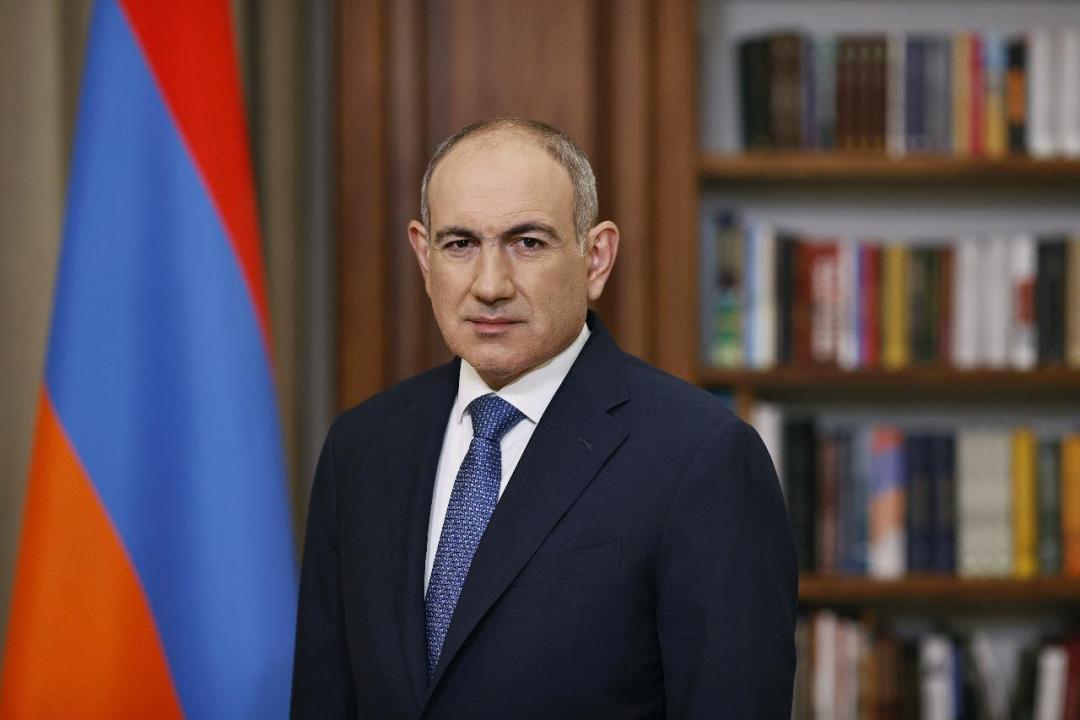
On January 29, Armenian Prime Minister Nikol Pashinyan, during a conversation with journalists, clarified that Armenia maintains a neutral stance toward the Church while targeting usurped positions, outlined judicial and electoral reforms, highlighted energy cooperation with Azerbaijan and Turkey, reinforced regional security through economic integration, addressed domestic political accountability, and responded to criticisms from former President Kocharyan and others.
He said that there was no conflict between the Armenian Apostolic Church and the state, while emphasizing that "there is a person who has usurped power in the church and who cannot occupy this position under any circumstances," adding that the authorities would take "all permissible and legal measures" to remove him from what he described as an undeserved position.
Pashinyan stated that Armenia should introduce a jury system as part of ongoing reforms, including constitutional amendments, emphasizing that such a system would create a direct and natural link between the judiciary and the public. He stated that compared with 2018 and 2019, he had been receiving significantly fewer letters from citizens dissatisfied with court decisions, stressing that the number had decreased several times, if not dozens of times, and underlining that he read and addressed citizens’ letters on a daily basis.
Pashinyan also stated that he had likewise expressed gratitude to Ilham Aliyev, the President of Azerbaijan, responding to questions about remarks by Vahagn Khachatryan, the President of Armenia, who had thanked Aliyev for decisions related to organizers and perpetrators of ethnic cleansing in unrecognized Nagorno-Karabakh. He emphasized that Armenia had benefited from practical decisions, including the delivery of grain and diesel fuel through Azerbaijani territory and the unblocking of roads, stating, "I don't believe we should criticize Azerbaijan for this, let alone condemn it".
Pashinyan reiterated that the Karabakh movement must not continue, emphasizing that he adhered to this policy as the Prime Minister and would continue to implement it, while stating that citizens who disagreed were free to take to the streets and pursue political change. Pashinyan stated that the Armenian government intended to deepen cooperation with Russian partners on unblocking regional communications, noting that a written request had been submitted and that there were positive signs suggesting the process could accelerate. He recalled that representatives of Armenia and Azerbaijan had visited the Yeraskh–Sadarak border railway junction in early 2026, emphasizing that regional processes were ongoing and irreversible, and added that similar dynamics applied to the Akhurik site. Pashinyan stated that if Russian partners were unwilling to invest in these projects, Armenia would assume responsibility itself and carry out the work independently.
Commenting on domestic political developments, Pashinyan addressed the resignation of Hripsime Hunanyan, Chair of the Parliamentary Standing Committee on Healthcare and a Member of Parliament from the Civil Contract party, as well as the decision not to include Hayk Sargsyan on the party’s election list. He stated that Hunanyan had shown courage by stepping down following criticism of her ideas, emphasizing that political actors must communicate with the public, acknowledge mistakes, and accept their consequences, while noting that she would remain part of the team. Speaking about Sargsyan, Pashinyan stated that the issue had been discussed several times within the Civil Contract Party Board, noting that Sargsyan had previously received a stern reprimand and emphasizing that the party would not tolerate any manifestations of corruption, including among its own members.
Pashinyan stated that connecting the Armenian energy system with the Azerbaijani and Turkish systems would be expedient, emphasizing that a unified energy space could transform the region into a major exporter to international markets and become the foundation of a new security architecture. He stated that Armenia and Azerbaijan both possessed excess energy capacity, which created opportunities for mutually beneficial cooperation, including Armenia’s access to export markets through Azerbaijani infrastructure and Azerbaijan’s ability to transit electricity to Nakhichevan through Armenian territory. Pashinyan emphasized that, beyond direct trade, such projects would provide Armenia with stable transit revenues benefiting both the state budget and private companies, while stating that experts had identified no security threats associated with the initiative.
Addressing broader strategic issues, Pashinyan emphasized that security should be based on economic interdependence, stating that previous security models had failed between 2020 and 2023 and that Armenia required new guarantees rooted in international trade and energy flows. He stated that when major global powers and markets had a vested interest in stability due to economic linkages, this provided a more reliable guarantee of peace than traditional mechanisms.
Responding to criticism over remarks about the Catholicos of All Armenians during the January 29 conversation, Pashinyan stated that the government did not recognize decisions made by Ktrich Nersisyan, emphasizing that existing legal regulations applied equally to everyone, regardless of position. He stressed that these regulations were binding on all, including the Prime Minister, government officials, journalists, and clergy alike.
Pashinyan stated that, for the first time, citizens of the Republic of Armenia were returning to the country rather than leaving, emphasizing expanded access to state-funded health insurance and asserting that Armenia had begun to experience peace and independence. Responding to a symbolic question about "Ararat or Aragats," he emphasized the distinction between a state and a non-state, stating that Armenia had clearly defined its internationally recognized territory and that Mount Ararat lay outside those borders, underscoring a newly established clarity between statehood and symbolism.
Responding to criticism from Robert Kocharyan, the Second President of Armenia, Pashinyan stated that Kocharyan’s understanding of regional and international realities was "hopelessly outdated," responding to claims that the Trump Route for International Peace and Prosperity was an Armenian-American project favoring Azerbaijan and Turkey. He stated that he had nothing further to add on the matter. Pashinyan neither confirmed nor denied reports that Gevork Sujyan, one of the individuals released from Azerbaijani captivity, could be included on the Civil Contract party’s election list, emphasizing that the Republic of Armenia was a democratic state where anyone could engage in politics.
News,
Politics,
Armenia |
Turkey, Nikol Pashinyan, Armenia-Turkey Relations, Armenia-Azerbaijan Relations