
Pashinyan Highlights Connectivity, TRIPP, and Türkiye Dialogue
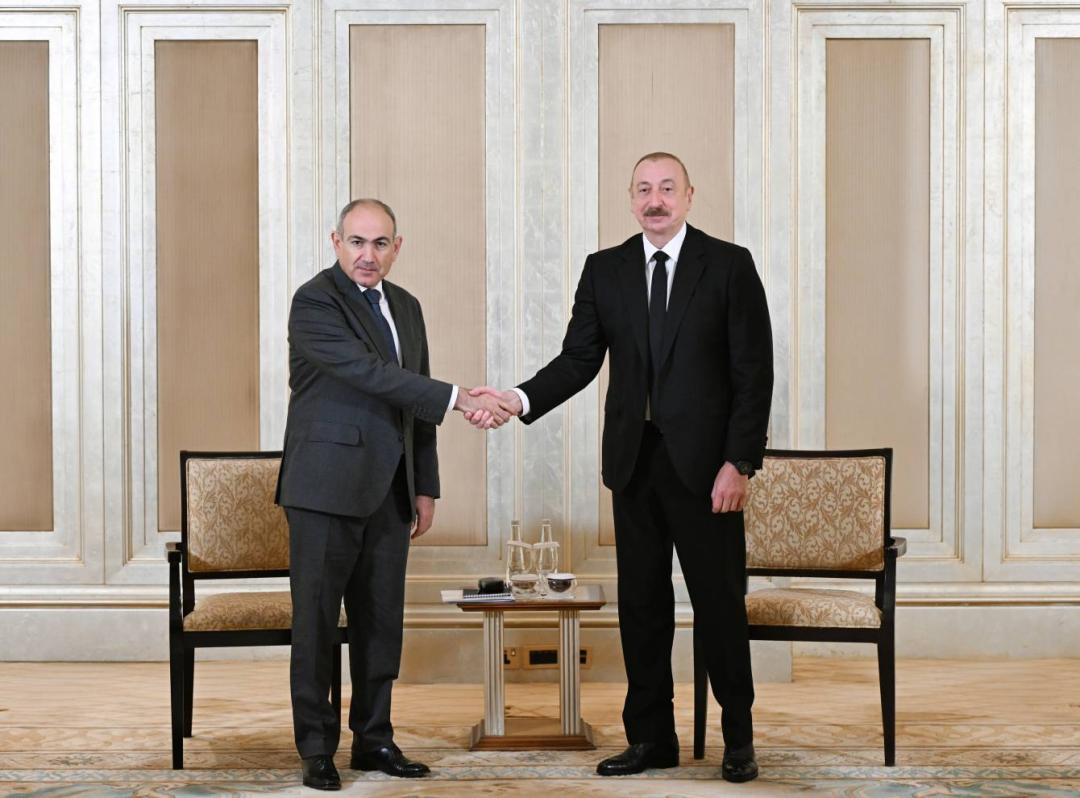
Armenian Prime Minister Nikol Pashinyan explained why he has repeatedly thanked Azerbaijani President Ilham Aliyev for lifting restrictions on the transit of goods to Armenia through Azerbaijani territory, saying such statements reflect Armenia’s positive assessment of concrete developments.
Speaking to reporters after a government session, Pashinyan cited several steps that directly affect Armenia, including the lifting of bans on wheat imports first from Kazakhstan and later from Russia, the absence of restrictions on rail transport from Armenia in the opposite direction, and Azerbaijan’s agreement to sell petroleum products to Armenian businesses, a transaction that has already been completed.
Pashinyan said Armenia has not yet fully capitalized on these opportunities due to logistical and organizational challenges, noting that effective rail transport requires consolidated cargo and larger-scale planning. Nevertheless, he stressed that these developments represent a qualitative shift.
He added that Armenia considers it important to formally record its position in multiple forums, including within the Eurasian Economic Union, noting that Armenia has now established railway connectivity with the EAEU that did not previously exist. In his assessment, these developments demonstrate that peace has been established and is already producing tangible results. Pashinyan also expressed hope that further steps would follow, including the promotion of Armenian exports to Azerbaijan.
In a related briefing, Pashinyan said Armenia and the United States are jointly preparing a document defining the strategic framework for the Trump Route for International Peace and Prosperity connectivity project. He said that once approved, practical implementation would begin, with work on the ground expected in the second half of 2026. According to Pashinyan, the railway component is currently considered the priority within TRIPP, given that the route previously existed, though economic or investment considerations could later shift focus toward energy infrastructure such as gas or oil pipelines.
He also said Armenia is working to acquire modern border and customs infrastructure and equipment not only along the Armenia–Azerbaijan border but also at crossings with Iran, Georgia, and Türkiye.
Separately, Pashinyan said Armenia intends to deepen ties with Iran and is interested in signing a strategic partnership agreement with Tehran, describing bilateral relations as already being at a very high level.
The Prime Minister also welcomed Turkish President Recep Tayyip Erdogan’s recent statement signaling progress in the normalization process between Armenia and Türkiye in 2026. He said Ankara’s expressed readiness should now be followed by tangible steps, expressing hope that both symbolic and substantive measures will be implemented. Erdogan earlier said Türkiye is moving forward with normalization and that certain symbolic measures could begin in early 2026.
News,
Politics,
Armenia |
Russia, Turkey, Nikol Pashinyan, Ilham Aliyev, Kazakhstan, Recep Tayyip Erdogan, TRIPP