
Rubinyan Discusses TRIPP Project Sovereignty, Catholicos Departure, and Foreign Interference
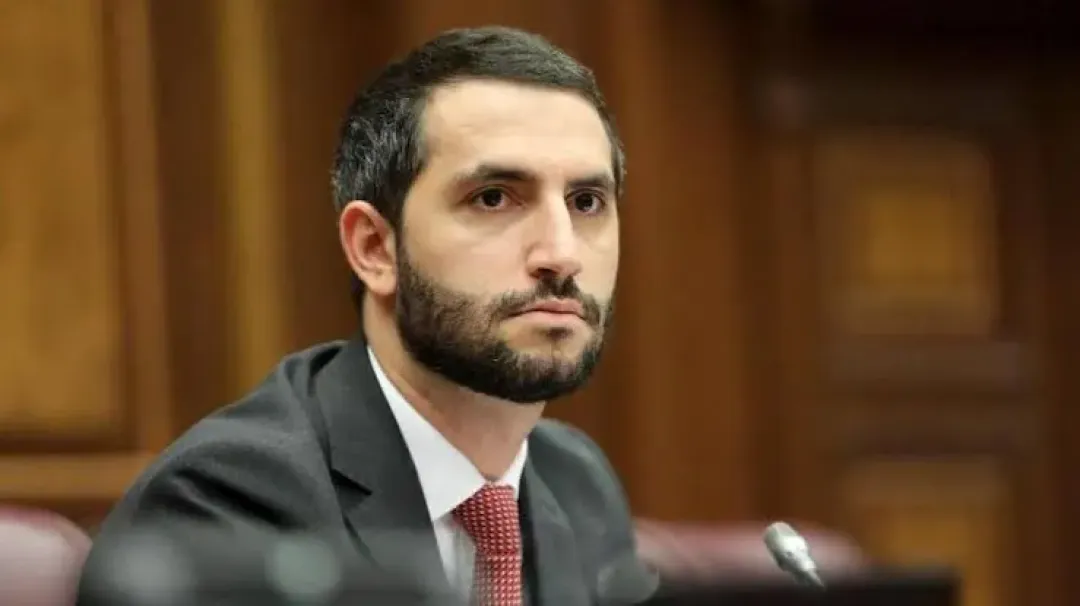
On December 16, Ruben Rubinyan, the Deputy Speaker of the Armenian Parliament, provided a comprehensive update on several national security and domestic issues. He reassured the public that the TRIPP project fully respects Armenia’s sovereignty and territorial integrity, explicitly clarifying that Russia is not involved in the initiative. During his briefing, Rubinyan also addressed internal party procedures for candidate selection, hinted at the potential departure of Catholicos Ktrich Nersisyan, and issued a stern warning regarding foreign interference and rapid disinformation campaigns targeting the country.
Rubinyan characterized the TRIPP project as a business-oriented initiative operating strictly under Armenia’s jurisdiction and the principles of equality and reciprocity. He emphatically stated that the project is "by no means a ‘Zangezur Corridor’" and noted that Armenia remains in constant communication with Iranian counterparts to ensure their interests are considered. According to Rubinyan, the Iranian Foreign Ministry has repeatedly confirmed that TRIPP respects their "red lines" while creating new regional opportunities. He reiterated that protecting sovereignty is, first and foremost, Armenia's own priority, vowing that no extraterritorial corridor will ever exist on Armenian soil.
Regarding the Catholicos of All Armenians, whom Rubinyan referred to by his secular name, Ktrich Nersisyan, the Deputy Speaker suggested a major transition within the church leadership. He stated that it is possible the Catholicos will vacate the Patriarchal Chambers by the end of the year, remarking, "He cannot remain Catholicos; I think he will leave in a Christian manner." When further questioned about traditional New Year’s greetings from the church leader, Rubinyan responded pointedly, "I think the position is vacant."
Addressing Russia's role, Rubinyan clarified that Moscow’s participation in the TRIPP project is not currently under discussion, despite Moscow expressing a readiness to engage with Yerevan on the matter. "We are glad that they are ready to discuss this with us," Rubinyan noted, "but there are no such discussions. I don't answer hypothetical questions." This statement underscores Armenia's current stance on maintaining independent control over the project's development.
On the domestic front, Rubinyan detailed the democratic procedures the ruling Civil Contract party uses to form its electoral lists. He explained that candidates are nominated by both members and non-members, followed by a rigorous preliminary review by the Board. With over 300 applicants registered, Rubinyan emphasized that the primary focus remains on integrity rather than personal loyalty to Nikol Pashinyan or specific stances on religious issues. He also addressed internal party discipline, noting that members like Hovik Agazaryan could act independently without facing immediate expulsion.
Finally, Rubinyan raised concerns about sophisticated foreign interference and "fake news" campaigns. He highlighted a pattern where sensationalized disinformation appears on English-language websites before being rapidly disseminated through Armenian media. To combat this, he confirmed that Armenian authorities are strengthening tools to prevent such interference and may involve law enforcement when necessary. However, he clarified that while Armenia is keen on sharing best practices, European Union agencies would not be directly involved in these specific security measures.