
South Caucasus Countries React to US-Israel-Iran Escalation
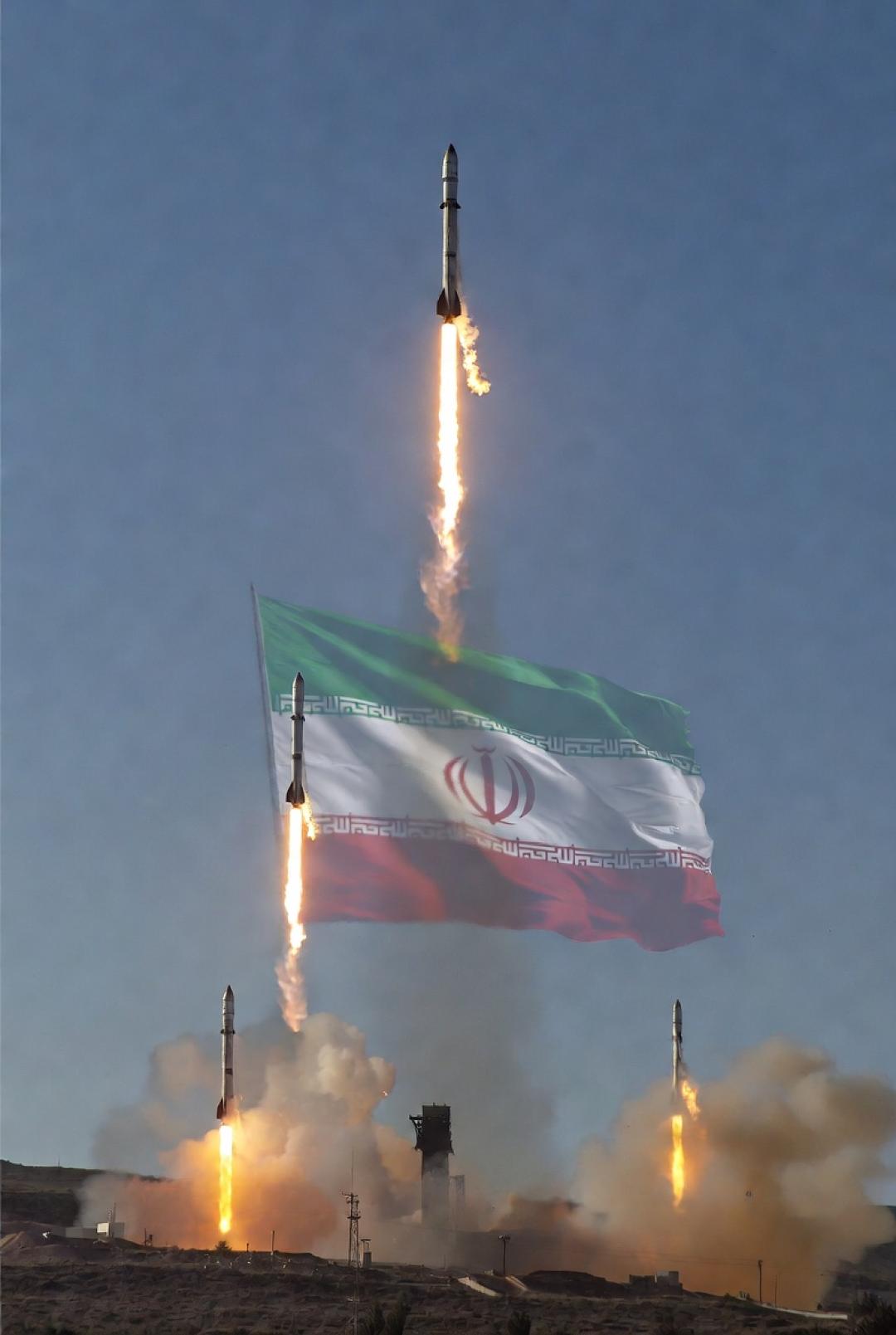
In the last few days, Iran has been at the center of a rapidly escalating conflict involving the United States and Israel. A US‑Israeli air campaign struck targets inside Iran, leading to heavy clashes across multiple fronts in the Middle East. Reports suggest that Iranian retaliatory attacks using missiles and drones have hit US bases and regional sites in the Gulf, Kuwait, Qatar and UAE. Early estimates indicate hundreds of deaths, including civilians and military personnel on both sides. One of the most dramatic developments is the reported killing of Ayatollah Ali Khamenei, Iran’s Supreme Leader, by US‑Israeli strikes.
Armenia
On February 28, the Ministry of Foreign Affairs of Armenia stated that they are closely monitoring developments in the Middle East. Armenian citizens traveling to Iran and Israel were advised to follow safety regulations and adhere to official instructions. The ministry stated that it will continue to track the situation and provide updates as needed.
During a telephone conversation on the same day, Ararat Mirzoyan, the Foreign Minister of Armenia, spoke with Anita Anand, the Foreign Minister of Canada. They discussed the escalating situation in the Middle East, emphasizing the importance of close cooperation during crises. Mirzoyan highlighted Armenia’s readiness to assist in the evacuation of Canadian citizens through Armenian territory if necessary and stressed the need for a negotiated, peaceful resolution.
On March 1, Nikol Pashinyan, the Prime Minister of Armenia, chaired a Security Council meeting. Present at the meeting were Vahagn Khachaturyan, the President of the Republic; Alen Simonyan, the Speaker of the National Assembly; Arayik Harutyunyan, Chief of Staff to the Prime Minister; Ruben Rubinyan, Deputy Speaker of Parliament; Hayk Konjoryan, Head of the Civil Contract parliamentary faction; and Sargis Khandanyan, Chairman of the National Assembly Foreign Affairs Committee. During the session, Kristine Grigoryan, head of the Foreign Intelligence Service, presented a detailed report on developments in Iran and the broader Middle East. Armen Grigoryan, Security Council Secretary, provided an update on the activities of the interagency working group established by the Prime Minister. Following the meeting, the Prime Minister issued relevant instructions. Participants expressed condolences for the victims of recent attacks and emphasized the urgency of restoring peace in the region.
Also on March 1, Edmon Marukyan, leader of the Bright Armenia Party, described the regional situation as extremely tense. He stated that Iran is effectively at war, with the US and Israel targeting the Iranian elite for regime change and confirmed reports of attacks on Ali Khamenei and other senior officials. "We have a situation where the president of Venezuela is kidnapped, arrested, and scheduled for trial in New York. We have a situation where the government of a sovereign state is being targeted and eliminated," Marukyan said. He warned that continued military escalation could severely affect trade, finance, and energy markets, and stressed that Armenia must prepare for multiple scenarios, including a potential change in Iran’s leadership.
On March 2, Ararat Mirzoyan, the Foreign Minister of Armenia, held a phone conversation with Seyyed Abbas Araghchi, the Iranian Foreign Minister. During the call, Mirzoyan expressed condolences to the families of victims in Iran and emphasized the importance of reducing tensions and pursuing a peaceful resolution. The discussion also covered humanitarian concerns.
Azerbaijan
On February 28, the Ministry of Foreign Affairs of Azerbaijan urged Azerbaijani citizens to avoid traveling to Iran due to increased security risks. Citizens currently in Iran were advised to leave the country via Azerbaijan or Türkiye depending on their location. The ministry emphasized that citizens should follow safety measures, avoid crowded areas, comply with local authorities’ instructions, and monitor official sources. In emergencies, Azerbaijani nationals are advised to contact local diplomatic missions.
On the same day, the ministry also recommended that Azerbaijani citizens refrain from traveling to Israel amid escalating tensions linked to Iran. Citizens in Israel were instructed to stay alert, follow local authority guidance, avoid crowded places, and strengthen personal safety precautions. Emergency assistance remains available through Azerbaijani diplomatic missions.
Moreover, Iran’s Embassy in Azerbaijan issued guidance for its nationals, calling on citizens to remain calm and exercise restraint after the country came under attacks. The embassy confirmed that all sections, including consular services, continue operations. Meanwhile, the Russian embassy in Iran urged its citizens to exit via Azerbaijan and Armenia, identifying Astara and the Nurduz/Agarak border crossings as optimal routes. Travelers were advised to remain vigilant.
On the same day, the Azerbaijani Foreign Ministry described the escalation as a serious threat to regional and global security. "We strongly call on all parties involved to exercise maximum restraint and avoid actions that could further inflame tensions, and to return to negotiation table. We emphasize the importance of respecting the sovereignty, territorial integrity and independence of all states," the ministry stated.
During a briefing on March 1, Aykhan Hajizada, the Spokesperson of the Ministry of Foreign Affairs, said Azerbaijani embassies and consulates continue to operate in an intensified mode, providing assistance to citizens in the region. Hajizada confirmed that only one Azerbaijani citizen has been injured, receiving necessary support, and that 30 citizens have crossed into Azerbaijan from Iran. Given regional airspace closures, mass evacuation is not planned. Citizens were urged to monitor security updates, comply with local authority instructions, avoid crowded places, and take safety precautions.
On March 1, Jeyhun Bayramov, the Foreign Minister of Azerbaijan, held a phone call with Abbas Araghchi, the Iranian Foreign Minister, to discuss the military escalation in Iran and the broader region. Araghchi provided updates on the situation, while Bayramov expressed concern over civilian casualties and the death of Iran’s Supreme Leader, Ayatollah Seyed Ali Khamenei. He stressed that Azerbaijan’s territory must not be used against Iran and voiced hope for a resolution through diplomacy.
Azerbaijani President Ilham Aliyev sent condolences to Masoud Pezeshkian, the Iranian President. "The news of the tragic death of Ayatollah Seyid Ali Khamenei…has deeply saddened us. On this difficult day, we wish peace, stability, and security to the friendly and brotherly Iranian people. May Allah have mercy on him!" the letter reads.
Also on March 1, Bayramov held phone calls with regional and international counterparts. These included Bakhtiyor Saidov, the Foreign Minister of Uzbekistan, Abdullah bin Zayed Al Nahyan, the Deputy Prime Minister and Foreign Minister of the UAE, José Manuel Albares Bueno, the Foreign Minister of Spain, Fuad Hussein, Iraq’s Deputy Prime Minister and Foreign Minister, Sayyid Badr bin Hamad bin Hamood Al Busaidi, the Foreign Minister of Oman, Yermek Kosherbayev, the Foreign Minister of Kazakhstan, and Kaja Kallas, the EU High Representative for Foreign Affairs and Security Policy. In these conversations, Bayramov and his counterparts expressed deep concern over the military escalation, underscoring the need for restraint, diplomatic resolution, and protection of civilians and civilian infrastructure. The ministers highlighted cooperation between diplomatic missions, citizen evacuation efforts, and coordination on regional security. The discussions also covered broader bilateral relations and prospects for continued collaboration in various fields.
On March 2, Mojtaba Demirchilu, Iran's Ambassador to Azerbaijan, noted that Iran’s Supreme Leader remained at his residence despite the escalation, describing the decision as consistent with his principles. The ambassador expressed gratitude for Azerbaijani condolences and solidarity, citing the phone conversation between Bayramov and Araghchi in which Azerbaijan reaffirmed that its territory would not be used against Iran.
On the same day, the Foreign Minister of Azerbaijan held a telephone conversation with Hakan Fidan, the Foreign Minister of Turkey. The ministers exchanged views on the current military-political situation in the region, escalating tensions in the Middle East, and associated security risks. Both sides stressed that the spread of regional escalation to a wider area is unacceptable and highlighted the importance of addressing issues through diplomatic channels in accordance with international legal norms and principles. They emphasized the need to maintain stability and security in the region, with particular attention to the protection of civilians and critical infrastructure. The strategic alliance between Azerbaijan and Turkey was described as increasingly significant given the current challenges, and both ministers affirmed that close coordination between the two brotherly countries will continue. Other matters of mutual interest were also discussed during the conversation.
Georgia
On February 28, Georgia’s Ministry of Foreign Affairs stated late in the evening that it was "closely monitoring" developments in the Middle East with "deep concern," following strikes carried out by the US and Israel against Iran and subsequent retaliatory attacks by Tehran across the region. "We emphasise the importance of diplomatic efforts to achieve de-escalation and ensure stability in the region," the ministry stated. The ministry also urged Georgian citizens to "follow the official guidance and take all necessary precautions to ensure their safety." It added that Georgian embassies in the region "remain fully operational and ready to assist Georgian citizens as needed."
On the same day, in a statement, the Iranian Embassy in Georgia announced plans to arrange repatriation for Iranian nationals affected by flight cancellations. "The Embassy of the Islamic Republic of Iran in Georgia plans to take appropriate measures to repatriate citizens who, due to the Zionist regime's blatant aggression and the lack of direct flights, are unable to return to their homeland in a timely manner," the embassy stated. The statement added, "Iran is a powerful state capable of defending itself from any aggression. Repeating what has already been tried is a mistake."
On March 1, Irakli Kobakhidze, the Prime Minister of Georgia, wrote on X that he had a telephone conversation with Mohamed bin Zayed Al Nahyan, President of the United Arab Emirates, expressing solidarity and hope for lasting peace, and reaffirming the strong and growing partnership between Georgia and the UAE.
On March 2, the Georgian Dream government issued a statement confirming that it continues to monitor military actions in the Middle East with "deep concern." The statement extended condolences to the Iranian people and the Islamic Republic of Iran, noting the loss of lives including the supreme leader, political leaders, civilians, and children. Condolences were also extended to the Jewish people and Israel for civilian casualties. The government expressed full solidarity with Gulf Arab countries, highlighting Georgia’s distinguished partnerships with them, and called for replacing hostilities with diplomacy and political dialogue. The statement concluded by assuring that all necessary measures will be taken to ensure the safety of Georgian citizens and protect their interests in the region.