
TAP Managing Director Emphasizes Strategic Role of TAP In EU Energy Diversification, Decarbonization, And Security Amid Expansion
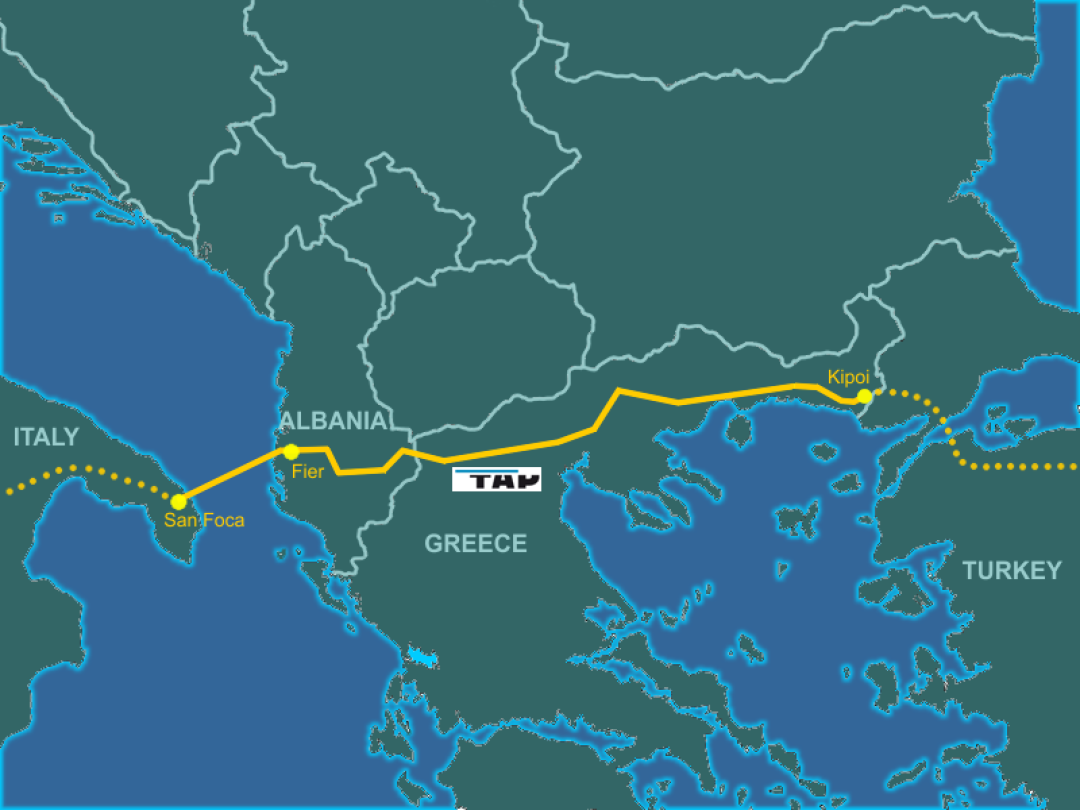
On February 27, during an exclusive interview with Report, Luca Schieppati, the Managing Director of TAP AG, reviewed the first five years of the pipeline’s commercial operations, outlined the implementation of its initial expansion phase, and addressed prospects related to hydrogen adaptation, decarbonization, and the project’s role within the EU’s energy strategy.
Schieppati stated that TAP will participate in the upcoming meetings of the Southern Gas Corridor Advisory Council in Baku, describing the platform as a key forum uniting governments, international organizations, financial institutions, and energy companies. He emphasized the strategic importance of the Southern Gas Corridor for Europe’s energy infrastructure. Referring to milestones achieved in 2025 — including the transportation of 50 billion cubic metres (bcm) of gas to Europe, the completion of five years of commercial activity, and the timely execution of the first capacity expansion without interrupting flows — he noted that TAP intends to focus discussions on operational reliability, infrastructure resilience, and coordinated corridor development. He also stressed the importance of cooperation with national regulators, host governments, EU institutions, transmission system operators, and upstream partners to support Europe’s diversification and energy security objectives.
Addressing the additional 1.2 bcm per year capacity available from January 1, Schieppati stated that long-term volumes allocated during the 2021 Market Test, along with short-term auctioned capacity via PRISMA, have been made available since the beginning of the year. The increase followed the completion of works at TAP’s compressor station in Greece, marking the first expansion stage. Initiated in January 2024, the project was finalized ahead of schedule, within budget, and without disrupting gas transit.
Regarding the distribution of additional volumes, he specified that approximately 1.04 bcm per year was booked from January 1, 2026, from the Kipoi entry point at the Turkish-Greek border to Italy. The remaining 0.16 bcm per year, scheduled to start on October 1, 2026, will run from Greece to a new exit point in Albania. Schieppati noted that TAP plans to complete its Roskovec exit point in accordance with long-term transportation agreements but cannot comment on infrastructure developments beyond its responsibility, while reaffirming support for Albania’s gas sector development.
Commenting on expansion beyond the current phase, Schieppati stated that TAP has the technical capacity to exceed 20 bcm annually, provided there is sufficient market demand. Any further expansion, he emphasized, would follow an open and transparent market test process conducted at least every two years. The 2023 Market Test concluded in December 2025 without allocated capacity, while the non-binding phase of the 2025 Market Test, launched in July 2025, remains ongoing.
On hydrogen readiness, Schieppati emphasized that TAP aims to enable the transport of hydrogen blended with natural gas and is assessing technical feasibility. An initial hydrogen readiness study conducted in 2021 confirmed potential in this area, followed by material and above-ground equipment testing in international laboratories. Results are currently under detailed evaluation. He noted that investment decisions and hydrogen blending levels would likely progress incrementally, aligned with regulatory frameworks and market demand.
Regarding coordination with shareholders and partners in the Caspian region, Schieppati stated that TAP maintains continuous dialogue to monitor developments in hydrogen and other green gases. He highlighted the company’s Long-Term Energy Transition Strategy toward 2050 and the implementation of a Carbon Management Plan for 2022–2025, comprising over 50 initiatives. These measures aimed to reduce carbon emissions by 5%, methane emissions by 8%, and fugitive emissions by 54% compared to baseline forecasts. By 2025, TAP achieved more than a 25% reduction in greenhouse gas emissions, over 50% in methane emissions, and more than 85% in fugitive emissions relative to baseline data. Internal assessments indicate that more than 95% of CO₂ emissions originate from gas-powered compressors, and the company is evaluating the potential installation of electro-compressors, subject to expansion triggers and grid reliability considerations. In February 2026, EU Emissions Trading System compliance verification was completed at the Kipoi Compressor Station in Greece.
Schieppati also addressed TAP’s participation in the OGMP 2.0 initiative, which it joined in 2023. He stated that in 2025 TAP maintained the Gold Standard Pathway Certificate, reflecting progress in methane monitoring, reporting, and mitigation. The company expects to obtain the Gold Standard Reporting Certificate during the current year upon full implementation of measurement-based reporting requirements.
Assessing TAP’s broader role, Schieppati stated that in its sixth year of operation the company has established itself as a reliable and resilient transmission system operator. Since commercial launch, nearly 56 bcm of natural gas have been delivered to Europe, strengthening supply security during a period of heightened uncertainty. He emphasized that by physically linking the Caspian region to EU markets, TAP has reinforced diversification at a time when Europe is reshaping its energy architecture. Within the framework of the European Commission’s REPowerEU agenda, which seeks both decarbonization and reduced dependency on single suppliers, the Southern Gas Corridor — with TAP as its European segment — continues to be recognized as strategic infrastructure. Schieppati noted that scaling up TAP’s capacity could further enhance supplies to the EU and the Western Balkans, while the company simultaneously advances efficiency improvements and infrastructure readiness in line with EU climate objectives.