
Armenia’s Nuclear Facility — Environmental Risk or Safeguard of Sovereignty?
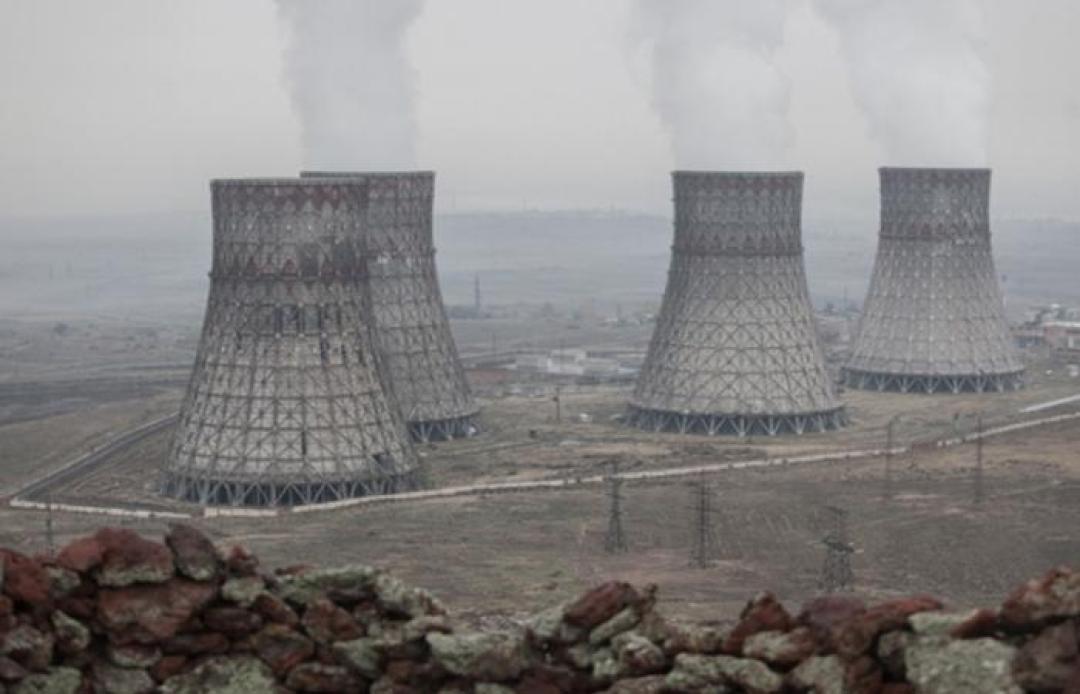
The Armenian Nuclear Power Plant (ANPP), the only nuclear facility in the South Caucasus and often referred to as the Metsamor NPP, is located about 36 km west of the capital Yerevan, near the town of Metsamor. The plant consists of two reactors: the first entered service in 1976, and the second in 1980. The plant was shut down following the 1988 earthquake in Armenia due to safety concerns. However, after the collapse of the USSR — and in the context of the blockade of Armenia by Turkey and Azerbaijan — the country faced severe energy shortages. As a result, the Armenian government decided to restart the plant’s second reactor in 1993. After 5–6 years of inactivity, the Second Power Unit resumed normal operation on November 5, 1995, leading to a significant increase in Armenia’s energy supply. This decision was unprecedented, as no previously shut-down nuclear power plant in the world had ever been brought back online.
Today, the ANPP provides up to 40% of Armenia’s electricity needs. The facility is supervised by the International Atomic Energy Agency (IAEA), which conducts regular safety assessments and issues recommendations to ensure compliance with international standards. The operational life of the existing power unit has been extended until 2026, with plans to prolong it for an additional 10 years. The modernization and life-extension program is being carried out in cooperation with Rosatom (the Russian State Atomic Energy Corporation) and other international partners.
Operational safety concerns – justified or politicized?
The Metsamor NPP is unique in its design, as it is one of the few nuclear power plants whose reactor is not enclosed within a conventional protective containment structure typically made of steel or lead. Located close to residential areas and just 16 km from the Armenian–Turkish border, its environmental and safety aspects are of significant importance for the entire region. Concerns have been raised primarily by Turkey and Azerbaijan, which have consistently criticized the plant. For many years, both countries have claimed that the Armenian nuclear power plant poses a regional threat and have repeatedly called for its shutdown. One of the latest examples in May of this year the Cumhuriyet published a call from 33 Turkish environmental and human rights organizations to the governments of Armenia and Turkey to close the Metsamor Nuclear Power Plant, citing seismic risks, outdated infrastructure, and allegedly an increase in cancer cases and the birth of children with leukemia in Iğdır, a town bordering Armenia. Although no international health organization has confirmed these claims, this did not stop the head of the Turkish Association for the Protection of Nature and the Environment, Sabahat Aslan, from declaring: “Our fight will continue until the Metsamor Nuclear Power Plant is closed.” Last month, a delegation of staff from the French, German, Canadian, and U.S. embassies in Ankara, accompanied by foreign nuclear energy experts, visited Iğdır. According to local media, during a meeting with the provincial governor, Ercan Turan, the alleged risks associated with the operation of the Armenian Nuclear Power Plant — managed under Rosatom’s supervision — were discussed. Following the meeting, a permanent monitoring council was established, coordinated by EU technical experts and including representatives of local municipalities, law enforcement and oversight agencies in Turkey, as well as members of civil society and the media. The stated goal of this body is to analyze the alleged threats posed by the Metsamor Nuclear Power Plant and to develop protective measures for the population in the event of a radiological emergency or man-made disaster. Concerns are also being voiced by the European Union, which reportedly had classified the reactors like the VVER 440 Model V230—such as the Unit 2 at the Armenian Nuclear Power Plant, as the "oldest and least reliable" category of all the 66 Soviet reactors built in Eastern Europe. The Armenia-EU Comprehensive and Enhanced Partnership Agreement even includes a provision on the closure and safe decommissioning of the Metsamor nuclear power plant, which proposes to approve a roadmap or action plan that envisages replacing the Metsamor nuclear power plant with new capacity necessary to ensure the energy security and sustainable development conditions of the Republic of Armenia.
Despite the concerns raised, a delegation led by the IAEA Director General Rafael Mariano Grossi, visited the Metsamor Nuclear Power Plant on October 4-5, 2022 and within the framework of the visit, he noted that multifaceted large-scale works were carried out at the station, "which will certainly guarantee the future safe and reliable operation of the station."
Later, in a conversation with "Armenpress", Grossi, referring to calls from Turkey to close the nuclear power plant, stated that the International Atomic Energy Agency does not plan to shut down the nuclear power plant, and that "Armenia continues to work seriously with the IAEA and strengthen the safety of the nuclear power plant, and the agency is confident about this."
It should be noted that in 2021, the operating unit of the Nuclear Power Plant went through its longest repair phase, 156 days, as a result of which the emergency cooling system of the active zone of the reactor was upgraded, the core of the reactor was heated, which allowed the life of the plant to be extended until 2026.
In an interview with Caucasus Watch, the former Prime Minister of Armenia, Hrant Bagratyan, during whose tenure and initiative the 2nd block of the nuclear power plant was restarted, stated that the concerns voiced are exaggerated, because the nuclear power plant has gone through many stages of modernization and safety re-equipment since the day of its restart.
"The restart of the second unit, which took place in 1995, was done after radical reforms at the Metsamor nuclear power plant, in particular, the cable system was changed, it was doubled. Then, a second drainage system was built at the nuclear power plant. The Armenian nuclear power plant is Russian reactors of the VVER 440 type, which are cooled by water, in this regard, I should note that the Armenian nuclear power plant has no similarity with Chernobyl, which was cooled by air. If there is an accident, water will be released into the reactor, and it is impossible for that type of reactor to release radioactive material into the air. And finally, the entire building system of the nuclear power plant has been strengthened to withstand a 10-point earthquake. Although later we had the opportunity to find out through microseismic research that the nuclear power plant is not located on a geological fault. There is a fourth improvement that we made later: the cemetery built with the support of the French government near the nuclear power plant, where we bury the used fuel in concrete mortar, one of the components of which is a large percentage of lead (previously, spent fuel was stored in a boric acid-saturated water basin inside the nuclear power plant). After these reforms, the Armenian NPP is considered a plant that meets all international standards, the operation of which is allowed until 2037. They are generally considered to last 30 to 60 years. Although our nuclear power plant is working well, nevertheless, Armenia needs a new nuclear power plant, a new Russian 600 megawatt reactor, which Turkey is currently building on its territory. In other words, it is allowed for them, but not for us? The reason here is political," claims Hrant Bagratyan.
The prospect of building small modular nuclear reactors in Armenia
It is imperative for Armenia to have nuclear energy, so it is planned to build a new power unit with a capacity of 1,000-1,200 megawatts by 2036. The initial cost of building a new nuclear power plant is estimated at 3-5 billion dollars.
Recently, active discussions have been underway on the Armenian side regarding the construction of small modular reactors (SMRs). The issue of small modular nuclear reactors in Armenia has been widely raised by the administration of former US President Joe Biden. This was due to the fact that one of the key political priorities of the previous US administration was the formation of a carbon-free electricity sector by 2035. Currently, only China and Russia are successfully building SMRs worldwide. These discussions became especially active after the statement made by US State Department official Maria Longhi to Congress in 2023 that the feasibility of SMRs built using American technology could contribute to energy independence from both Russia and China, then followed the statement of Armenian Prime Minister Nikol Pashinyan that there are negotiations with the American side and a delegation from Yerevan will soon leave for the US to study the technology of SMRs on site. And in October 2025, the PM Pashinyan clearly announced that Armenia's next nuclear reactor will be a small modular reactor, and for this purpose, the Armenian government is holding discussions with 5 partners, and in the next 1.5 years, the Armenian government should make a final decision and sign an agreement. According to him, “Armenia must have a modular nuclear power plant, so that it isn’t anyhow deemed as a threat neither inside Armenia nor for surrounding countries,”.
Proponents of SMRs argue that they could play a revolutionary role in the nuclear energy industry, becoming a safer alternative to traditional reactors[1]. However, a profound examination by some experts depicts a completely different picture, full of economic, security, and practical challenges. There are also conflicting opinions in professional circles in Armenia regarding the feasibility of building a small modular nuclear power plant. One of the key arguments against SMRs is related to their cost-effectiveness. Research shows that larger reactors are generally less expensive to produce electricity than their smaller alternatives[2]. It is also assumed that the production of smaller volumes of electricity will bring less revenue, and construction costs will be much higher[3]. Another common argument in favor of SMRs is the reduction of radioactive waste. Nevertheless, studies show that SMRs can increase the volume of nuclear waste compared to larger reactors (Stanford Report, May, 2022)[4].
In a conversation with Caucasus Watch, former Prime Minister Hrant Bagratyan considered the idea of building a modular station in Armenia "simply ridiculous," which, according to him, cannot be the subject of professional discourse. "There cannot be a modular station in Armenia (29,743 km2), it is off the debate. Modular stations are built when the country’s territory is large, e.g. in far north of Russia, in Taymyr Peninsula, in the western part of China, in Tibet and the Gobi Desert, in Argentina (2.78 million km²) and Australia (7.7 million km²) have done something similar. The modular reactor is twice as expensive. Modular reactors are small units designed to supply power to one or two cities. For example, the United States does not have any operational modular plants because, despite its large territory, the country is fully covered by an integrated power grid. This means that, just as in Armenia, it is more practical to build a conventional stationary plant rather than a modular one — and the stationary option is 40–50% cheaper per megawatt," claims Hrant Bagratyan.
Metsamor nuclear power plant - a strategic factor for Armenia's economy and security
During our interview, Hrant Bagratyan emphasized that the Armenian nuclear power plant is indispensable for the security of Armenia’s economy. “Although solar energy is currently developing in Armenia (as it is worldwide), the country does not have significant wind energy resources. Yet over the next 30 years, we will still need a source of stabilizing power. Such stabilizing capacity can come either from a thermal power plant that burns coal, gas, or fuel oil, or from a nuclear power plant. A nuclear plant is a large autonomous source: once we fuel it, it operates for about 9–10 months. This is the most optimal energy solution, because it can reliably provide 20–25%, or even 30%, of total electricity generation. Even if we increase our solar capacity tenfold, we will still need stabilizing power. At the moment, this is the main focus of global energy development. It should be noted that alongside the expansion of solar and wind power — which countries like Germany, Spain, and Japan are successfully pursuing — everyone has come to understand that nuclear energy is highly suitable in parallel, precisely because stabilizing capacity is needed, whereas previously this need was not as acute,” Bagratyan explains.
In terms of regional impact, according to Hrant Bagratyan, by having a nuclear power plant, Armenians thereby strengthen and guarantee the arguments for the existence of their state.
“In other words, the very existence of a nuclear power plant is evidence that there is an Armenian state — and that this state has the capacity to defend itself. All countries that issue statements against Armenia’s nuclear power plant simply do not want us to possess an autonomous, independent source of electricity. Having a nuclear plant also means having nuclear waste, and these countries do not want to see that, because nuclear waste is a form of deterrent. In a wartime situation, it is not we who should fear that someone will attack and bomb our NPP — it is the attacking side that should be cautious. These countries must finally understand that the IAEA monitors the safety of Armenia’s NPP and has already confirmed that it can operate for another 10 years. During this period, Armenia must create additional energy capacities and build a new nuclear power plant,” concludes Hrant Bagratyan.
Contributed by Anna Vardanyan, a political journalist-researcher from Armenia based in Yerevan. Her 18-year professional and academic research career is closely related to international relations, political science, and security policy topics within the Eastern Europe and Caucasus region overall.
[1] Jasmina Vujić, Ryan M. Bergmann, Radek Škoda, Marija Miletić “Energy” Volume 45, Issue 1, September 2012, Pages 288-295, https://www.sciencedirect.com/science/article/abs/pii/S036054421200093X#:~:text=Small%20Modular%20Reactors%20(SMRs)%20could,module%2C%20large%20capacity%20power%20plant.
[2] Christopher P. Pannier, Radek Skoda, “Comparison of Small Modular Reactor and Large Nuclear Reactor Fuel Cost”, Energy and Power Engineering > Vol.6 No.5, May 2014, https://www.scirp.org/journal/paperinformation?paperid=45669#:~:text=Generally%2C%20SMRs%20offer%20utilities%20the,of%20the%20two%20reactor%20classes
[3] Nick Van Hee, Herbert Peremans, Philippe Nimmegeers, “Economic potential and barriers of small modular reactors in Europe” Renewable and Sustainable Energy Reviews, Volume 203, October 2024, https://www.sciencedirect.com/science/article/abs/pii/S1364032124004696#:~:text=A%20major%20drawback%20of%20the%20smaller%20size,cost%20per%20unit%20of%20electricity%20produced%20%5B10%2C15%5D.
[4] Stanford Report, May, 2022, https://news.stanford.edu/stories/2022/05/small-modular-reactors-produce-high-levels-nuclear-waste