
Charles Hendry: BP Anchors a Gas First Caspian Policy
The Caucasus entered the European strategic imagination through the flow of oil and gas from the Caspian Sea. In the early 1990s, Türkiye championed a westward pipeline corridor as a means of establishing itself as a regional transit hub, securing affordable domestic energy, and positioning the country as an attractive destination for energy intensive manufacturing. The United Kingdom played a complementary role, promoting a vision in which the newly independent post-Soviet states would become stakeholders in the wider European economic space.
BP emerged as the central protagonist of this endeavor, shaping not only upstream exploration in Azerbaijan but also the development of the region’s critical pipeline infrastructure, including the Baku–Tbilisi–Ceyhan oil pipeline and the South Caucasus gas pipeline.
Three decades later, this traditional partnership faces new pressures. Europe’s decarbonization agenda, the UK’s departure from the Single Market, and the shifting geopolitics of Eurasian energy raise a fundamental question: how is the UK–Caspian energy relationship evolving, and what role can Britain still play in the region’s energy transition and integration?
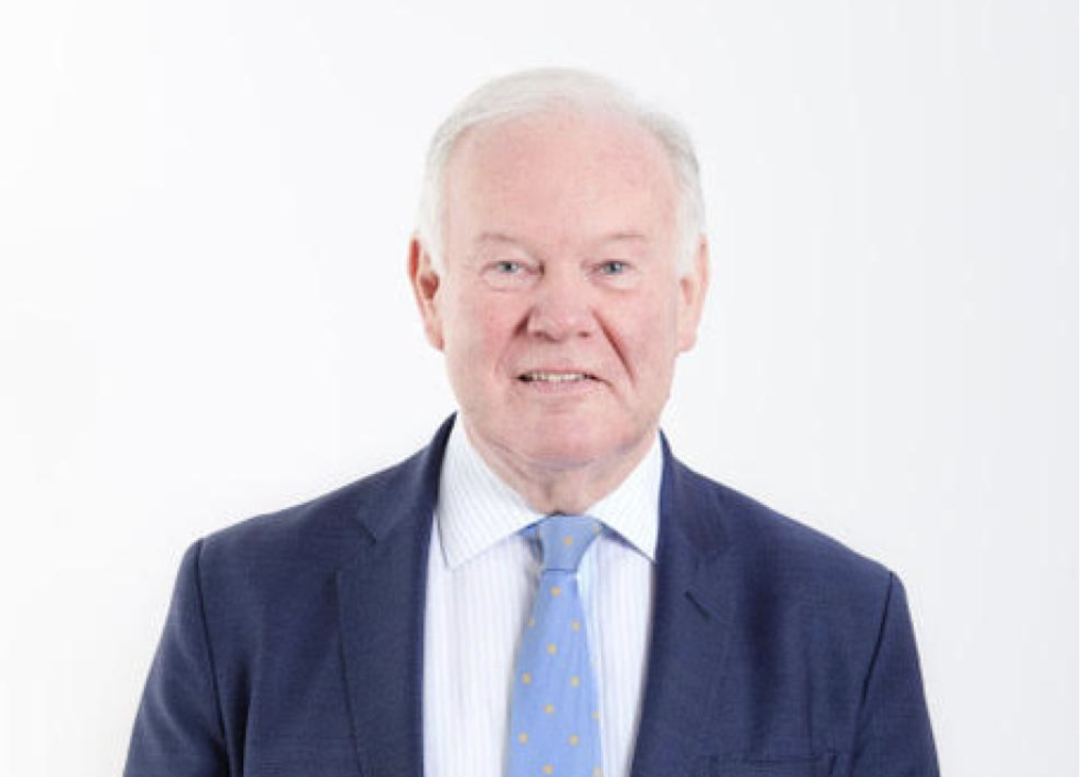
To explore these issues, Caucasus Watch speaks with Charles Hendry CBE, former UK Minister of State for Energy, the Prime Minister’s Trade Envoy to Azerbaijan, Kazakhstan, and Turkmenistan, Distinguished Fellow at the Atlantic Council’s Global Energy Center, and Honorary Professor at the University of Edinburgh. His long experience in shaping UK energy policy, and his reflections on the evolving role of gas, renewables, and regulatory diplomacy, make him a leading authority on the subject.
During your tenure as Minister of State for Energy (2010-2012), you advocated for the Southern Gas Corridor as Europe’s main scalable non-Russian gas route. That was over a decade ago. Today, Azerbaijan’s export capacity has arguably reached its peak. Is there scope to maintain current supply levels, or even scale up Caspian resources to Europe, and where would additional volumes come from, if at all?
At the time, our advocacy for the Southern Gas Corridor was driven by the need for supply diversity. If you rely on a single major pipeline, you are vulnerable, but if you have multiple sources and routes, your energy security improves. There was a difference of opinion then, since the European Commission favored Nabucco while we supported the Southern Gas Corridor, but the core objective was the same, namely bringing Azerbaijani gas into Europe. That has been delivered. There is scope to increase volumes, either through additional Azerbaijani resources or by using the pipeline to bring gas from elsewhere. Turkmenistan has long discussed exporting gas westward, and if agreement is reached on a Trans-Caspian pipeline, it would diversify Turkmenistan’s customer base and enhance Europe’s energy security.
The UK is the largest foreign investor in Azerbaijan and Georgia, largely through BP. Does London retain political leverage with the current Georgian government, and is Georgia’s political shift undermining the region’s energy role, particularly the planned subsea Black Sea cable between Georgia and Romania?
Political changes always require caution, but they should not halt discussions on long-term projects. If Georgia can deliver power or transit gas into Europe, that benefits the EU. At the same time, we must be aware of the risks posed by governments that are less inclined toward European engagement. We should pursue major long-term projects, but with a degree of caution.
The UK has the second largest installed offshore wind capacity in the world, after China. Can Britain leverage that experience to help the South Caucasus and wider Caspian region transition to renewables, and if so, through what instruments, such as technical cooperation, finance, or regulatory support?
The markets are fundamentally different, but the UK can certainly help. Azerbaijan is already diversifying its energy base, expanding renewables so that a greater share of domestic electricity demand is met from non-gas sources. This, in turn, frees up larger volumes of gas for export rather than using them at home, which is clearly beneficial for the Azerbaijani economy. There is also discussion of exporting green electricity to Europe via a “Green Energy Corridor,” which is a major undertaking, but not impossible. The UK has built the world’s largest offshore wind farms and has deep technical expertise, including how to build in difficult waters, how to ensure resilience in severe weather, and how to manage grid connections efficiently. We do not have a large manufacturing base, since components often come from Asia, but our engineering and regulatory experience is worldclass. Offshore wind does not deliver the same returns as oil and gas, so the role of companies like BP will be different. Still, as governments diversify beyond hydrocarbons, low carbon technologies are a natural area for UK engagement.
BP has been diversifying its portfolio, including using solar in its own operations and entering new energy markets. Do you foresee a gradual electrification of major oil and gas companies, or is that still distant?
If anything, that prospect has moved further away. Oil and gas companies have skills that are highly relevant to offshore renewables, such as working in hostile waters and managing complex engineering projects. But given the abundance of gas globally, and the continued reliance on gas in many countries, these companies will focus on hydrocarbons for now. BP’s recent strategic shift, {that is, a return to its core traditional oil and gas activities}, was driven largely by its investor base, who compared BP’s share price performance with companies like Shell or ExxonMobil and pushed for a reorientation. Still, the energy transition is accelerating, and there will be substantial opportunities across Central Asia and the Caucasus for clean energy development, even if oil and gas majors take a more cautious approach.
The expansion of AI technology is predicated on the imperative of building energy consuming datacenters, which also require reliable and uninterrupted baseload supply. Given the current state of the economy and climate change, do you feel there is anything that can tame the expansion of fossil fuels?
There is a lot of attention at present on powering the datacenters using next generation small modular nuclear reactors, but the challenge is that those datacenters will be built before the SMRs are commercially available. That means they would either need to be powered by renewables - and there is a lot of doubt about the ability to deliver the volumes if power at the consistency required - or, more likely, by gas generation, potentially linked to CCUS. If we are moving to a period of cheaper gas, then the likelihood is that gas will be the economic choice, even if they plan to move to a lower-carbon solution in some years to come.
You mentioned the possibility of additional Caspian volumes, such as Turkmen gas. In the light of current EU and UK climate and energy frameworks, how bankable is a Trans-Caspian connection today, and what meaningful role could the UK play in making such a route politically and commercially viable?
Gas will remain immensely important in Europe. Russian pipeline gas to Europe is down by 90 percent, and the EU has stated that it intends to end Russian imports entirely. Europe will need alternative supplies. LNG is coming in from the United States, Qatar, and others, but pipeline gas has advantages, since you know where it starts and where it ends. LNG on the spot market goes to whoever pays the highest price. If LNG prices fall by 30 to 40 percent, as many predict this decade, countries will expand gas use. Germany is building 20 gigawatts of new gas fired capacity, and the UK and Ireland are considering new gas generation plant as well, albeit probably used for fewer hours. So, Europe will need secure, long-term gas supplies, and a Trans-Caspian route could be part of that.
One of the biggest obstacles to regional energy integration is the clash between EU grid and market standards, national regulatory frameworks in the South Caucasus, and the Eurasian Economic Union’s technical norms. Does the UK, with its regulatory expertise and BP’s footprint, have a meaningful role in helping the region navigate competing standards?
The UK is very good at navigating complex regulatory environments, and none of these issues should be seen as dealbreakers. We can help create greater harmonization, or design systems that allow fundamentally different approaches to coexist. Our regulatory model has attracted enormous investment, far more than expected 15 years ago. If countries in Central Asia and the Caucasus want access to that kind of investment environment, they may look to the UK as a model. These are ultimately matters for negotiation, but none of them are insurmountable.
Interview conducted by Ilya Roubanis for Caucasus Watch
Interviews,
Politics,
Azerbaijan |
Caspian Sea, BP, Southern Gas Corridor, United Kingdom, Ilya Roubanis, Charles Hendry