
Hassan Shariatmadari: We Do Not Need a Digital King, But Constituent Assembly
Iran’s northern frontier enters a period of profound strategic instability. Over recent days, Iranian drones have struck targets not only in Iraqi Kurdistan, but also inside Azerbaijan, signaling that Tehran is prepared to project force across both Kurdish and Azerbaijani spaces as it braces for internal uncertainty. These strikes highlight a deeper, structural tension: three competing national projects are converging in one space: Iranian Unitarianism, Kurdish aspirations for self‑rule, and Azerbaijan’s posture over its south co‑nationals.
This convergence is not new, but the current moment is uniquely combustible. Iran faces a succession crisis following the death of its Supreme Leader, with no clear mechanism for political continuity. The IRGC, once the guarantor of regime stability, is fragmented into rival networks. Meanwhile, Israel and the United States increasingly view Iran’s northern periphery as the most vulnerable point of pressure, especially as neither actor is willing or able to deploy ground forces.
For Azerbaijan, the situation is equally delicate. Baku has cultivated deep strategic ties with both Turkey and Israel. Yet, Baku is acutely aware that instability along its southern border could trigger unpredictable dynamics. Iranian drone strikes on Azerbaijani territory mark a significant escalation, but Baku’s response so far has been measured, reflecting both caution and strategic calculation. This is in line with Ankara’s caution, not Tel Aviv’s ambition.
Kurdish actors, meanwhile, find themselves pulled into a geopolitical contest that extends far beyond their own political ambitions. Their territories sit at the intersection of Iranian insecurity, Turkish red lines, and Azerbaijani sensitivities. Any shift in control risks triggering reactions from all three states, not to mention Syria and Iraq. The prospect of Kurdish territorial gains inside Iran is viewed in Ankara as a direct threat, in Tehran as an existential challenge, and in Baku as a potential source of refugee flows and ethnic tension.
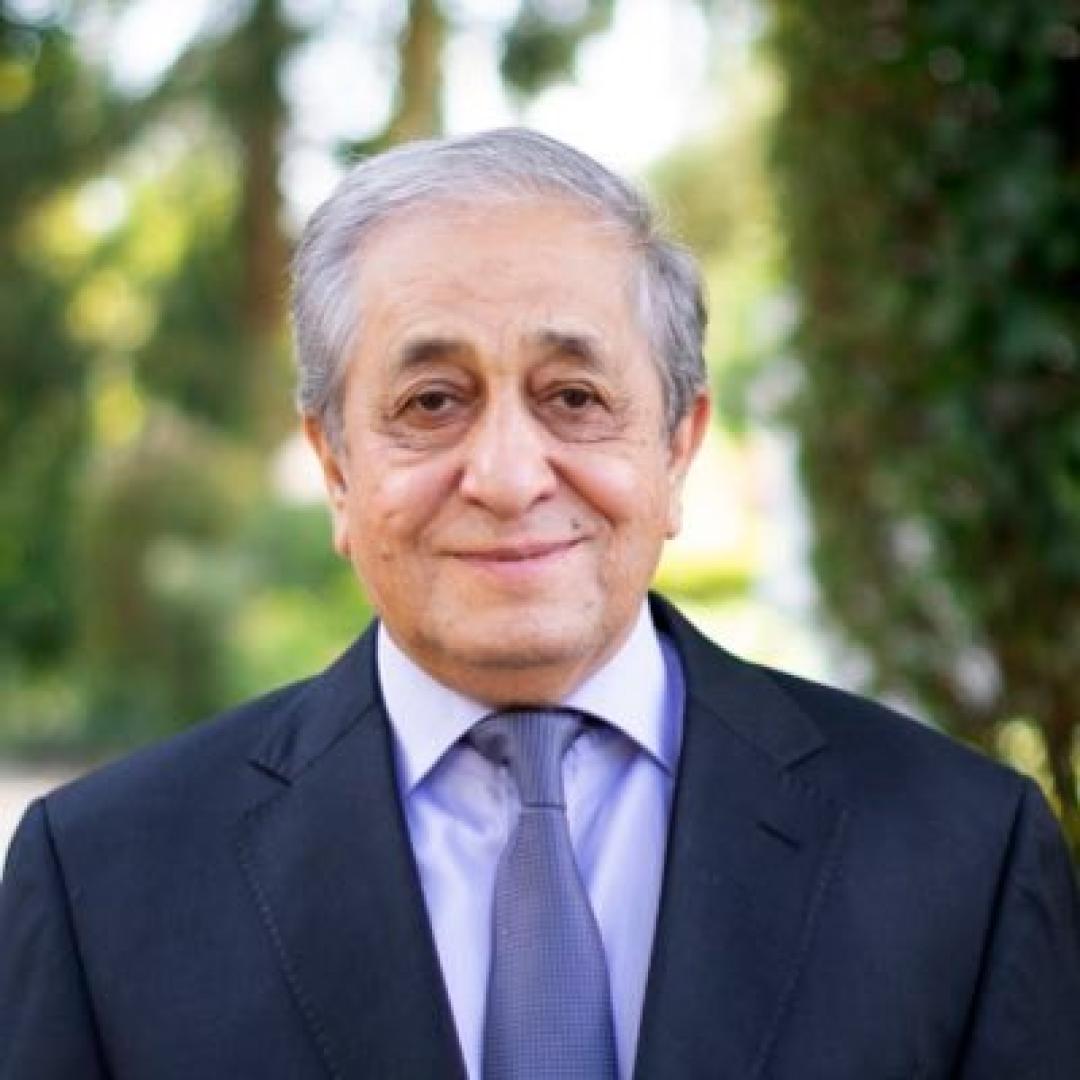
Few figures can speak to this intersection with the historical depth and political clarity of Hassan Shariatmadari, who presides over a platform of Republican and Federalists democratic forces. His perspective offers insight into how Iran’s internal fragmentation may reshape the Caucasus.
You and your family are closely associated with the republican tradition in Iran. For someone unfamiliar with your country’s history, could you explain why?
Our association with republicanism goes back to the drafting of the constitution of the Islamic Republic in 1979–1980. During that period, my father strongly opposed the introduction of Velayat‑e Faqih (“Guardianship over the Jurist,” the doctrine granting a senior cleric ultimate political authority). In interviews, articles, and public speeches, he argued that this doctrine was fundamentally incompatible with democracy and individual freedoms.
He believed that Iran’s modern political thought, which emphasises popular sovereignty and constitutional limits on power, could not coexist with a system in which unelected clerical authority overrides the will of the people. This placed him in direct ideological conflict with Ayatollah Khomeini, who championed Velayat‑e Faqih as the foundation of the new state.
Although Khomeini never mentioned him by name, he repeatedly attacked my father’s arguments in his speeches. The confrontation escalated. In 1981, the regime fabricated a case accusing my father of involvement in a coup attempt, placed him under house arrest for five years, and denied him medical treatment. During this period, he developed prostate cancer, which ultimately killed him in 1986.
These events—combined with our long‑standing commitment to democratic principles—firmly rooted our family in the republican tradition: a belief in popular sovereignty, constitutionalism, and the separation of religion from political power.
From the outside, Iran is often portrayed as a monolithic theocracy. In reality, there are multiple elite factions and competing centres of power. If the leadership changes, what follows? And do any of these factions have the legitimacy to govern?
No faction within the current system can win the trust of the Iranian people. The overwhelming majority of the population has completely detached itself from the regime. Some groups inside the establishment are trying to present themselves to the United States and Israel as “reformist alternatives” – not as opponents of the Islamic Republic, but as managers who can adjust policies without changing the structure or the name of the system. “Support us, and we will reform the regime from within,” they say. That is unrealistic.
Even with foreign backing, any faction emerging from within the system could only govern temporarily. They would have to minimize the theocratic elements and maximize the republican ones, because the public no longer accepts clerical authority as a basis for governance. They would need deep reforms, including the separation of religion and state. But the Constitution does not allow such reforms. They would have to ignore it entirely. At the same time, they would need to rebuild trust with the international community and with regional states—many of which Iran is currently attacking. This makes sustainable governance by regime factions extremely difficult. At best, they could serve as a transitional authority.
There is a perception that both Israel and the United States have supported monarchist groups. Polls suggest monarchists may have around 20% support. Given the fragmentation of the political landscape, do they have a realistic chance?
In the United States, there is no official support for the monarchists. President Trump has said in the past that he prefers “someone from inside Iran,” and that the Shah’s son is “a nice person.” But being likable does not make someone capable of governing a country in crisis.
Israel initially invested heavily in the Shah’s son, but that changed quickly. Prime Minister Netanyahu now emphasizes Iran’s ethnic diversity – Azeris, Kurds, Arabs, Baluch, and others – as a defining political reality. Israel realized it cannot rely on a single figure. It now has multiple scenarios for Iran’s future, not one.
You identify as a republican. Does that imply a unitary republic or a federal one? How do you imagine Iran’s future political structure? Is it Nasser’s Egypt or Lebanon in the 1970s?
Iran today is a deeply modern and educated society. It cannot be compared to Nasser’s Egypt in the 1950s–60s, nor to Turkey or Lebanon in the 1970s. Its social structure resembles contemporary middle‑income countries with strong urban cultures, more like today’s Turkey or even parts of Southern Europe.
Is there a single republican movement, or multiple groups that could operate within a republican system?
Most Iranian political activists in the Iranian opposition identify as republicans. Historically, however, they were scattered across many groups. Now, we are bringing them together into a unified front or congress that can serve as an alternative to the regime.
This coalition includes both federalists and anti‑federalists. Historically, this was a deep divide. But the need for unity has brought them together. I argued that this issue cannot be resolved through debate. It must be referred to a constitutional assembly after the fall of the regime. Whatever that assembly decides—unitary or federal—must commit everyone. They have agreed to this principle, and we are now working together.
Armed groups inside Iran are mostly regional – Baluch, Kurdish – or the exiled opposition organisation Mojahedin-e Khalq (MEK). There is no national armed republican movement. Without weapons, will republicans have negotiating power the day after?
Armed groups say they carry weapons only to protect their lives and communities. They do not seek to build a military movement but to survive. They have stated that once Iran transitions to a liberal democratic system, they will hand over their weapons to the central government. This aligns with a principle present even in American constitutional tradition, namely that people may defend themselves when the state violates their rights.
As for the Mojahedin-e Khalq: they have isolated themselves. They do not negotiate or share power. If they opened their doors and cooperated with other political groups, an understanding would be possible. They say many nice things publicly, but in real politics we have not yet seen any sign of genuine willingness to cooperate. If that changes, other groups will be ready to negotiate with them.
Do you see the Shah’s son, Reza Pahlavi, playing any transitional role?
I do not believe he has the capacity to lead a transition. He does not have the ability to govern the country. He is a “digital king,” a figure of the internet, not of Iran’s real political life.
Let’s turn to the Caucasus. Azeris have historically played a central role in Iranian statehood. Today, however, a distinct Azerbaijani national project appears to be emerging. Are Azeris fundamentally Iranian, or are we witnessing the birth of a new identity?
All ethnic groups in Iran have deep roots in the country. Most Azeris say: “We are Turks, but we are also Iranians.” Historically, the regions around Iran were part of Iranian empires, and for centuries they lived together. Azeris also point out that they governed Iran for more than 900 years. They believe they have the prestige and experience to continue playing a leading role: not alone, but alongside other ethnic groups and Persians.
In any future system, dictatorship or democracy, Azeris will remain an integral part of governance. Even in the current regime, their influence is so significant that no form of government can exist without them.
There is now a real possibility of a Kurdish offensive beginning from the Iraqi border and spreading into Iranian Kurdistan. After such an escalation, can Azeris and Kurds cooperate in a federal Iran? War often creates its own negotiating realities.
The dynamics of war will determine whether such a plan can succeed. It is too early to judge. If the Kurds manage to organise a large, disciplined force – especially with American weapons – and pressure the central government, the situation could change dramatically. But we cannot predict that now.
What I can say is that dialogue has already begun. I have strong contacts with both Kurdish and Azerbaijani leaders. There are differences, including territorial claims in some cities. But these issues are not insoluble. We are examining international models: for example, referendums in disputed cities, where only residents decide their future. Most leaders on both sides accept this principle. We are working on a framework that could enable long‑term cooperation.
So, this conversation is already underway?
Yes. I have personally negotiated many times with leaders on both sides. They are educated, flexible, and realistic. I hope we will reach a good solution soon.
Are you optimistic about Iran’s future?
Yes, I am. Iran has an exceptionally educated population and a highly capable diaspora that has excelled in Europe and the United States. They all want to serve their country and invest their knowledge and resources in rebuilding it. With these assets, I have no doubt that Iran can make rapid progress once this regime ends.
Interview conducted by Ilya Roubanis for Caucasus Watch
Interviews,
Politics,
Azerbaijan |
Turkey, Iran, Israel, USA, Ilya Roubanis, IRGC, Hassan Shariatmadari