
Artyom Geghamyan: Armenia Must Forge a Rare Earths Strategy
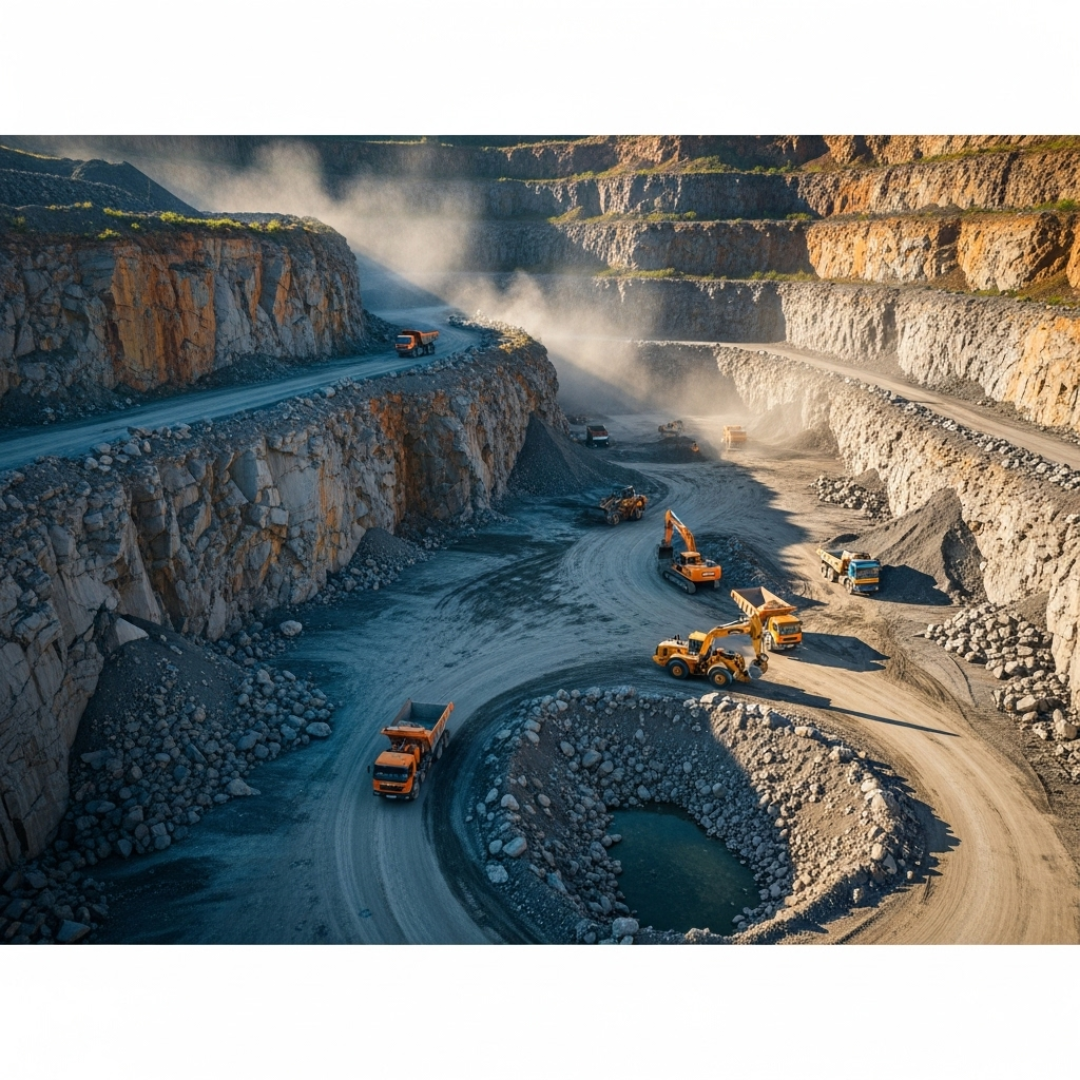
“To build high, you must dig deep,” goes a Mongolian saying—apt for a landlocked country that, like Armenia, treasures its mineral wealth. Unlike its oil-rich neighbor Azerbaijan, Armenia lacks a hydrocarbon base. However, it does possess abundant mineral reserves, including rare earth elements, which are key ingredients in the global shift toward electrification. The real challenge is unlocking that promise. Mining is no sprint: where digital infrastructure moves fast and breaks things, the extractive industries demand patience, planning, and permanence.
Armenia has a long-standing mining tradition. The sector contributes over 5% of its GDP and nearly 30% of its industrial output. But positioning Armenia within global rare earths supply chains requires more than just extraction—it demands vision.
Caucasus Watch sat down with Artyom Geghamyan, Executive Chairman of the International Chamber of Mines of Armenia. A lawyer by training and a former Deputy Minister of Justice, Geghamyan brings policy expertise to the boardroom. We met him at the APRI Forum in Yerevan (11–13 June), an invite-only annual summit that sets Armenia’s agenda at the intersection of geopolitics, technology, and energy.
Does Armenia have confirmed rare earth resources, or is this still exploratory? Would production use existing mines or require new sites?
Armenia is still exploring its potential for rare earth elements (REEs). While small quantities of REEs and other valuable metals like rhenium and tellurium have been found—mainly in copper and molybdenum mines such as Kajaran and Teghut—there are no confirmed reserves or facilities dedicated to rare earths. What matters most is not whether REEs are present, but whether they occur in the requisite concentrations and that the technological capabilities are available to economically process them. Right now, Armenia’s position is more one of geological potential than operational readiness.
For the foreseeable future, rare earth recovery would likely be a byproduct of base metal mining. That is already the case with rhenium, which is extracted in limited volumes from molybdenite concentrates produced at ZCMC—but only when market prices rise above $1,500–$3,000 per kilogram. Another notable site is the Abovyan ore field near Yerevan, where surface-level deposits of light rare earths like neodymium and lanthanum exceed 1,000 ppm. These materials are critical for EVs and wind turbines, but the site remains at an early stage with no extraction or processing yet underway.
Armenia currently lacks refining and separation capacity for REEs, much like many other countries. Even the U.S. sends REE concentrate from its Mountain Pass mine to China for final processing. China dominates the entire value chain, from mining to magnet production, especially for the neodymium-iron-boron magnets that power everything from electric vehicles to defense systems.
REE production also poses serious environmental challenges. In China, key mining regions have suffered from contamination and waste. For Armenia—especially in areas like Syunik and the Ararat Valley—new REE operations would require advanced water management and tailings systems to be sustainable. Water stress in southern mining regions adds to the complexity.
Strategically, Armenia’s role is still undefined. With China reassessing its own REE policy and Western countries pushing to diversify their supply, there is a narrow window for new entrants. Countries like Vietnam, Brazil, and Australia are seizing this moment, backed by investment and clear mineral strategies. In contrast, although Armenia formally adopted its Mining Sector Development Strategy in 2023, it lacks a critical minerals strategy aligned with the rapidly evolving global landscape. It also needs a geological agency focused on resource exploration, development, and verification, as well as direct commercial ties to major global traders and magnet manufacturers. Without these foundations, its geology remains a promise, not leverage.
Caucasus Watch: Rare earth mining costs 40% more than typical mining ventures. How much would Armenia need to invest, and would that come from loans or equity? Could Armenian mining firms list on stock exchanges in London or New York?
Rare earth mining is far more expensive than base metal mining—typically 30% to 50% costlier—due to complex refining, environmental requirements, and high-tech infrastructure. In Armenia, just verifying deposits and running pilot tests could cost $5–$20 million. If a viable deposit is found, full development would likely need $200–$500 million, with some global REE projects topping $1 billion when refining and magnet production are factored in. Funding would mostly come from private equity, state-backed investment, and offtake deals, where industrial buyers provide capital in return for long-term supply agreements. This model is common globally, especially with Asian partners.
As for stock listings, Armenia’s mining firms aren't ready for London or New York. Most lack the scale, transparency, and governance that major exchanges demand. A few—like Kajaran, Amulsar, Teghut, Sotk, or Kapan—might qualify with significant upgrades, but initial capital is more likely to come, if at all, from private deals or junior exchanges like Toronto’s TSX-V or London’s AIM. Public listings without verified reserves, ESG plans, and committed buyers will not attract serious investment. Today, exchanges in North America are preferred over AIM, as they offer better access to capital and stronger regulatory frameworks. For now, Armenia would do well to focus on early equity funding and bilateral programs like the EU Raw Materials Alliance or the U.S. Development Finance Corporation (DFC).
Rare earth mining is extremely water-intensive. Can Armenia support such an industry, given its geography and water limitations? If so, is exporting rare earths viable under current logistical conditions?
Rare earth element (REE) processing demands immense water resources—typically between 300 and 1,000 cubic meters per ton of rare earth oxide—due to multiple chemical stages such as leaching, separation, and purification. These processes also generate hazardous waste, including radioactive and acidic effluents.
Armenia’s geography and climate make large-scale REE processing a significant challenge. The country is landlocked, mountainous, and lacks major industrial rivers. Its reservoirs, already under pressure from agriculture, energy, and household demand, offer little margin for new, water-intensive industries. The Ararat Valley, one of Armenia’s most vital agricultural zones, is already facing groundwater depletion. Without strict water management and public consultation, REE operations could trigger ecological damage and social resistance.
To proceed safely, Armenia would require closed-loop water systems and advanced treatment plants, each costing an estimated $5–10 million and requiring specialized personnel. Any system would need to comply with international environmental standards. The country also lacks a national framework for water use in mining, despite existing concerns about waste management at sites like Kajaran and Teghut. Shared, centralized water infrastructure will be necessary to ensure cost-effectiveness and regulatory compliance across multiple projects.
Regarding export viability, Armenia currently transports bulk mineral goods via rail through Georgia to Black Sea ports such as Poti and Batumi. While this works for concentrates like copper and molybdenum, rare earths—particularly in processed or separated form—face greater challenges. Armenia lacks domestic refining capacity and has no defined export regime for strategic minerals like REEs. Still, with proper planning, small-volume, high-purity rare earth exports may be feasible. Doing so will require Armenia to secure partnerships with the EU, the U.S., or China, and to align with global initiatives such as the EU Raw Materials Alliance or the U.S. Critical Minerals Strategy. Meeting environmental, logistical, and governance benchmarks will be key to unlocking that potential.
What is the biggest regulatory challenge to bringing rare earth elements (REEs) to market in Armenia?
The Armenian government deserves credit for the significant efforts made to improve the investment environment, particularly in enhancing transparency in mining license issuance and committing to higher ESG standards. Its 2023 Mining Sector Development Strategy offers much-needed policy predictability for the next eight years and underscores the government’s intention to align more closely with international mining and critical mineral platforms. The emphasis on community empowerment and corporate social responsibility, including in health and education, reflects an encouraging shift toward long-term, inclusive development.
However, these steps—while welcome—are not yet sufficient to meet the pace and scale of global developments in critical mineral supply chains. The key regulatory barrier lies in the continued reliance on legacy Soviet geological reporting systems, which are difficult for international investors, particularly from Canada, Australia, or the U.S., to interpret with confidence. While Armenia is working toward adopting globally recognized geological frameworks, implementation remains partial.
Equally important is the lack of a fully digitized, investor-accessible geological survey system. Although modernization of the geological database is part of the government’s agenda, institutional disagreements over data management and transparency continue to pose challenges, especially as global competition for resources intensifies. Moreover, the state’s equity holdings in major mining ventures blur the line between regulator and commercial actor, raising valid concerns about potential conflicts of interest. To position itself within the evolving global critical minerals architecture, Armenia must move decisively to complete regulatory reform and build a system that is transparent, modern, and aligned with international market expectations.
Mongolia uses its mineral wealth to pursue a “Third Neighbor” policy that offsets reliance on its powerful neighbors. Can Armenia follow a similar path?
Mongolia’s “Third Neighbor” policy is a strategic effort to diversify its diplomatic and economic ties beyond Russia and China by engaging with democratic partners like the U.S., Japan, South Korea, and the EU. Its success rests largely on leveraging major mining projects—like Oyu Tolgoi, developed by Rio Tinto and Japan’s Sumitomo—to attract international interest and embed itself in global supply chains. This has turned Mongolia into a landlocked but strategically relevant actor.
Armenia faces similar geographic and security constraints—it is landlocked, threatened by Azerbaijani aggression, and is redefining its relationship with Russia. It too has significant mineral assets: copper, molybdenum, gold, zinc, antimony, rhenium, and early signs of rare earth potential. But Armenia has yet to frame these assets as geopolitical tools. That is the goal of “Mining for Security,” a strategy promoted by the International Chamber of Mines of Armenia (ICMA).
Modeled partly on Mongolia’s playbook, the initiative rests on four pillars: attracting diverse international partners from countries like the U.S., Canada, France, Germany, India, and Saudi Arabia; using foreign corporate presence as a form of geopolitical insulation; participating in critical mineral supply chains tied to energy, digital infrastructure, and defense; and building diplomatic capital through trade and resource governance.
Recent developments in Central Africa are instructive. The U.S. backed a minerals-related peace deal between Rwanda and Congo over the Goma region to secure critical mineral flows. This reflects a shift in American policy from offering aid to securing tangible inputs, especially metals. Rather than own or operate mines, the U.S. now prefers guaranteed offtake agreements. Direct government investment in mining, once rare, is becoming bipartisan as Washington confronts its supply chain vulnerabilities.
This shift has global echoes. Japan and South Korea have the technological capacity to process minerals but lack upstream resources. Germany faces similar gaps. France, meanwhile, is reinvesting in its former African partners using development finance tools. The shared goal is to secure access to minerals that underpin energy and defense futures.
Against this backdrop, the U.S.-brokered DRC-Rwanda minerals deal offers a blueprint. Armenia could position itself as a critical mineral partner if it aligns resource development with transparency and reform. Known deposits at Sotk, Amulsar, Kajaran, and Teghut are well placed to attract investment, particularly if Armenia stabilizes its borders and integrates these sites into trusted international supply chains. In this scenario, Armenia’s mineral wealth becomes a peace asset. The U.S. gains secure access to critical inputs; Armenia gains foreign capital, political backing, and greater resilience. If “Mining for Security” evolves into a functioning policy, Armenia could be successful in transforming geology into diplomacy—anchoring its sovereignty in global relevance.
In your view, how should the government go about realizing Armenia’s rare earth (REE) mineral potential?
Armenia needs a clear, long-term strategy to bring its rare earth potential to market—one that balances public interest, investor confidence, and environmental responsibility. While the government is right to seek a stake in mineral wealth, holding direct equity in mining firms creates a conflict of interest. It blurs the line between regulator and commercial actor, which can undermine public trust and deter serious investment.
A better approach would be to establish a sovereign wealth fund. Financed by mining revenues, this fund would invest in infrastructure, education, and economic diversification. It should be governed independently and professionally, converting finite mineral wealth into long-term national benefits.
To unlock new deposits, especially those in remote or underdeveloped areas, the state can invest strategically in roads, utilities, and geological mapping. With verified reserves and logistics in place, Armenia would be better positioned to attract global players like Glencore, BHP, or Freeport through joint ventures or offtake agreements.
Crucially, Armenia must align with international geological reporting standards (JORC or NI 43-101), digitize its geological data, and streamline permits. These steps would help reduce investor uncertainty and bring Armenia’s mining sector in line with global norms. Realizing REE potential isn’t just about what’s underground. It’s about building institutions, infrastructure, and partnerships that can turn natural assets into long-term national strength.
Interview conducted by Ilya Roubanis for Caucasus Watch