
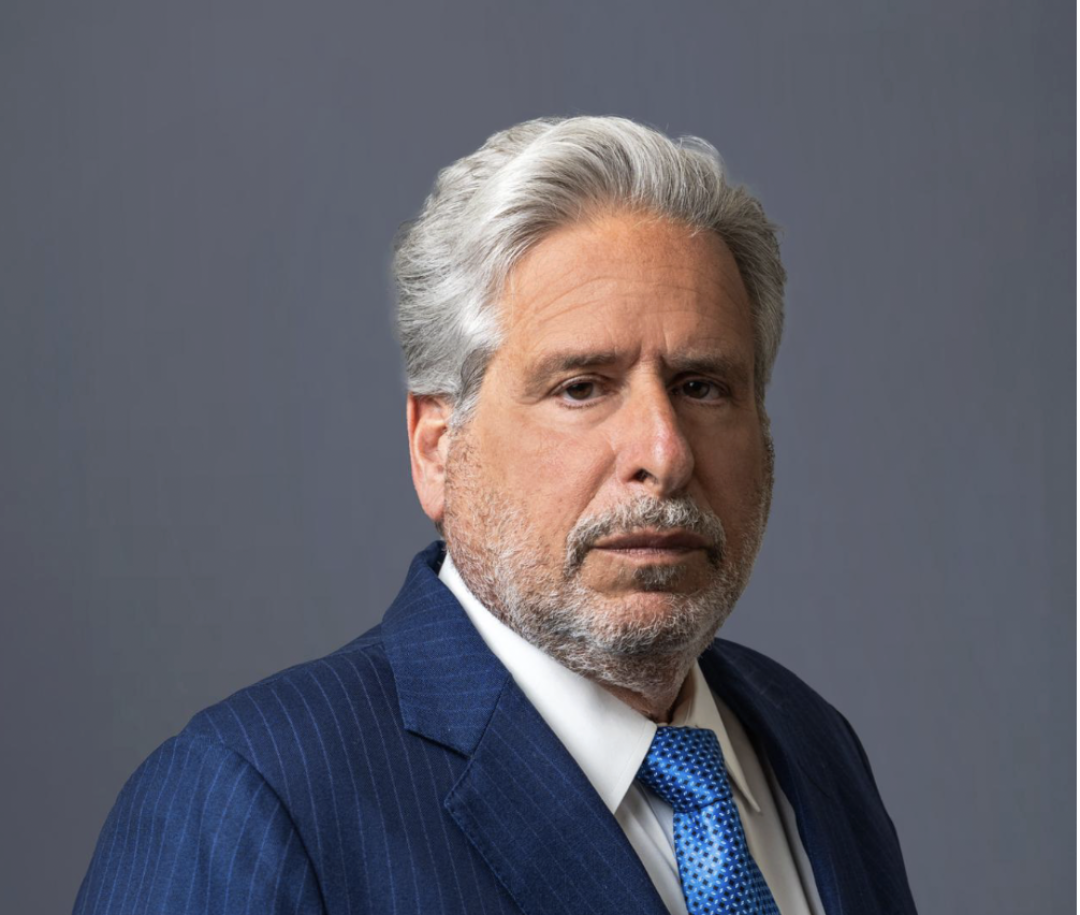
Robert Amsterdam: The Karapetyan Case Has Nothing To Do With Russia
On 16 June, Armenian Prime Minister Nikol Pashinyan posted a series of public statements critical of Russian‑Armenian businessman Samvel Karapetyan, owner of the Electricity Networks of Armenia (ENA), citing his support for the Armenian Apostolic Church and Catholicos Garegin II. The following day, police raided Karapetyan’s Yerevan residence, detaining him on charges authorities describe as ‘inciting the violent overthrow of the government.’ Days later, Pashinyan announced — and on 24 June confirmed — plans to nationalise the Armenian grid, owned by Karapetyan. That same day, international lawyer Robert Amsterdam arrived in Yerevan.
Amsterdam, who first rose to prominence in the early 2000s representing former Yukos Oil CEO Mikhail Khodorkovsky, has built a career taking on high‑profile disputes between governments and influential figures. More recently, he has represented the Ukrainian Orthodox Church, opposing proposed legislation to ban it. Observers note the Karapetyan case is emerging as a flashpoint ahead of Armenia’s forthcoming legislative elections.
Your client, Samvel Karapetyan, was arrested on June 18. He was charged with “a public call to seize power.”
The charges were largely founded on a June 17 statement:
“Since I have always stood with the Armenian Church and the Armenian people, I will be directly involved. If the politicians fail, then we will participate in our own way.”
This statement has been interpreted by authorities as calls to oppose the government, potentially by force. Is there any additional evidence against your client, or are these statements the whole foundation of this alleged plot?
This is a complete fabrication. It's very hard to discuss it and keep a straight face. There's absolutely nothing to it. We believe that some newspapers misinterpreted the language to mean “intervene.”
In other words, they mis-transposed his words. But in any event, it appears that there has been a plan by the present government to deflect attention away from their record. All right, I won't get into it. I don't think I need to go into too many details about what has happened in Armenia in terms of the loss of sacred territory. And there were, as you know, two Archbishops who have also been arrested.
In fact, the Prime Minister has let it be known that he wants to amend the Constitution and restructure the relationship between church and state. All of this comes together in the fabricated charges against my client.
The term “our way” has become something of a political brand. For clarity, is it clear to you, as it wasn't to the press, what is “his way” and who are “we” in this case?
Yes, its true {it has become a brand}.
“We” are the Armenian people, and His way is very clearly nonviolent and church related. Nothing could be more foreign to violence than a man who's talking about supporting Jesus Christ.
You have advocated in the past for the Ukrainian Orthodox Church.
I'm still advocating for the Ukrainian Orthodox Church.
If I am not mistaken, in Armenia, you were initially retained by the Armenian Apostolic Church and then Mr Karapetyan. Strategically, how are the two cases linked?
I'm hired by Mr. Karapetyan and, obviously, he has dedicated his life to the Church and I am dedicated to assisting the Church as well. But my client is Mr. Karapetyan. These two churches, as you know, are not directly or in any way canonically related.
So, to be clear, the one common thread, in this case, is that you are defending a church against government overreach. Is that so?
Exactly.
Regarding the point the government is making, it is true that your client is a Russian citizen. The Tashir Group he owns is also present in 47 cities across Russia and Belarus.
He has accused the government of “defecting to the European Union” and “abandoning Russia” (27/06/2025).
There is a widely held perception that, in Russia, businessmen are custodians rather than outright owners of assets. Given Mr Karapetyan’s footprint across Russia and Belarus, how do you counter the accusation that he is acting on behalf of the Kremlin?
You are forgetting many other countries my client’s business interests are present besides Russia and Belarus, like for instance Kazakhstan and Dubai. I don’t have the whole list.
The reason I am bringing up Russian ownership is the perception that is common in Europe that, in Russia, businessmen are not owners of their assets but custodians on behalf of the Kremlin.
Look, there are few people who know more the oligarchs than myself. This is part of a false narrative that is espoused by many who developed Russophobia into a PhD course.
If there is anyone or any group that has forced Russian businesspeople back into Russia, it is the West. Through their sanctions program, the West has isolated and cut off Russia. So many Russian businessmen now have been forced to expand their businesses in Russia. This doesn't mean that particularly someone such as my client, who is in all sorts of businesses, like pizza, is politically motivated. This doesn't mean that he's holding these assets for anybody other than himself and his family. And I think the other thing that's important to understand. He is Armenian. He has dedicated his life to the Armenian Church.
Following this line of argument, there is another controversial statement by your client, dating back to June 18:
“No matter how much they try to defame us, I don't care about their electric grids or anything else, everything will be fine. The people will speak up and they will realize they were wrong.”
Setting aside the legal case against Mr. Karapetyan. Is it legitimate for the government to pursue an independent industrial policy? They feel they have to nationalize the grid to restore some degree of sovereignty in terms of industrial policy.
It's complete bullshit. They only felt they had to nationalise the grid after they charged him with a completely bogus offense. Then rewrote the law to try to make their way. They wanted another Yukos case, and thanks to me, they're going to have one.
If they go ahead with the grid, I can assure you that this will have a tragic impact on the Armenian government, because there's it's absolutely clear that this is politically motivated retribution and an attempt to send a signal before the election that they will countenance no opposition. That's what this is. This is the hallmark of an anti- democratic government. And there are many hallmarks, and I know them all. I went to Armenia and I ticked all the boxes. This is a political prosecution of the first order.
Depending on which side of the table you are seating, this move has been labelled “expropriation” and/or “nationalisation.”
Now, the Electric Networks of Armenia (ENA) is a Cyprus-based company.
The Stockholm Chamber of Commerce (SCC) emergency arbitrator found Armenia’s actions raised “serious doubts” about its compliance with the 1995 Armenia–Cyprus Bilateral Investment Treaty (BIT).
On July 16, 2025, Prime Minister Nikol Pashinyan publicly stated that no prior consultation occurred with either the International Monetary Fund (IMF) or the World Bank regarding the ENA nationalisation.
In your legal opinion, does this send a broader signal or is it primarily relevant to those with Russian-linked assets?
This has nothing to do with Russia. This has zero to do with Russia.
This is entirely about an insecure politician with a lousy record trying to protect himself before what will be a very difficult election. That's what this is. And of course, it sends a signal when you have a government that is insecure with the track record it presently has.
Of course, it sends a signal when a country as deeply, profoundly religious as Armenia decides out of nowhere to go to war with its own church. It signals instability. And one has to take a real look at what the political motivations here. There's nothing Russian about this. We have to stop in the West seeing Russia as an excuse for poor governance and pathetic politicians. I think it's very important that we do that. And I'm seeing this all over Europe, where lousy politicians who can't competently govern start to use Western Russophobia to absolutely hinder the development of their own countries. There was no need for a split in Armenia involving the church.
This was a tremendous attack on the fabric of the country. This attack on the church is schismatic. It runs entirely against the grain of Armenian history, history and it's just plain bad politics.
I'm working with a whole group of lawyers, who are working on various international fora. Obviously, there is also a tremendous international lobbying approach to all of this. But in terms of my involvement, these are early days, and I'm not going to outline what my plans are. I'm going to the United States. I'll be meeting with people there, and I hope to return to Armenia to attend the next hearing in person. I mean, the fact that this man is being kept in jail is another tick of the box of political prosecution. There's zero basis for him to be kept in jail when, in fact, it was this government that put in the statute books the possibility of house arrest. What is the possible rationale for keeping a man who's not young in the heat of a summer in an Armenian jail?
I was in court a week ago, outside of the court, and they had 1000 police there. I mean, if there's any picture I leave Armenia with, it is the fear and uncertainty of the government.
So, if this is going to become an international case and litigated outside Armenia, one could see two-three angles: we haven't seen the World Bank reacting; we haven't seen the IMF reacting; So, how could one litigate in the U.S.? We haven't seen Cyprus or the EU reacting. How does this become an international case?
Watch me. I'm one of the people that brought you the Yukos decision, right? So I think we've seen this playbook before. This is happening. This is an international case.
Now help an outsider understand. In Armenia, a significant portion of the economy relies on exports with Russia. A big share of the Diaspora resides in Russia. So, ahead of the 2026 elections, is there a world in which this case is adjudicated without becoming a legal proxy for a geopolitical standoff between the West and Russia? Can this be depoliticised?
Listen, I view this as a case of incompetent governmental leadership. I don't see it in East and West terms. I see the present government as wildly incompetent and neurotic. And honestly, I've been a lawyer doing this type of work for 45 years. It's a long time. I've never seen a government use the crude language. I mean, I've seen more political trials than probably any lawyer alive. I've never seen one as stupid as this. I went to Armenia and asking for dialogue. I'm representing a key figure involved in the church issues. The response of the government was an obscenity laced comment from somebody in the presidential administration. Now, I deal with clients all over Africa and Asia. Never have I seen disrespect of this kind: not to me; that's okay. But disrespect to the process: it's just an embarrassment. The Armenian government is an embarrassment to Armenia.
In your in a recent interview with Tucker Carlson you refer back to the time you were declared persona non grata in Russia. Having been through the Armenian legal process recently, do you hold Armenia to a higher human rights and legal standard than Russia?
No, I don’t. I don't see no evidence. I have a 60-year-old industrialist with no prior criminal record being kept illegally in jail. What expectations am I supposed to have in a completely fabricated case: 1,000% fabricated case? No, they're playing Russian rules. This could be the Basmanny Court in Moscow. Let us put our faith in the integrity of judges!
For years, it has been speculated that one of the anchors of Armenia to Russia has been its electricity grid. That's a dependency. If this is privately owned and not Russia-controlled, it's an argument. But is it a viable argument if public perception, not only in Armenia, but also in the West, has been framed by this assumption?
Do you know what percentage of Armenian exports go to Russia: 85%.
So, I mean, there was no reason to start with the grid if you want to come up with some sort of policy. Besides, the Russians have a base in Armenia, they are part of the Eurasian Union, so I don’t know that we should be attempting to place standards that are completely unrealistic in respect to trying to look at this as a Russia vs U.S. battle. This is a battle involving an incompetent politician and a church of two millennia, and one of the things we have to do is depoliticise the church. How people worship Jesus Christ is not to be decided upon by the State Department, as they have in Ukraine, or as the Pashinyan government, which is now trying to do so in Armenia. Issues of faith are not to be decided by crude obscenity, smearing and defaming the leadership of the church.
Interview conducted by Ilya Roubanis
Interviews,
Politics,
Armenia |
Armenian Apostolic Church, Samvel Karapetyan, Ilya Roubanis, Robert Amsterdam